Is There VAT on Train Tickets in the UK? VAT Rates, Receipts and Business Expenses Explained

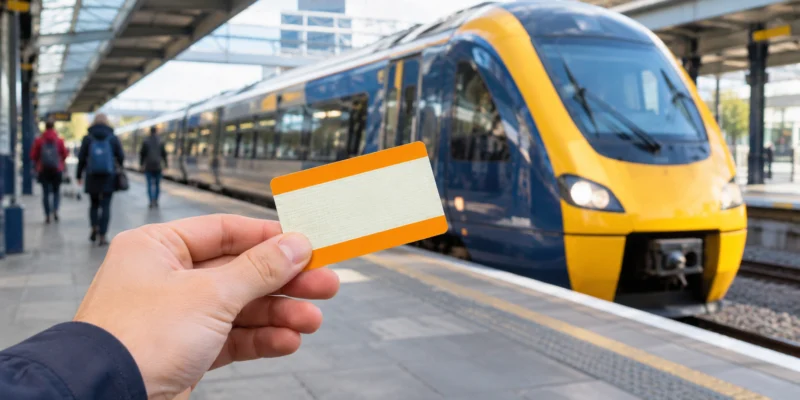
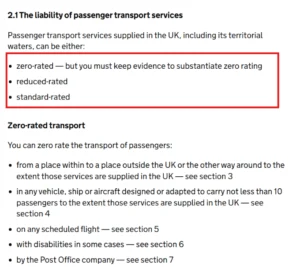
No. Most UK train tickets are zero-rated for VAT at 0%. This means passengers do not pay VAT on ordinary rail fares, including Standard Class, First Class, Advance, Off-Peak and season tickets.
However, VAT may apply to separately charged booking fees, station parking, catering and certain additional services.
For businesses, the distinction is particularly important. Although train fares do not contain recoverable VAT, qualifying business journeys can still be treated as allowable expenses when calculating taxable profits.
Understanding these rules helps employees, sole traders and companies avoid accounting errors and submit accurate expense claims.
Why Are Train Tickets Zero-Rated for VAT?
Under Schedule 8, Group 8 of the VAT Act 1994, qualifying passenger transport is subject to a 0% VAT rate.
The rules generally cover passenger transport in vehicles designed or adapted to carry at least 10 passengers.
Consequently, most ordinary services operated by National Rail companies, the London Underground, trams and other qualifying public transport providers are zero-rated.
The standard UK VAT rate is 20%, but this does not apply to ordinary domestic rail fares.
According to HMRC’s VAT Notice 744A, qualifying passenger transport services receive zero-rating, while certain additional services may be taxed separately.
Christina Odgers FCCA, Director at Towerstone Accountants, explained in her February 2026 analysis that the zero-rating distinction is frequently misunderstood by business owners and employees reviewing travel expenses.
Her published advice identifies the risk of claiming VAT that was never charged, particularly when businesses apply standard VAT calculations to train ticket purchases.
Which Types of Train Tickets Have 0% VAT?
The VAT rate generally remains the same regardless of ticket class, journey length or booking method.
| Train ticket type | VAT rate | VAT on £100 fare |
| Standard Class | 0% | £0 |
| First Class | 0% | £0 |
| Anytime Return | 0% | £0 |
| Off-Peak | 0% | £0 |
| Advance | 0% | £0 |
| Weekly season ticket | 0% | £0 |
| Monthly season ticket | 0% | £0 |
| Annual season ticket | 0% | £0 |
| Railcard-discounted fare | 0% | £0 |
Purchasing tickets through a railway website, booking application or station ticket machine does not normally change the fare’s VAT treatment.
Seat reservations and qualifying sleeper accommodation provided as part of ordinary passenger transport may also follow the zero-rated treatment.
However, a separately supplied service should not automatically be assumed to qualify for the same VAT rate.
What Is the Difference Between Zero-Rated and VAT-Exempt Travel?
Although zero-rated and VAT-exempt supplies both involve no VAT being charged to customers, they have different tax consequences.
Zero-rated services remain taxable supplies within the VAT system. Suppliers can generally recover qualifying VAT incurred on costs associated with providing those services.
VAT-exempt supplies are treated differently, and recovery of related input VAT is often restricted.
| Feature | Zero-rated | VAT-exempt |
| VAT charged | 0% | None |
| Taxable supply | Yes | No |
| Input VAT recovery by supplier | Generally permitted | Often restricted |
| Counts towards VAT registration threshold | Generally yes | Generally no |
| Example | Train passenger transport | Certain financial services |
This distinction is particularly relevant to transport operators and businesses calculating taxable turnover.
For customers, however, the immediate result is simple: an ordinary train fare contains no VAT.
How Much VAT Is Included in the Price of a Train Ticket?
VAT on qualifying UK rail fares is calculated at 0%.
Calculation: Ticket price × 0% = £0 VAT
| Ticket price | VAT amount | Total payable |
| £20 | £0 | £20 |
| £50 | £0 | £50 |
| £100 | £0 | £100 |
| £150 | £0 | £150 |
| £250 | £0 | £250 |
| £500 | £0 | £500 |
Consider a business spending £6,000 annually on employee rail travel.
Its total expenditure is £6,000, but the amount of VAT available for recovery from those fares is £0.
Applying the standard 20% VAT fraction would incorrectly create a £1,000 input VAT claim.
This mistake can lead to inaccurate VAT returns and potential HMRC compliance enquiries.
Businesses should therefore ensure their accounting software correctly categorises passenger rail fares.
Is There VAT on Trainline Booking Fees?
Trainline does not normally charge VAT on UK train fares, but its separately charged booking fees can contain VAT.
Its official expense-receipt guidance confirms that VAT charged on booking fees appears in booking confirmations and expense receipts.
For example, consider a passenger purchasing a £75 ticket with a £3 booking fee.
Assuming the booking fee is £3 before VAT and subject to the UK’s standard rate:
| Expense | Net amount | VAT | Total |
| Train fare | £75.00 | £0.00 | £75.00 |
| Booking fee | £3.00 | £0.60 | £3.60 |
| Total | £78.00 | £0.60 | £78.60 |
A VAT-registered business may recover the £0.60 if the booking fee qualifies as a business expense, its input tax is recoverable and appropriate VAT evidence is retained.
However, it cannot reclaim VAT on the £75 fare.
Booking fees should be checked individually because VAT treatment may depend on the nature and location of the service.
What Additional Train Travel Expenses May Include VAT?
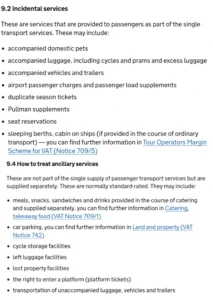
Although train tickets are generally zero-rated, several associated purchases can attract the standard VAT rate.
HMRC distinguishes between services incidental to passenger transport and separately supplied ancillary services.
| Service | Typical VAT treatment |
| Ordinary passenger train fare | 0% |
| Qualifying seat reservation | 0% |
| Accompanied luggage | 0% |
| Separate onboard catering | Usually 20% |
| Station car parking | Usually 20% |
| Left luggage storage | Usually 20% |
| Platform admission ticket | Usually 20% |
| Separately charged booking service | Often 20% |
For example, purchasing a train ticket and a hot coffee at the station involves two different supplies.
The train ticket is zero-rated, while the separately purchased hot drink will normally attract 20% VAT.
Some qualifying perks incorporated into a passenger transport package may receive different treatment.
Can Businesses Claim VAT Back on Train Tickets?
Businesses cannot reclaim VAT on ordinary UK train fares because no VAT has been charged.
This applies to sole traders, partnerships, limited companies and other VAT-registered organisations.
However, VAT recovery and business expense deductions are separate matters.
A legitimate business journey may be deductible when calculating taxable profits, even when its VAT rate is 0%.
For example, a consultant travelling by train to meet a customer might spend £120 on a return ticket.
The £120 may qualify as an allowable business expense, but the consultant cannot reclaim £20 VAT because the ticket contains none.
Businesses experiencing difficulties with VAT accounting may benefit from understanding how VAT registration affects business costs, particularly when managing different VAT rates.
The key is to record the full eligible travel expense without inventing recoverable tax.
How Should Train Tickets Be Recorded in Business Accounts?
Train tickets should normally be recorded under business travel expenses using the appropriate zero-rated tax category.
For a qualifying £150 journey, a basic bookkeeping entry would be:
| Account | Debit | Credit |
| Business travel expenses | £150 | — |
| Bank account | — | £150 |
| Recoverable VAT | £0 | — |
The business records the full cost and does not create an input VAT claim.
Accounting systems should distinguish zero-rated transactions from expenses that genuinely contain VAT.
The purchase may still need to be included in relevant accounting or VAT-return purchase totals, depending on the circumstances and reporting rules.
Accurate digital records also support compliance with HMRC Making Tax Digital changes.
Businesses should retain booking confirmations, payment evidence, journey details and explanations of why the travel was necessary.
Which Train Journeys Qualify as Business Expenses?
Not every train journey qualifies for tax relief simply because it is paid for by an employee or business.
The purpose of the journey determines whether the cost is allowable.
| Journey purpose | Generally allowable? |
| Visiting a client | Yes |
| Attending a qualifying business conference | Yes |
| Travelling between qualifying workplaces | Yes |
| Visiting a supplier | Yes |
| Ordinary home-to-work commuting | No |
| Personal holidays | No |
| Mixed personal and business trips | Depends on circumstances |
Ordinary commuting between home and a permanent workplace is generally not an allowable business travel expense.
Different rules may apply to travel to temporary workplaces.
Employees who personally pay for qualifying business journeys without reimbursement may be eligible for employment expense tax relief.
Those considering a claim can explore how to check whether HMRC owes a tax rebate.
The tax relief depends on the employee’s circumstances and does not convert zero-rated fares into VAT-bearing expenses.
What Happens When You Recharge Train Expenses to a Client?
A common VAT mistake occurs when a business recharges its travel costs to a customer.
Although the original train ticket contains no VAT, a recharge can become part of the business’s taxable service.
For example, a VAT-registered consultant provides £800 of standard-rated services and recharges £100 for train travel.
| Invoice item | Net amount | VAT |
| Consultancy services | £800 | £160 |
| Recharged rail travel | £100 | £20 |
| Total | £900 | £180 |
The customer pays £1,080.
The train fare was originally zero-rated, but the recharge forms part of the consultant’s standard-rated supply.
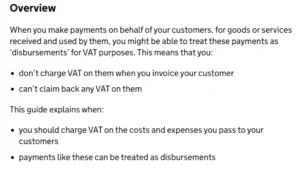
HMRC distinguishes these expenses from genuine disbursements.
Under its guidance on VAT costs and disbursements, a payment may qualify as a disbursement only when the relevant agency and other conditions are satisfied.
Ordinary travel undertaken by a consultant to visit a client generally does not qualify.
Is There VAT on Eurostar and International Train Tickets?
International train travel can involve more complex VAT rules because journeys cross national boundaries.
The UK portion of qualifying international passenger transport is generally zero-rated.
However, transport taking place outside the UK may fall outside the scope of UK VAT and become subject to another country’s tax rules.
For instance, an international rail journey from London to mainland Europe should not automatically be treated as a single UK standard-rated purchase.
Different countries may impose different VAT rates and invoice requirements.
Businesses booking international rail journeys should examine the operator’s documentation before making any VAT recovery claim.
Foreign VAT cannot automatically be reclaimed through an ordinary UK VAT return.
Do You Need a VAT Receipt for a Train Ticket?
A UK train ticket normally does not generate a VAT invoice for the fare because no VAT has been charged.
However, businesses should still retain evidence supporting the travel expense.
Useful documentation includes:
- Digital or physical train tickets
- Booking confirmations
- Payment receipts
- Employee expense submissions
- Details of the business purpose
Trainline allows passengers to download expense receipts through its website or application.
These receipts can separately identify VAT charged on eligible booking fees.
Employees should ensure that the amount claimed matches the actual expenditure.
Businesses submitting VAT repayment claims may also need to demonstrate that their accounting records are accurate.
Further information about supporting documents is available when providing evidence for an HMRC VAT repayment claim.
Are Heritage Railways and Tourist Trains Zero-Rated?
Heritage railway journeys can qualify for zero-rating when they satisfy the rules for passenger transport.
However, rail-based amusement rides and combined entertainment packages may have different VAT treatments.
For instance, a miniature train operating entirely as an attraction inside a theme park may not qualify for the same treatment as an independent passenger railway.
Similarly, dining experiences and entertainment packages involving train travel can require separate consideration.
The correct VAT treatment depends on the nature of the supply and the relationship between transport and other services.
Operators should examine their individual arrangements before applying zero-rating.
What VAT Mistakes Should Businesses Avoid?
Businesses frequently encounter problems when different travel expenses are grouped together.
Christina Odgers FCCA identifies several practical errors in her published professional guidance, including attempting to reclaim nonexistent VAT, overlooking booking fees and confusing zero-rated services with exempt supplies.
Common errors include applying 20% VAT to ordinary train fares, reclaiming VAT without adequate evidence and incorrectly categorising client travel recharges.
Businesses should also distinguish train fares from mileage expenses, which follow separate tax rules.
For employees using personal vehicles instead of public transport, HMRC mileage rates help explain the different reimbursement arrangements.
Periodic reviews of travel expense categories can reduce errors and improve VAT compliance.
Frequently Asked Questions
Is there 20% VAT on train tickets?
No. Ordinary UK train fares are generally zero-rated at 0%, so passengers do not pay 20% VAT.
Can I claim VAT on train tickets for work?
No VAT can be reclaimed from the fare itself. However, qualifying business travel may be deductible for Income Tax or Corporation Tax purposes.
Is there VAT on First Class train tickets?
First Class fares are generally zero-rated, just like Standard Class fares.
Do season tickets include VAT?
No. Ordinary weekly, monthly and annual train season tickets are generally zero-rated.
Does Trainline charge VAT?
Trainline does not normally charge VAT on UK rail fares, but separately charged booking fees may include VAT.
Can I get a VAT invoice for a train ticket?
A VAT invoice is not normally issued for a zero-rated UK fare. Booking confirmations and expense receipts can provide evidence of payment.
Is there VAT on train tickets purchased for employees?
No. The VAT treatment remains 0% regardless of whether the ticket is purchased by an employee, company director or employer.
Do businesses charge VAT when recharging train tickets?
A recharge for the business’s own travel generally follows the VAT treatment of its underlying service. Genuine disbursements may qualify for different treatment.
What is your reaction?