How Weather Damage Affects Residential Roofs and What to Do About It?

Weather damage is one of the biggest threats to any residential roof.
The data proves it. Roof repair and replacement costs in the U.S. reached nearly $31 billion in 2024, an increase of nearly 30% since 2022.
Storms are more frequent. Damage is more severe. And homeowners are getting caught completely off guard.
Here’s the thing…
Most people don’t give their roof much thought until there’s a problem. A leak develops. A shingle blows off. Dark water stains appear on the ceiling. By that time, the damage has already occurred.
The good news? Figuring out how different weather events impact a roof and what to do about it can prevent thousands of dollars in repairs.
What you’ll discover:
- How Different Weather Types Damage Residential Roofs
- Warning Signs Every Homeowner Should Know
- Why Fiber Cement Siding and Roofing Materials Matter
- What To Do After Weather Damage Hits
How Different Weather Types Damage Residential Roofs?
Different damage types can happen. The severity of storm damage to a roof depends on the weather, and understanding these types of damage may make a response more or less urgent.
Wind Damage
High winds can be one of the leading causes of roof damage. Wind pulls up under shingles and peels them back, loosening the adhesive seal or, in the worst cases, ripping them off completely.
A few lifted shingles might not seem like a big deal. But once that seal is broken, water is going to find its way in and fast.
Hail Damage
Hail is another big problem, and it’s getting worse. The NOAA recorded 5,373 hail events in 2024, only slightly below the record 6,962 set in 2023.
That’s an extraordinary amount of impact hitting residential roofs across the country every single year.
Areas of hail impact on asphalt shingles bruise the surface. Many of those hail hits are not visible from ground level.
Hail impact points on asphalt shingles decompose the granule system and weaken the shingle over time. Cosmetic damage that seems minor today may become a leak within months.
Ice and Snow
Ice dams can be a major problem in colder climates. Heat loss through the attic melts the snow on the upper portion of the roof.
The meltwater refreezes near the eaves, creating a dam that blocks drainage and pushes water up under the shingles.
Paired with high snow loads, this places structural stress on the roof and can lead to sagging, cracking, and partial collapse.
UV and Heat
UV exposure and heat cycles over many years slowly degrade roofing materials. Asphalt shingles dry out and crack.
They curl at the edges. Sealants break down. Flashing becomes loose. This type of slow-burn damage is the most ignored, and the most preventable.
The Warning Signs Every Homeowner Should Know
An ounce of prevention is worth a pound of cure. A small, early repair is always less costly than a wholesale replacement many months or years down the road.
So here are some warning signs to look for:
- Missing or curling shingles after a storm
- Granule loss: check gutters for shingle grit accumulating in downspouts
- Water stains on ceilings or in the attic after rainfall
- Sagging areas on the roof deck
- Damaged or lifted flashing around chimneys, vents, and skylights
- Visible daylight coming through the attic boards
Either of these signs is cause enough to call a professional out to that roof. Delaying just lets the issue get worse.
Why Fiber Cement Siding and Roofing Materials Matter?
Here’s something that gets overlooked in most conversations about roof damage…
Building materials that are used on the exterior of a home, including fiber cement siding, have a significant impact on the ability of the entire structure to withstand the elements
After all, it’s not just the roof’s performance in isolation that matters.
This is why a reputable residential roofer in Lancaster will echo the same sentiment, roof performance and exterior cladding complement each other, and replacing one without the other will have real vulnerabilities in weatherproofing.
Fiber cement siding is one of the most durable exterior cladding products available.
It won’t swell, warp, or rot when exposed to moisture the way wood does. It won’t crack or become brittle in extreme cold like vinyl.
And it takes a lot of abuse from impacts like hail and wind-driven debris far better than most other siding materials.
Fiber cement can even stand up to wind speeds of up to 130 mph, making it an attractive option for homes in areas that are prone to storms.
The real benefit in this instance is functional. If a storm pounds a house with projectiles and rain, an adequately fortified exterior reduces the number of ways water can enter the home, fewer chances for moisture to penetrate the wall assembly, the roof edge, and the interior.
Fiber cement siding is also fire-resistant. Holds paint extremely well, which is important in long-term maintenance. Designed to last 50 years or more with proper maintenance, it is a wise investment to pair with any quality residential roof.
What To Do After Weather Damage Hits?
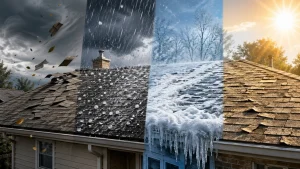
A major storm has just passed. Here’s exactly what to do in order.
Step 1: Do a Safe Visual Inspection
Walk the perimeter of the property and look up, do not walk on the roof.
Check for missing shingles, evidence of debris impact, gutters that have pulled away from the fascia, and any damage to the siding or soffit.
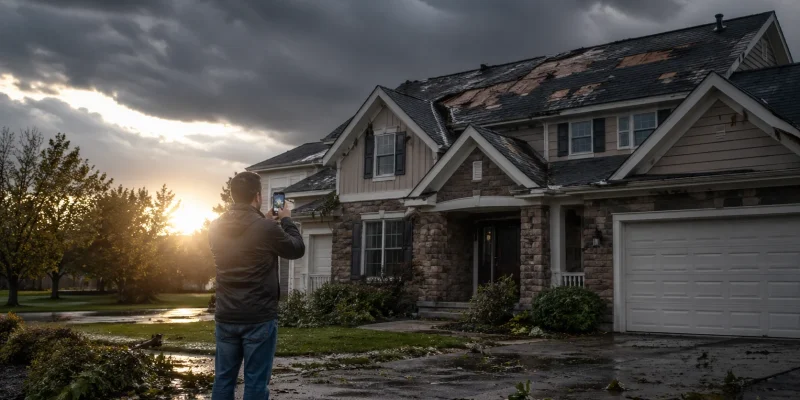
Take photographs of all evidence. Date-stamped images are critical to the insurance claims process.
Step 2: Check the Attic
Take a flashlight and go into the attic. Check for daylight between the roof boards, wet insulation or water staining on the rafters. These are easy signs that need a professional to deal with immediately.
Step 3: Call a Professional
This is the most critical step on the list. A professional roofer provides a true assessment of what’s damaged, what needs attention now, and what can be monitored.
They also understand what insurance adjusters look for, proper damage documentation, and how to scope the repair accurately.
Step 4: Don’t Wait
Roofs with fewer than four years left in their useful life can incur 50% more damage during a major storm event compared to a roof with a longer remaining useful life.
If a roof that’s already in a state of disrepair gets struck by severe weather, a repair job is not enough to reverse the deterioration.
In fact, the roof can deteriorate quickly if action is not taken in a timely manner to contain what could have been a simple repair into an entire replacement.
The Bottom Line On Storm Season
Roofs are an inevitability in residential weather damage.
Storms are intensifying. Costs are surging. And 38% of U.S. residential roofs are in moderate to poor condition today. That’s a lot of properties one storm away from major catastrophe.
The winners are the homeowners who know what various weather types do to a roof, look for warning signs between seasons, upgrade to durable exterior materials like fiber cement siding and take immediate action after any major weather event.
A solid plan is half the battle, and now there’s one to go by.
What is your reaction?