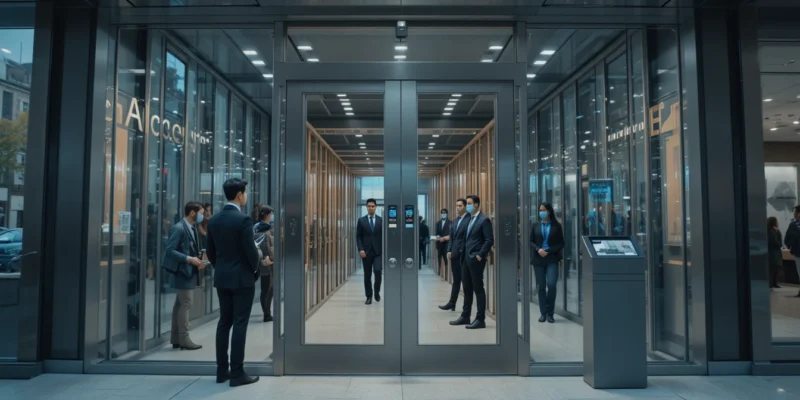
How Smart Locking System is Changing Access Control in the UK?

Physical security has come a long way from simple keys and mechanical locks. Businesses across the UK are increasingly turning to digital and connected solutions to manage who gets in, when, and where.
Understanding what drives this shift helps organisations make better decisions about protecting their premises.
Why Are Businesses Switching to Smart Access Control Systems?
The Limits of Traditional Lock and Key Systems

For decades, businesses relied on metal keys to secure their buildings, storage units, and equipment. While simple in theory, this approach creates real operational headaches. Lost keys mean lock replacements.
Copying keys without authorisation is surprisingly easy. And when an employee leaves, there is no reliable way to know how many copies of a key are out there.
These vulnerabilities are not just inconvenient. They represent genuine security gaps that can expose a business to theft, liability, and compliance issues.
The more sites or access points a company manages, the more complex and risky key-based systems become.
This is where digital locking solutions step in. Rather than relying on a physical object that can be lost, copied, or stolen, modern systems use encrypted credentials stored on a smartphone or access card.
Permissions can be granted or revoked instantly, and access logs provide a clear audit trail.
What Modern Access Control Actually Looks Like?

Today’s access control solutions range from software-managed door readers to fully wireless systems that require no wiring or battery changes.
iLOQ, for example, has built its reputation around energy-harvesting technology that powers the locking mechanism directly from the act of using it.
This removes one of the most common maintenance burdens associated with electronic locks.
A Smart padlock is a good example of how far portable locking technology has evolved. Unlike traditional padlocks, a smart version can be managed remotely, programmed with time-limited access, and integrated into a broader security system without any physical key exchange.
This is particularly useful for outdoor assets, construction sites, or logistics operations where multiple people need access at different times.
Scalability is another major advantage. Whether a company needs to secure two offices or two hundred, the management process remains consistent.
Administrators can update permissions from a central platform, reducing the need for on-site intervention every time access requirements change.
For organisations looking to build a more robust security infrastructure, understanding Access control security in depth is an important starting point.
It covers not just the technology itself, but also the strategic considerations around deployment, user management, and compliance.
Making the Right Choice for Your Organisation

Choosing an access control solution is not just a technical decision. It involves thinking about workflow, staff training, integration with existing systems, and long-term maintenance costs.
Businesses that take a structured approach to evaluating their options tend to see better outcomes than those that focus purely on upfront price.
As expectations around security continue to rise, investing in scalable and manageable locking infrastructure is becoming less of a luxury and more of a baseline requirement for responsible business operations.
What is your reaction?