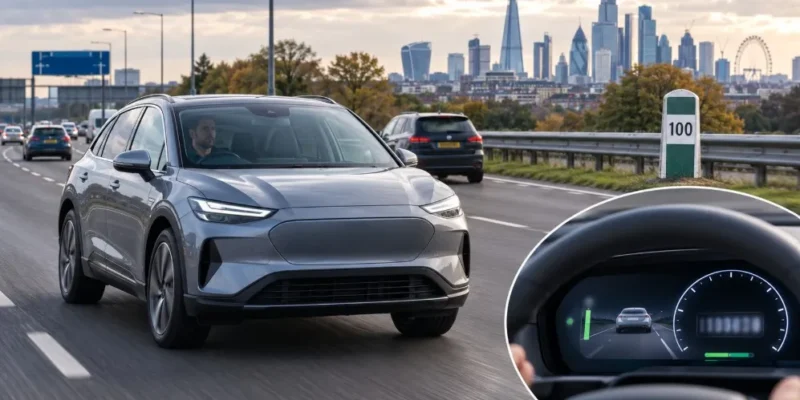
UK Pay-Per-Mile Tax Confirmed for Electric Cars from 2028 | What Are the New Rules?

Last Checked: 22-09-2026
The UK government has confirmed a new mileage-based tax for electric and plug-in hybrid cars starting 1 April 2028. Known as Electric Vehicle Excise Duty (eVED), it will charge drivers based on miles recorded by their vehicle.
Battery-electric and hydrogen fuel-cell cars will initially pay 3p per mile, while plug-in hybrids and range extenders will pay 1.5p per mile. The charge will apply alongside standard Vehicle Excise Duty.
Drivers will submit an odometer reading and estimate mileage for the next tax period. Payments will later be adjusted against verified mileage. Compulsory GPS tracking is not included.
Why Has the UK Confirmed a Pay-Per-Mile Tax for Electric Cars?
The Government says eVED is intended to address the long-term decline in fuel duty revenue. Unlike petrol and diesel drivers, who pay fuel duty when they refuel, electric vehicle drivers do not currently pay an equivalent usage-based motoring tax.
As more motorists transition to electric vehicles, the government expects fuel-duty receipts to fall significantly. eVED is designed to introduce a mileage-based contribution without immediately moving to a full road-pricing system that tracks every journey.
Key reasons behind the policy include:
- Maintaining a stable source of motoring tax revenue as EV adoption increases
- Creating a system where drivers contribute based on how much they use the roads
- Avoiding the complexity and privacy concerns of nationwide GPS-based road pricing
- Aligning EV taxation more closely with existing fuel-duty principles
In its government consultation response document, the government said the tax system should ensure that “all motorists make an appropriate contribution for the miles they drive”.
However, the policy has also raised concerns, including:
- Potential impact on EV affordability
- Additional administrative requirements for drivers and businesses
- Whether introducing a new tax could slow the shift away from petrol and diesel vehicles
The government’s position is that, even with eVED, electric-car drivers are expected to pay a lower effective cost per mile than the average fuel-duty contribution made by drivers of conventional petrol and diesel cars.
When Does the UK Pay-Per-Mile Tax Start, and What Is Still Being Finalised?
The confirmed implementation date is 1 April 2028. Affected motorists are expected to become liable when they first renew their vehicle tax after that date.
What Has Been Confirmed?
The Government has already confirmed several key features of the eVED system that will apply from April 2028.
- The April 2028 start date.
- A 3p-per-mile rate for battery-electric and hydrogen cars.
- A 1.5p-per-mile rate for plug-in hybrids and range extenders.
- Integration with the existing VED system.
- Odometer readings and annual mileage estimates.
- Reconciliation after the licensing period.
- Inflation-linked rate increases from 2029–30.
These confirmed measures provide the framework for how the new mileage-based tax is expected to operate.
What is Still Being Developed?
Some operational and legal aspects of eVED are still being finalised before the scheme comes into effect.
- Final legislation and supporting regulations.
- Detailed penalties and appeal procedures.
- Some refund arrangements.
- Final online and non-digital reporting processes.
- Optional connected-car functionality.
- Detailed fleet, leasing and rental guidance.
The official eVED policy details confirm the rates and start date but also state that legislative amendments and additional regulations are required before implementation.
Therefore, eVED is a confirmed government policy, but motorists should not assume that every administrative detail has already been finalised.
Which Electric, Hybrid, Petrol and Diesel Cars Will Pay the New Mileage Charge?
The UK pay-per-mile tax will not initially apply to every car. Its scope depends primarily on the vehicle’s powertrain and registration category.
Electric and Hydrogen Cars: 3p Per Mile
UK-registered battery-electric cars will initially pay 3p for every recorded mile. Hydrogen fuel-cell electric cars will be charged at the same rate.
The scheme is not restricted to cars bought after April 2028. Existing and used electric cars will also enter the system when their VED is renewed after implementation.
Which Hybrids, Petrol and Diesel Cars Are in Scope?
Plug-in hybrid electric vehicles will pay 1.5p per mile. Range-extender electric cars, which use a small combustion engine to generate electricity, will also pay the 1.5p rate.
Conventional hybrids, sometimes marketed as self-charging hybrids, are not included in the confirmed eVED categories because petrol or diesel remains their only external energy source. Pure petrol and diesel cars will continue to contribute through fuel duty rather than eVED.
Vehicle scope at launch:
| Vehicle category | Initial eVED treatment |
| Battery-electric car | 3p per mile |
| Hydrogen fuel-cell car | 3p per mile |
| Plug-in hybrid car | 1.5p per mile |
| Range-extender car | 1.5p per mile |
| Conventional hybrid car | Outside eVED |
| Petrol or diesel car | Outside eVED |
| Electric van or motorcycle | Outside initial scope |
| Bus, coach or HGV | Outside initial scope |
Certain specialist vehicles and combustion-engine cars converted to electric power are also expected to remain outside the initial scheme.
The scope could be reviewed after launch, so “outside the scheme” should not be interpreted as a permanent exemption.
How Much Will the Pay-Per-Mile Tax Cost EV and Hybrid Drivers?
A driver’s eVED bill will depend on annual mileage and vehicle type. A fully electric car covering 8,000 miles would initially generate a £240 eVED charge, while a plug-in hybrid covering the same distance would generate a £120 charge.
Illustrative annual costs:
| Annual mileage | Electric or hydrogen car | Plug-in hybrid or range extender |
| 5,000 miles | £150 | £75 |
| 8,000 miles | £240 | £120 |
| 10,000 miles | £300 | £150 |
| 12,000 miles | £360 | £180 |
| 15,000 miles | £450 | £225 |
| 20,000 miles | £600 | £300 |
These calculations represent eVED only. Drivers may also have to pay ordinary VED, insurance, charging or fuel costs, maintenance and other motoring expenses.
The government has compared the 3p EV rate with an estimated average fuel-duty contribution of approximately 6p per mile for petrol and diesel drivers. Actual fuel duty per mile varies according to fuel economy and driving conditions.
A driver-focused tax update report also notes that both eVED rates are planned to increase with inflation from 2029 onwards.
The initial rate should therefore be used for 2028 planning, not as a permanent fixed cost.
How Will the Pay-Per-Mile Road Tax Work in Practice?

The system will be administered alongside the existing VED process. The registered keeper will normally be responsible for providing accurate information and paying the charge.
The expected eVED process:
- The keeper renews the car’s vehicle tax.
- They enter the car’s current odometer reading.
- They estimate the mileage expected during the next tax period.
- The estimated mileage is multiplied by the relevant rate.
- The driver pays annually, every six months or monthly.
- A new mileage reading is provided at the next renewal.
- The estimate is compared with actual or verified mileage.
- Any underpayment, overpayment or mileage credit is calculated.
A driver who expects to exceed the original estimate should be able to purchase additional mileage during the year. This could reduce the risk of receiving a large balancing bill at renewal.
This estimation-and-reconciliation model means the amount initially paid may not be the motorist’s final liability.
How Will Mileage Be Reported and Monitored Without Compulsory GPS Tracking?
The eVED system will mainly use odometer readings, driver declarations and existing vehicle records rather than compulsory GPS tracking. Drivers will not be required to report where or when they travelled.
Key points include:
- MOT records: Annual MOT mileage will help verify reported readings.
- Self-reporting: Vehicles below MOT age will report mileage during VED renewal.
- Compliance checks: Unusual or inconsistent readings may be reviewed.
- No mandatory GPS: Connected-car data will remain optional and require the driver’s consent.
Vehicle keepers remain responsible for reporting accurate mileage and ensuring their odometer is functioning correctly under the proposed system.
What Happens if Mileage Changes, the Car Is Sold or It Is Driven Abroad?

Different situations, such as driving abroad, exceeding your estimated mileage or selling your vehicle, can affect how your final eVED liability is calculated.
Mileage Driven Outside the UK
Mileage added to a UK-registered car’s odometer while it is abroad will normally count towards eVED. The government has ruled out deducting foreign journeys because doing so would require a system capable of distinguishing where mileage was accumulated.
An overseas mileage tax report highlighted this issue following the government’s response. The official reasoning is that simplicity and privacy should take priority over creating location-based exemptions for a relatively small proportion of total mileage.
What Happens When Estimates are Wrong?
Selling a vehicle may also affect its eVED balance. Before ownership changes, both buyers and sellers should understand how the scheme is expected to work.
Key points include:
- Outstanding tax: The seller can pay any remaining eVED liability before the sale.
- Mileage credit: Any prepaid mileage credit is expected to stay with the vehicle.
- Buyer checks: A planned vehicle enquiry service should display the prepaid mileage balance.
- Refunds: Automatic refunds after a change of keeper are not expected at launch.
These arrangements could make a vehicle’s eVED balance an important consideration during the buying and selling process.
Selling the Car and Transferring Credit
A seller will be able to settle an outstanding liability through a top-up before ownership changes. However, prepaid mileage credit is expected to remain with the car and transfer to the buyer.
A planned vehicle-enquiry service should show how much mileage has been paid for, allowing buyers to compare the paid balance with the odometer. Automatic refunds following a change of keeper will not be available at launch, although wider refund arrangements are planned.
These rules could make a vehicle’s eVED balance relevant to both its sale price and the buyer’s checks.
How Will eVED Affect UK Businesses, Fleets and Company-Car Budgets?
eVED will introduce both an additional operating cost and new mileage-reporting requirements for businesses with electric vehicles. Employers will need to factor the charge into future fleet and company-car cost calculations.
Fleet operators should also review company-car, lease, rental and salary-sacrifice agreements to clarify responsibility for eVED and any balancing payments.
Businesses should consider:
- Fleet management: Review mileage estimates, vehicle contracts and reporting responsibilities.
- Operating costs: Include eVED in future fleet and company-car budgets.
The Government also plans tailored arrangements for commercial fleets, including bulk licensing, bulk payments and digital reporting options for high-volume operators.
Businesses that prepare early will be better placed to manage eVED costs and minimise administrative challenges when the scheme begins.
What Should Electric and Hybrid Drivers Do Before April 2028?
Although eVED will not apply until 1 April 2028, drivers and businesses can start preparing now. Keeping accurate mileage records, reviewing previous MOT readings and estimating future eVED costs can help avoid unexpected expenses.
Company-car users should also check who will be responsible for reporting mileage under lease, rental or salary-sacrifice agreements.
Motorists should monitor official guidance on reporting requirements, refunds, vehicle sales and inflation-linked rate changes. They should also avoid unofficial websites claiming to offer early eVED registration or payment.
Preparing in advance will help drivers understand the new system and manage both eVED and ordinary Vehicle Excise Duty (VED) more effectively once the scheme begins.
Conclusion
The UK’s eVED scheme will introduce a new mileage-based tax for electric and certain hybrid vehicles from 1 April 2028. While the start date and tax rates have been confirmed, some operational details are still being finalised.
Drivers and businesses can prepare by reviewing mileage records, budgeting for future costs and following official updates. Understanding the new rules early will help motorists adapt smoothly when the scheme comes into effect.
Frequently Asked Questions
Is eVED the same as nationwide road pricing?
No. eVED is an odometer-based mileage charge for specified electric, hydrogen and plug-in hybrid cars. It is not designed to vary according to individual roads, congestion levels, journey times or geographic zones.
Will used electric cars registered before 2028 have to pay?
Yes, under the confirmed policy. The tax will apply to affected UK-registered cars when their VED is renewed after implementation. It is not restricted to cars purchased or first registered after April 2028.
Do self-charging hybrids have to pay eVED?
Conventional hybrids that cannot be plugged into an external electricity source are outside the currently confirmed eVED categories. Plug-in hybrid cars will pay the reduced 1.5p-per-mile rate.
Will electric vans and motorcycles pay at launch?
Electric vans, motorcycles, buses, coaches and HGVs are expected to remain outside the scheme when it launches. The government could review the treatment of other vehicle categories later.
Is eVED payable in addition to normal road tax?
Yes. eVED will operate as an additional mileage component within the VED system. It does not replace the ordinary Vehicle Excise Duty applying to the car.
Can people still own and drive diesel cars after 2030?
Yes. The 2030 policy concerns sales of new cars powered solely by petrol or diesel. It does not ban ownership, resale or use of existing diesel cars. New cars will need to be hybridised or zero-emission from 2030, with all new cars and vans intended to be zero-emission from 2035.
Will the 3p and 1.5p rates increase after 2028?
Yes. Both rates are expected to be increased in line with Consumer Prices Index inflation from the 2029–30 tax year and in subsequent years.
What is your reaction?