Independent School Tax Changes Push Fees Up 4.5%

Independent school fees are expected to rise again from September 2026 as schools respond to higher taxation, employment costs and general operating expenses.
An analysis of fees at 424 schools, reported by The Telegraph, found that the average annual charge for a Year 13 pupil is increasing by approximately 4.5%, from £26,550 to £27,734. That represents an average additional cost of £1,184 over the academic year.
The increase is higher than the UK’s latest headline inflation rate. The Consumer Prices Index rose by 2.6% in the 12 months to June 2026, according to the Office for National Statistics.
However, school costs do not necessarily move in line with consumer inflation because staffing, premises, catering, energy and regulatory expenses can change at different rates.
The latest fee increases follow three major cost changes affecting much of the independent education sector:
- The introduction of 20% VAT on private education and boarding fees.
- The removal of charitable business rates relief from eligible private schools in England.
- Higher employer National Insurance contributions and a lower payment threshold.
The phrase “triple whammy” has been used by independent school representatives to describe these combined pressures. It is a sector description rather than an official tax term.
How Much Are Independent School Fees Rising?
The reported 4.5% increase is an average, not a compulsory or uniform rise. Each school sets its own fees, and the amount charged may depend on the pupil’s year group, whether the place includes boarding and which additional services are included.
| Fee category | Reported 2026–27 position |
| Average Year 13 fee in the 424-school analysis | £27,734 |
| Previous average Year 13 fee | £26,550 |
| Average reported increase | Approximately 4.5% |
| Average sixth-form boarding fee | £48,920 |
| Typical increase for sixth-form boarders | Approximately 6% |
Boarding families are generally facing larger cash increases because accommodation, meals, supervision, utilities and round-the-clock staffing are included in the cost.
The analysis found that some individual schools had raised fees by as much as 12%, although larger increases may reflect schools spreading the effect of recent tax changes across more than one academic year.
At the upper end of the market, Cardiff Sixth Form College is charging £77,250 for an A-level boarding place in the 2026–27 academic year. Westminster School’s published annual boarding fee is £69,282.
These figures illustrate the highest-priced part of the market and should not be treated as representative of all UK independent schools.
Why Did VAT Change Private School Fees?
Since 1 January 2025, education, vocational training and boarding services supplied for a charge by private schools have generally been subject to VAT at the standard rate of 20%.
The change applies across the UK. HMRC guidance confirms that VAT is due on the total consideration received in return for providing taxable private education, including taxable boarding services.
A 20% VAT rate does not necessarily produce a 20% increase in the amount paid by parents. Schools may:
- Absorb part of the additional cost.
- Reduce their underlying pre-VAT fees.
- Reclaim eligible VAT paid on business purchases.
- Cut expenditure or alter the services included in the standard fee.
- Pass some or most of the net cost to parents.
The amount ultimately added to a bill therefore depends on the school’s finances, cost structure and pricing decisions. In its assessment of the policy, the government expected schools to make cost reductions rather than simply transfer the full headline VAT rate to families.
Parents should examine the school’s fee notice carefully. Tuition, boarding, transport, meals, clubs, trips and other services may not all receive identical VAT treatment or be included in the advertised headline fee.
What Happened to Business Rates Relief?
From 1 April 2025, private schools in England that are charities generally stopped qualifying for mandatory charitable business rates relief.
Before the change, eligible charitable properties could receive an 80% reduction in their business rates bill.
The Non-Domestic Rating (Multipliers and Private Schools) Act 2025 removed that entitlement from properties used wholly or mainly to operate a private school.
This part of the policy applies specifically to England because business rates are devolved.
Private schools in Scotland, Wales and Northern Ireland operate under their respective non-domestic rating systems, so the exact position should not be assumed to be identical across the UK.
There are limited exclusions. For example, an eligible charitable institution that is wholly or mainly concerned with educating pupils with Education, Health and Care Plans can remain within the relief rules where the relevant statutory conditions are met.
This is a technical area, and individual institutions may need professional advice on their circumstances.
How Has Employer National Insurance Added to School Costs?
Independent schools are significant employers. Their payrolls can include teachers, teaching assistants, boarding staff, catering teams, cleaners, administrators, maintenance workers and pastoral support staff.
From 6 April 2025, the main employer National Insurance rate increased from 13.8% to 15%.
At the same time, the annual secondary threshold—the level above which employers generally begin paying contributions was reduced from £9,100 to £5,000.
The 15% employer rate remains in place for the 2026–27 tax year for the principal employee categories.
For labour-intensive organisations, the combination of a higher rate and lower threshold can produce a material increase in employment costs.
Schools may respond through fee increases, staffing reviews, delayed recruitment, reduced discretionary spending or changes to the services offered.
National Insurance is not a tax placed directly on school fees. It is an employment cost paid by the school, but it can indirectly influence the price charged to parents.
Are Falling Pupil Numbers Also Affecting Fees?
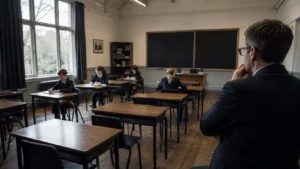
Independent schools are dealing not only with taxation but also with lower pupil numbers.
Department for Education statistics show that the number of pupils in independent schools in England fell by 3.8% to approximately 560,300 in January 2026. This was the second consecutive annual decline. Independent school pupils represented 6.3% of the school population in England.
It would be inaccurate to attribute the entire decline to VAT. The Department for Education has also identified demographic changes, including smaller age cohorts moving into primary education, as a factor affecting pupil numbers across the school system.
Nevertheless, lower enrolment can create a difficult financial cycle. A school with fewer pupils has fewer fee-paying families across which to spread fixed costs such as buildings, safeguarding, maintenance and senior staff salaries.
Increasing fees may protect short-term income, but it can also make the school unaffordable for more families.
The financial effect is unlikely to be distributed evenly. Smaller schools, schools with limited reserves and lower-fee institutions may have less room to absorb additional costs than larger schools with substantial assets, waiting lists or international demand.
What Is the Government’s Position?
The government introduced the tax changes as part of a wider policy to raise additional revenue for public services and state education.
At the Autumn Budget 2024, the Treasury estimated that VAT on private school fees and the removal of business rates relief would together raise approximately £1.8 billion a year by 2029–30.
The government has maintained that individual schools remain responsible for deciding what they charge. Fee increases can reflect taxation, but they may also include wages, pensions, food, energy, maintenance, insurance and investment in facilities.
The Independent Schools Council takes a different view of the pressure facing the sector. It argues that the combined tax and employment changes are contributing to difficult financial conditions, particularly for smaller and lower-fee schools.
Both positions should be distinguished clearly: the tax rules and commencement dates are confirmed facts, while predictions about school closures, pupil movements and long-term revenue remain estimates that can change as more evidence becomes available.
Can Families Receive Help With Fees?

Fee assistance remains available at many independent schools, although eligibility and award values vary considerably.
The Independent Schools Council says more than one-third of pupils at its member schools receive some form of fee assistance. Its 2026 sector information reports £549 million in means-tested support.
Assistance can include:
- Means-tested bursaries based on household finances.
- Scholarships linked to academic, sporting, musical or other achievement.
- Sibling discounts.
- Staff discounts.
- Hardship support for families experiencing an unexpected change in circumstances.
A scholarship does not always produce a substantial reduction in fees. Bursaries are normally means-tested and may be reviewed annually.
Families should also establish whether an award covers only tuition or extends to boarding, meals, transport, trips, examinations and other compulsory charges.
What Should Parents Check Before Accepting a Fee Increase?
Parents receiving a revised fee schedule should request a complete explanation of the charges rather than concentrating only on the headline percentage.
Useful questions include:
- Does the quoted total include VAT?
- Which services are included in the standard fee?
- Are meals, transport, examinations or activities charged separately?
- Is another increase planned during the academic year?
- What notice is required before withdrawing a pupil?
- Are bursaries, hardship funds or revised payment plans available?
- Will deposits be returned, transferred or retained if a pupil leaves?
The parent-school contract is particularly important. Withdrawal deadlines, notice periods and payment obligations are normally governed by the contractual terms agreed when the place was accepted.
Removing a child without the required notice can result in an additional term’s fees becoming payable.
Families should not cancel payments or withdraw a pupil solely on the basis of general online information. Contractual disputes may require advice from a suitably qualified legal professional.
Will Independent School Fees Continue to Rise?

Further increases are possible, but there is no single rate that can be predicted for the whole sector.
Schools will need to balance staff costs, taxation and building expenses against affordability and the risk of losing pupils. Some may continue raising headline fees, while others may introduce lower-cost day arrangements, flexi-boarding, narrower service packages or greater bursary support.
The reported 4.5% average rise for September 2026 indicates that the financial consequences of the recent tax changes are continuing beyond their first year. It does not mean every school will increase its fees by 4.5%, nor does it establish that taxation is the only reason for each increase.
For parents, the most reliable information remains the school’s current published fee schedule, contractual terms and written bursary policy.
Frequently Asked Questions
Did VAT automatically increase private school fees by 20%?
No. VAT is charged at 20%, but schools can reclaim eligible input VAT, absorb part of the cost, reduce their underlying fees or alter expenditure. The final increase paid by parents depends on each school’s decisions and financial position.
Do the business rates changes apply across the UK?
The withdrawal of charitable business rates relief described in the 2025 legislation applies to eligible private schools in England. Non-domestic rates are devolved, so arrangements differ in Scotland, Wales and Northern Ireland.
Is the 4.5% increase an official government figure?
No. It is based on a media analysis of fees at 424 schools. It is useful as an indication of current pricing trends but is not an official national fee index.
Can parents challenge an increase?
Parents can ask the school to explain the increase and check whether it complies with the parent contract. Whether a fee can be challenged legally depends on the contractual wording and the individual circumstances.
Are bursaries still available after the tax changes?
Yes. Many schools continue to provide means-tested bursaries and other assistance, but availability, eligibility and the amount awarded vary by institution.
What is your reaction?