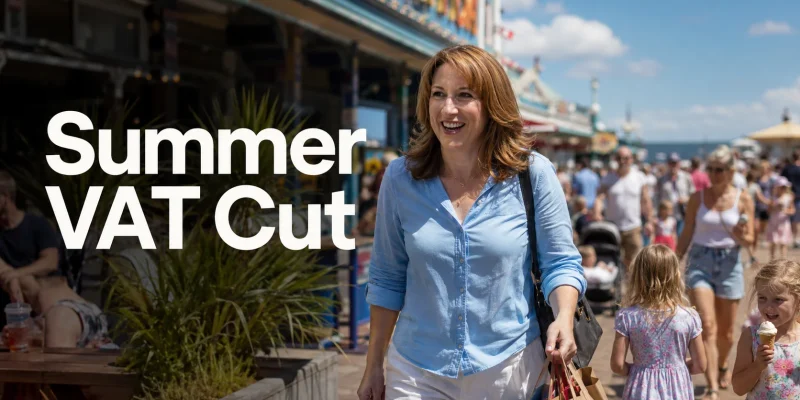
Rachel Reeves Summer VAT Cut to Help Families During School Holidays

Rachel Reeves has announced a temporary summer VAT cut that will reduce VAT from 20% to 5% on selected family attractions, children’s entertainment tickets, and kids’ meals during the UK school holidays.
The measure is part of the government’s “Great British Summer Savings” scheme, designed to ease cost of living pressures on households while supporting leisure, tourism, and hospitality businesses across Britain.
The temporary reduction will run from 25 June until 1 September and aims to make family outings more affordable during one of the most expensive periods of the year for parents.
Key Takeaways:
- VAT will be reduced from 20% to 5% on selected family attractions
- Theme parks, zoos, cinemas, and kids’ meals are included
- The scheme will run from 25 June to 1 September
- Free bus travel for under 16s will be available in England during August
- Fuel duty increases have been delayed as part of wider support measures
- The government plans to fund the scheme through higher taxes on global oil firms
- The policy aims to support both UK families and hospitality businesses
What Is Rachel Reeves’ Summer VAT Cut and Why Has It Been Introduced?

Rachel Reeves has announced a temporary summer VAT cut that will reduce VAT from 20% to 5% on selected family attractions, children’s entertainment, and kids’ meals during the school holidays.
The measure is part of a wider “Great British Summer Savings” scheme designed to help UK households cope with rising living costs and the economic pressures linked to global instability, including the ongoing Iran conflict.
The temporary VAT reduction will run from 25 June until 1 September and aims to make family activities more affordable during one of the most expensive times of the year for parents.
Alongside the tax cut, the government has also confirmed free bus travel for under-16s in England during August, delayed fuel duty increases, and reduced import tariffs on selected foods.
The policy is expected to provide immediate financial relief for families struggling with higher food, fuel, childcare, and entertainment costs.
According to Treasury estimates, the VAT reduction could save families meaningful amounts on days out and summer activities if businesses pass on the savings directly to customers.
For many households, the announcement comes at a time when managing summer holiday expenses has become increasingly difficult due to inflation and rising utility bills.
Which Attractions and Activities Will Benefit From the 5% VAT Reduction?
The temporary VAT cut applies to a wide range of attractions and activities aimed at families and children across the UK.
Family Attractions Included in the VAT Cut
Several popular destinations and entertainment venues will benefit from the lower VAT rate, including:
- Theme parks
- Zoos
- Museums
- Wildlife parks
- Soft-play centres
- Family visitor attractions
The government hopes these reductions will encourage families to continue spending during the summer while supporting businesses that rely heavily on school holiday visitors.
Entertainment and Food Discounts for Children
The VAT reduction will also cover:
- Children’s cinema tickets
- Kids’ theatre tickets
- Children’s meals in restaurants
- Selected family entertainment packages
According to Treasury examples, families could save around £17 on a wildlife park visit or approximately £1.50 on a child’s cinema ticket if businesses fully pass on the VAT savings.
A hospitality manager from Manchester explained how families are already reacting positively to the announcement:
“We’ve seen many parents cutting back on family outings over the last year. Even small reductions can encourage people to book activities again during the holidays.”
The inclusion of restaurants and entertainment venues could also provide a welcome boost to the hospitality industry after a challenging period of reduced consumer spending.
How Will the Rachel Reeves VAT Cut Help UK Families During School Holidays?
The school summer holidays often place significant financial pressure on families across Britain. Parents face increased spending on childcare, food, travel, and activities while children are away from school.
By reducing VAT on selected family attractions and meals, the government hopes to ease some of these pressures and make summer activities more accessible.
For lower and middle-income households, even modest savings can make a noticeable difference. Families who previously avoided costly outings may now feel more able to plan affordable experiences for children during the six-week break.
The measure could also support parents who have struggled with inflation over the past two years. Food prices, transport costs, and household bills have remained high despite recent improvements in economic growth figures.
A family budgeting adviser described the challenge many households currently face:
“Parents often feel guilty when they cannot afford regular summer outings for their children. Even temporary savings on attractions and meals can help families feel less restricted during the holidays.”
While the VAT reduction is temporary, it signals a broader attempt by the government to provide targeted cost-of-living support without introducing permanent tax cuts.
What Other Cost of Living Support Measures Has Rachel Reeves Announced?
Alongside the summer VAT cut, Rachel Reeves has introduced several additional measures intended to reduce financial pressure on households.
Free Bus Travel for Under-16s
Children under the age of 16 in England will receive free bus travel throughout August. The government believes this will reduce transport expenses for families during the holiday period and encourage domestic travel.
The scheme could particularly help lower-income families who rely heavily on public transport for day trips and summer activities.
Fuel Duty Delay and Food Import Tariff Suspension
The Chancellor has also confirmed that planned fuel duty increases scheduled for later in the year will be delayed.
In addition, import tariffs on selected food products, including chocolate and biscuits, will be temporarily suspended. Reeves stated that supermarkets are expected to pass these savings directly to consumers.
The government had reportedly considered a wider supermarket price control initiative, but retailers rejected the proposal.
Increased Tax-Free Mileage Allowance
Workers who drive for work purposes will also benefit from an increase in the tax-free mileage allowance.
This measure is expected to support:
| Worker Type | Potential Benefit |
| Care workers | Lower travel-related expenses |
| Tradespeople | Improved reimbursement rates |
| Delivery workers | Reduced financial strain |
| Mobile support staff | Better compensation for fuel use |
The government argues that these combined measures form part of a wider strategy to support working households during a period of economic uncertainty.
How Will the Government Pay for the Summer VAT Cut Scheme?
The Treasury has confirmed that part of the funding for the “Great British Summer Savings” package will come from changes to taxation rules affecting multinational oil and gas firms operating in the UK.
The government plans to tighten the “foreign branch profits” regime, which currently allows some companies to structure overseas operations in ways that reduce UK corporation tax liabilities.
Rachel Reeves stated that businesses benefiting from global energy price increases should contribute more fairly toward supporting households facing financial pressure.
The government expects these tax changes to generate hundreds of millions of pounds annually once introduced in September.
Critics, however, argue that multinational corporations may still identify alternative methods to minimise tax exposure unless broader reforms are introduced.
Could the Summer VAT Cut Boost the UK Economy and Consumer Spending?
The temporary VAT reduction could provide short-term support for sectors heavily dependent on summer consumer spending.
Tourism, hospitality, and family entertainment businesses may experience increased visitor numbers as households take advantage of lower prices during the school holidays.
Many attractions continue to face rising operational costs linked to energy prices, staffing shortages, and inflation. Increased customer demand during the summer period could provide valuable financial support for these businesses.
Economists suggest the policy may also improve consumer confidence at a time when many households remain cautious about discretionary spending.
A tourism operator from Yorkshire highlighted the potential impact on regional businesses:
“Families have been watching every pound carefully. If people feel they can save money on tickets and meals, they’re more likely to plan local trips rather than staying home.”
However, the broader economic impact may depend on whether businesses fully transfer VAT savings to customers rather than absorbing the reductions to offset operational expenses.
What Criticism and Concerns Have Been Raised About Rachel Reeves’ VAT Plans?
Despite the positive response from many families and businesses, some economists and political commentators have questioned whether the temporary VAT cut goes far enough to address wider cost-of-living concerns.
Critics argue that rising energy bills, inflation, and housing costs continue to place severe pressure on households across Britain.
Trade unions have also warned that the economic consequences of global instability could worsen later in the year, particularly if energy prices continue increasing.
There are additional concerns regarding the temporary nature of the scheme. Some experts believe short-term tax reductions may provide immediate relief but fail to address deeper structural economic challenges.
Industry representatives from the energy sector have meanwhile raised concerns about increased taxation on oil and gas firms, arguing that additional financial pressure could affect investment decisions.
Questions have also been raised over whether all businesses will pass on the full VAT savings to consumers, as the government expects.
What Does the VAT Cut Mean for Businesses, Attractions and Restaurants?
For businesses operating in the leisure and hospitality industries, the VAT reduction presents both opportunities and operational challenges.
Family attractions and restaurants may experience increased demand during the school holidays as customers search for more affordable entertainment options.
Businesses that clearly advertise reduced prices could attract more visitors and strengthen customer loyalty during the busy summer period.
At the same time, companies must decide how much of the VAT reduction they can realistically pass on while still managing rising wages, energy costs, and supply expenses.
Restaurants and entertainment venues may also face pressure from consumers expecting immediate price reductions once the scheme begins.
Some operators believe the temporary policy could help restore confidence among households that have reduced non-essential spending in recent months.
Could More Temporary UK Tax Relief Measures Be Introduced Later This Year?
Rachel Reeves has indicated that future support measures may remain “targeted and temporary” rather than introducing broad permanent tax cuts.
Attention is already turning toward winter, when household energy bills are expected to rise again following changes to the energy price cap.
While the government has not confirmed additional support packages, many analysts believe further intervention could become necessary if inflationary pressures continue.
Future measures may focus on:
- Energy bill support
- Transport cost relief
- Household tax reductions
- Food affordability initiatives
- Additional targeted welfare assistance
Political pressure is likely to increase if living costs continue rising into the colder months.
Conclusion
Rachel Reeves’ summer VAT cut represents a targeted attempt to reduce financial pressure on families during one of the most expensive periods of the year.
By lowering VAT to 5% on attractions, children’s entertainment, and kids’ meals, the government hopes to make family activities more affordable while supporting businesses across the hospitality and tourism sectors.
Additional measures, including free bus travel for under-16s and delayed fuel duty increases, form part of a broader strategy aimed at easing cost-of-living concerns.
Although questions remain about the long-term impact of temporary tax relief measures, many households are likely to welcome any reduction in summer expenses as inflation and household bills remain high.
The success of the scheme may ultimately depend on whether businesses fully pass the savings on to consumers and whether further support measures are introduced later in the year.
FAQs About Rachel Reeves Summer VAT Cut
When will the 5% VAT cut officially begin in the UK?
The temporary VAT reduction will begin on 25 June and remain in place until 1 September during the school holiday period.
Which family attractions are included in the VAT reduction scheme?
Theme parks, zoos, museums, wildlife parks, soft-play centres, cinemas, theatres, and selected family entertainment venues are included.
Will restaurants automatically reduce children’s meal prices?
The government expects businesses to pass on the VAT savings, although individual pricing decisions will depend on each restaurant or venue.
How much money could families realistically save this summer?
Treasury estimates suggest families could save around £17 on some attractions and smaller amounts on cinema tickets and meals.
Why is the government targeting oil and gas firms for extra tax revenue?
The government argues that global energy firms benefiting from higher prices should contribute more toward supporting households during economic uncertainty.
Are free bus rides available across the whole UK?
The free bus travel scheme for under-16s currently applies only to England during August.
Could the government extend the VAT cut beyond summer holidays?
There is currently no confirmation of an extension, although future temporary support measures have not been ruled out.
What is your reaction?