
The Importance of IT Asset Disposition for Businesses

In today’s digital economy, businesses rely heavily on IT equipment. From laptops and servers to mobile devices and storage systems, technology forms the backbone of daily operations. However, what happens when these assets reach the end of their lifecycle is often overlooked.
This is where IT Asset Disposition (ITAD) becomes essential. ITAD refers to the process of safely, responsibly, and efficiently disposing of or repurposing obsolete IT equipment.
For organisations, having a structured ITAD strategy is no longer optional, it is a critical component of risk management, sustainability, and cost control.
Why Businesses Cannot Ignore IT Asset Disposition Today?
Protecting Sensitive Data
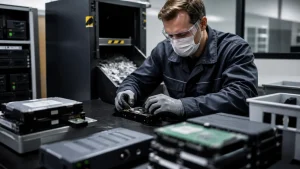
One of the primary reasons ITAD is important for businesses is data security. Outdated devices often still contain sensitive company information, including customer data, financial records, and intellectual property.
Simply discarding or reselling equipment without proper data sanitisation can lead to severe data breaches.
A professional ITAD process ensures that all data is securely erased or destroyed in accordance with recognised standards. This significantly reduces the risk of cyber incidents and helps businesses maintain trust with their customers and partners.
In sectors where data protection is heavily regulated, such as finance and healthcare, proper ITAD practices are essential to remain compliant.
Supporting Sustainability and Environmental Responsibility
Sustainability has become a key priority for modern organisations. Improper disposal of IT equipment contributes to the growing problem of electronic waste (e-waste), which can harm the environment due to hazardous materials.
ITAD services focus on environmentally responsible practices, such as recycling, refurbishing, and reusing equipment wherever possible. This supports the transition to a circular economy, where resources are kept in use for as long as possible.
By adopting ITAD, businesses not only reduce their environmental footprint but also demonstrate corporate social responsibility, something increasingly valued by customers, investors, and stakeholders.
Ensuring Regulatory Compliance

Businesses must comply with a wide range of regulations related to data protection and environmental standards. Failure to properly dispose of IT assets can result in fines, legal consequences, and reputational damage.
An effective ITAD strategy helps organisations meet compliance requirements by ensuring that all processes, from data destruction to recycling, are documented and carried out according to industry standards.
This provides an audit trail and peace of mind that all legal obligations are being met.
Cost Efficiency and Value Recovery
Another important benefit of ITAD is the potential for cost savings. Many organisations assume that end-of-life IT equipment has no value, but this is often not the case. Through refurbishment and resale, businesses can recover part of their initial investment.
A structured ITAD programme identifies which assets can be reused, resold, or recycled, maximising their residual value. This not only offsets the cost of new equipment but also contributes to more efficient budget management.
In addition, outsourcing ITAD can reduce the internal resources needed to manage disposal processes.
Enhancing Operational Efficiency
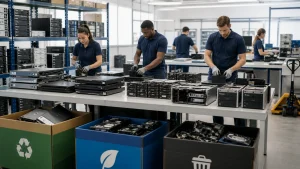
Managing outdated IT equipment internally can be time-consuming and complex. Without a clear strategy, organisations risk inefficient processes, storage issues, and security gaps.
By implementing a professional ITAD solution, businesses can streamline their asset lifecycle management. This ensures that equipment is decommissioned, processed, and replaced in a structured manner.
The result is improved operational efficiency and reduced administrative burden on internal teams.
Building a Future-Proof IT Strategy
As technology continues to evolve rapidly, businesses must adopt forward-thinking strategies to remain competitive. ITAD plays a crucial role in this by enabling organisations to manage the full lifecycle of their IT assets effectively.
A well-planned approach to IT Asset Disposition helps businesses stay agile, secure, and sustainable. It ensures that outdated equipment does not become a liability but instead contributes to broader organisational goals.
ITAD: An Essential Practice

IT Asset Disposition is far more than simply disposing of old equipment. It is a strategic process that protects sensitive data, supports environmental sustainability, ensures regulatory compliance, and delivers financial benefits.
For businesses operating in an increasingly digital and regulated world, ITAD is an essential practice that should not be overlooked.
By investing in a robust ITAD strategy, organisations can reduce risks, improve efficiency, and contribute to a more sustainable future. All while maintaining control over their valuable IT assets.
What is your reaction?