Shropshire Council Tax Hike: Another Above-Limit Rise Likely as Financial Crisis Deepens

Shropshire residents could face another significant Shropshire council tax hike next year as the local authority attempts to recover from what an independent review has described as an extremely poor financial position.
Council leader Heather Kidd has indicated that an increase above the normal government threshold may again be needed for the 2027/28 financial year.
The warning comes only months after Shropshire Council approved an 8.99% council tax increase for 2026/27, following special permission from the government.
The council says higher social care costs, historic council tax freezes, previous savings plans and weaknesses in financial management have contributed to a funding crisis that could take years to resolve.
Why Could Shropshire Council Tax Rise Again?
Shropshire Council normally cannot increase council tax beyond the standard threshold without holding a local referendum. For 2026/27, that normal limit was 4.99%.
However, the government granted the authority exceptional permission to add another four percentage points, allowing the council to impose an 8.99% increase from 1 April 2026.
The rise is expected to generate approximately £8.8 million in additional annual income and reduce the amount the council needs to borrow.
Another increase of a similar scale has not yet been formally approved for 2027/28. However, Kidd has warned that an above-threshold increase may be required as part of efforts to bring the council’s finances under control.
She said she would be resistant to increasing bills by significantly more, but argued that another substantial rise could be necessary to help the authority balance its books while delivering required savings.
Any exceptional increase would ultimately depend on the council’s budget process and, where necessary, permission from central government.
How Serious Are Shropshire Council’s Financial Problems?
The scale of the problem was highlighted by an independent external assurance review undertaken by the Chartered Institute of Public Finance and Accountancy (CIPFA) at the government’s request.
Its report states that Shropshire Council is in “extremely poor financial health” and faces a substantial structural difference between expected spending and available income.
The council’s February 2026 medium-term financial plan forecast a gap of around £120.718 million for 2026/27, potentially increasing to £180.318 million by 2030/31 if the underlying problems are not addressed.
CIPFA also warned that the council does not have sufficient reserves to absorb gaps of this size.
Exceptional Financial Support can help the council balance its budget in the short term, but it does not eliminate the underlying deficit.
Crucially, the support largely involves borrowing rather than a straightforward government grant, meaning money has to be repaid and creates additional financing costs in future years.
What Did the CIPFA Review Find?
CIPFA identified several factors behind the financial deterioration.
One of the biggest pressures has been the rising cost of adult and children’s social care. Demand for long-term adult support has increased, while children’s services have experienced growing pressures, particularly involving children requiring residential care.
However, the review did not attribute the problem solely to rising demand.
It also identified:
- Weak financial management in previous years.
- Unrealistic budgets that contributed to repeated overspending.
- Savings targets without sufficiently detailed delivery plans.
- Declining reserves used to cover previous overspends.
- Gaps in financial skills and capacity.
- Weak internal financial controls.
- A major workforce restructuring that removed around 217 posts without a sufficiently clear operating model for the future.
CIPFA said £42.15 million of the £59.876 million of savings planned for 2025/26 were forecast not to be delivered at period 11, demonstrating the scale of the challenge facing the authority.
Did Previous Council Tax Freezes Contribute to the Problem?
Another issue highlighted by both the council and CIPFA is the decision to freeze council tax for several consecutive years between 2010 and 2016.
Although those freezes reduced pressure on households at the time, they also permanently reduced the council’s future tax base because later percentage increases started from a lower figure.
Shropshire Council has said that the six-year freeze contributed to a substantial long-term loss of revenue and compounded the financial pressures now facing the authority.
This issue has become politically contentious, with the current Liberal Democrat administration linking part of today’s financial crisis to decisions made under previous Conservative leadership.
However, Conservatives have argued that the financial problems should also be viewed in the wider context of sharply rising social care costs and funding challenges affecting councils across the country.
How Much Is Council Tax Already Increasing in Shropshire?
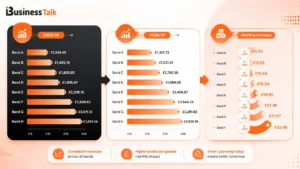
The 8.99% increase approved for 2026/27 affects the Shropshire Council portion of household bills.
| Council Tax Band | 2025/26 | 2026/27 | Monthly Increase |
| Band A | £1,204.45 | £1,312.73 | £10.83 |
| Band B | £1,405.19 | £1,531.51 | £12.63 |
| Band C | £1,605.93 | £1,750.30 | £14.44 |
| Band D | £1,806.67 | £1,969.09 | £16.24 |
| Band E | £2,208.15 | £2,406.67 | £19.85 |
| Band F | £2,609.63 | £2,844.24 | £23.46 |
| Band G | £3,011.12 | £3,281.82 | £27.07 |
| Band H | £3,613.34 | £3,938.18 | £32.48 |
These figures cover Shropshire Council’s element only. Actual household bills can be higher because they also include charges for police, fire services and individual town or parish councils.
For a Band D property, for example, the Shropshire Council element increased by about £162.42 a year, or approximately £16.24 a month.
What Does Exceptional Financial Support Mean for Shropshire?
Shropshire is relying on Exceptional Financial Support, or EFS, to help it balance its budget.
The council was granted support worth £71.4 million for 2025/26 and approximately £121 million for 2026/27. Unlike ordinary grant funding, the support creates borrowing that must ultimately be financed by the authority.
CIPFA warned that each new tranche of support creates long-term repayment and interest obligations.
That means relying heavily on borrowing could make the financial position more difficult rather than solving the structural problem.
Reducing future reliance on EFS is therefore one of the reasons further council tax increases, asset sales and deeper expenditure reductions are being considered.
What Changes Has CIPFA Recommended?
The independent review made 22 recommendations covering financial management, service transformation, governance, leadership and organisational culture.
Among the most significant recommendations is the creation of a detailed financial recovery strategy setting out how the council will close its remaining budget gap.
CIPFA also said the authority should consider more substantial structural changes, including:
- Restructuring services to reduce operating costs.
- Greater digitisation.
- Sharing services with other councils.
- Potential outsourcing where appropriate.
- Scaling back activities the council is not legally required to provide.
- Accelerating the disposal of surplus property and other assets.
The report specifically recommends that the council seek to sell its former Shirehall headquarters as soon as possible rather than delaying disposal while exploring potentially costly redevelopment proposals. It also calls for a wider asset disposal strategy to be developed.
Importantly, CIPFA said that before asking for another council tax increase above the normal threshold, Shropshire should demonstrate that it has properly considered opportunities to reduce expenditure and transform services.
Has Shropshire Council Started to Improve?
Despite its severe criticism of previous financial practices, the CIPFA report also acknowledged progress following changes to the authority’s leadership.
A major leadership change took place in September 2025, while a new chief executive took office in May 2026.
The council has since introduced an Improvement Plan, tighter spending controls, changes to financial governance and additional oversight of its transformation programme. CIPFA described the Improvement Plan as a positive step towards changing the council’s culture.
Shropshire Council says its focus is now on improving financial discipline, creating more realistic budgets and reducing its dependence on government-backed borrowing.
What Have Political Groups Said?
The financial crisis has triggered sharp political disagreement over responsibility for Shropshire’s current position.
Reform UK group leader Dawn Husemann has blamed years of Conservative financial management, arguing that residents could be left paying for borrowing over many years.
Conservative group leader Dan Thomas has defended his party’s record, saying previous administrations raised council tax when necessary and achieved substantial savings.
Conservatives have also emphasised that escalating social care costs are placing severe pressure on councils controlled by different political parties across England.
The CIPFA findings suggest that there is no single cause. Rising social care expenditure is identified as a major structural pressure, but the report also explicitly points to inadequate financial management, unrealistic savings plans and the lasting effect of earlier council tax freezes.
Will Shropshire Council Tax Definitely Rise Above the Limit in 2027?
No final 2027/28 council tax rate has yet been approved.
Heather Kidd’s comments indicate that another above-normal increase is a serious possibility, but the eventual figure will depend on the council’s financial recovery work, savings plans, government funding, borrowing requirements and decisions taken during the next budget-setting process.
CIPFA has specifically recommended that the council quantify its transformation plans before deciding how large any further exceptional council tax increase needs to be.
That means residents are likely to receive a clearer indication of the potential Shropshire council tax hike for 2027/28 once the authority develops its financial recovery strategy and begins preparing its next budget.
What Happens Next?
The coming months will be critical for Shropshire Council.
The authority needs to translate its Improvement Plan into measurable savings, accelerate potential asset sales, restructure services and demonstrate that it can progressively reduce reliance on exceptional borrowing.
The government has already issued Shropshire Council with a Best Value Notice, reflecting concerns about its financial position, governance, leadership capacity and organisational culture.
The council is expected to demonstrate continuing progress while engaging regularly with the government and its Improvement Board.
For Shropshire households, however, the immediate concern is straightforward: after an unusually large 8.99% increase in April 2026, another above-limit council tax rise could follow in 2027.
Whether it reaches a similar level will depend on how much progress the council can make in reducing expenditure and closing a financial gap that remains exceptionally large.
FAQs
Why is Shropshire Council under financial pressure?
Rising social care costs, weak financial management, undelivered savings and the long-term impact of earlier council tax freezes have all contributed.
How much did Shropshire Council increase council tax in 2026?
The council approved an 8.99% increase for 2026/27, which was four percentage points above the usual government threshold.
Could residents face another large increase in 2027?
Yes. Council leader Heather Kidd has indicated that another above-limit rise may be necessary, although no final 2027/28 rate has been agreed.
What is Shropshire Council doing to reduce its funding gap?
The authority is considering spending reductions, service transformation, asset sales, shared services and tighter financial controls.
Does the proposed increase affect every household by the same amount?
No. The amount paid depends on the property’s council tax band, while total bills can also include police, fire and parish or town council charges.
What is your reaction?