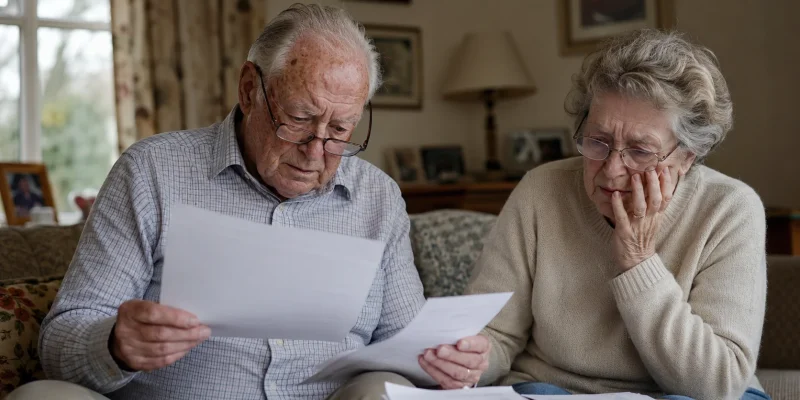
Pre-2016 Pensioner Tax Break Exclusion to Impact Over-75s Most

Millions of pensioners under the pre-2016 State Pension system are expected to miss out on the Government’s planned pension tax exemption from 2027, with over-75s likely to be affected the most.
The proposed measure is designed to stop some retirees from paying tax as the State Pension rises above the frozen personal allowance, but experts warn the majority of older pensioners will not qualify because of how their pension income is structured.
Key Takeaways:
- Pre-2016 pensioners are unlikely to benefit from the new tax exemption
- Over-75s may face the biggest financial impact
- The triple lock and frozen tax thresholds are driving the issue
- Pensioners with identical incomes could be treated differently
- Small private pensions may remove exemption eligibility
- Experts warn the policy could create long-term fairness concerns
- Future governments may face rising costs linked to the exemption
Why Are Millions of UK Pensioners Expected to Miss the New Tax Break?
The Government’s proposed pension tax exemption was introduced as a way to protect low-income pensioners from paying tax on the state pension once it rises above the personal allowance.
However, new analysis from pension consultancy LCP suggests only around 700,000 pensioners out of 13.2 million are likely to qualify.
Overview of the Government’s Proposed Pension Tax Exemption
The policy is expected to begin in the 2027/28 tax year. It aims to prevent pensioners who rely solely on the State Pension from receiving HMRC tax bills.
At present, the personal allowance remains frozen at £12,570 until 2030. Meanwhile, the triple lock continues increasing the State Pension every year based on inflation, average earnings growth, or 2.5% — whichever is highest.
As a result, the full new State Pension is projected to exceed the tax-free allowance from April 2027.
Why Only Around 700,000 Pensioners May Qualify?
According to LCP’s analysis:
- Around 7.7 million pensioners receiving the old State Pension system are unlikely to qualify
- Many pensioners on the new State Pension also miss out because they receive additional income
- Pensioners living overseas may also be excluded
- Small workplace pensions or savings income could remove eligibility entirely
This leaves only a small percentage of retirees expected to benefit from the exemption.
How the Frozen Personal Allowance is Driving the Issue?
The tax threshold freeze has become one of the biggest drivers behind the problem. While wages and pensions continue increasing, the tax-free allowance has remained unchanged for years.
This means pensioners who previously paid no tax could gradually become taxpayers despite receiving relatively modest retirement incomes.
A retired financial adviser described the concern clearly:
“Many pensioners assume the State Pension is automatically tax-free because it always used to sit comfortably below the allowance. What people are now realising is that frozen thresholds are quietly changing that position year by year.”
How Will the Triple Lock Push Pensioners Into Paying Tax?
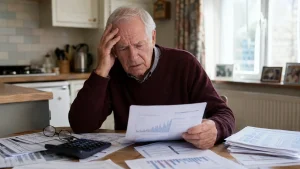
The triple lock was introduced to protect pensioners’ incomes from inflation and ensure retirement payments rise steadily over time.
However, rising State Pension payments combined with frozen tax thresholds are now creating unexpected tax consequences.
Understanding the State Pension Triple Lock
Under the triple lock, the State Pension increases annually by the highest of:
- Inflation
- Average earnings growth
- 2.5%
This policy has significantly increased pension payments over the past decade.
Why the Personal Allowance Freeze Matters?
The personal allowance determines how much income can be earned before income tax applies.
Because the threshold is frozen until 2030, more pensioners are expected to cross into taxable income territory even if their financial circumstances have not improved substantially in real terms.
Estimated HMRC Tax Bills From 2027 Onwards
Analysts estimate pensioners relying solely on the full new State Pension could face the following tax bills:
| Tax Year | Estimated Tax Bill |
| 2027/28 | £88 |
| 2028/29 | £153 |
| 2029/30 | £220 |
While the amounts may appear modest initially, experts warn the costs could rise significantly over time.
Why Are Pre-2016 Pensioners Excluded From the Tax Exemption?
One of the most controversial aspects of the proposal is the apparent exclusion of pensioners who reached State Pension age before April 6, 2016.
Differences Between the Old and New State Pension Systems
The UK currently operates under two pension systems:
- The old basic State Pension system
- The new State Pension introduced in April 2016
People who reached retirement age before April 2016 remain under the older structure, while younger retirees receive the new State Pension.
How SERPS and State Second Pension Affect Eligibility?
Many older pensioners receive additional income through:
- SERPS (State Earnings-Related Pension Scheme)
- State Second Pension
- Pension increments
Under the proposed exemption rules, these additions may automatically disqualify retirees from receiving the tax break.
Why Over-75 Pensioners Are Likely to Lose Out Most?
Many over-75s fall into the pre-2016 pension category. Although their total retirement income may be similar to pensioners on the newer system, the structure of their pension payments differs.
This creates situations where two pensioners with almost identical incomes are treated differently for tax purposes.
For example:
- A retiree receiving only the full new State Pension could qualify for the exemption
- Another pensioner receiving the same amount through the old pension plus SERPS may still receive a tax bill
Former pensions minister Steve Webb highlighted the issue directly. He explained:
“The proposed solution is deeply flawed. It discriminates against those on the old state pension system, even if they have identical income to someone on the new system.”
Could Pensioners With Identical Incomes Be Treated Differently?
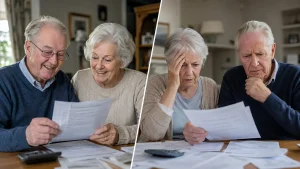
The proposed tax exemption has raised wider concerns about fairness within the pension system.
Experts say eligibility may depend less on how much money pensioners receive and more on how that income is classified.
This could create unusual financial inequalities between retirees with similar living standards.
For many pensioners, the distinction between old and new pension systems is not fully understood until tax issues arise.
A pensions consultant described the confusion from clients clearly:
“I regularly speak to retirees who are shocked to learn they may not qualify simply because part of their pension comes from SERPS. From their perspective, they’ve paid National Insurance for decades and cannot understand why two people on similar incomes are treated differently.”
Critics argue this “differential treatment” could become politically controversial as more pensioners begin facing tax demands.
Who Qualifies for the Basic State Pension in Britain?
Everyone eligible for the basic State Pension has now reached State Pension age.
To qualify for the old State Pension system, individuals generally need enough National Insurance qualifying years.
The old system applies to:
- Men born before 6 April 1951
- Women born before 6 April 1953
People born after those dates usually receive the new State Pension instead.
The distinction between the two systems now plays a major role in determining who may benefit from the proposed tax exemption.
Why Could Small Private Pensions Trigger Larger Tax Bills?
Another concern surrounding the proposal is the potential “cliff edge” effect.
The “Cliff Edge” Problem Explained
Under current plans, receiving even a very small amount of additional taxable income could remove the entire exemption.
That means pensioners earning just £1 outside the State Pension may lose the full tax protection.
How £1 of Extra Income Could Remove the Exemption?
This creates situations where relatively modest savings or pension income may unexpectedly increase tax liabilities.
Retirees could unknowingly trigger larger tax bills by:
- Accessing a small pension pot
- Receiving savings interest
- Taking annuity payments
- Drawing workplace pension income
Pension Income Sources That May Affect Eligibility
Potentially affected income sources include:
- Workplace pensions
- Private pensions
- Savings interest
- Investment income
- Auto-enrolment pension schemes
Experts warn this could make retirement planning significantly more complicated for older households.
What Are Pension Experts and Former Ministers Warning About?
Pensions specialists believe the policy risks increasing complexity rather than simplifying the tax system.
Critics argue the exemption may only provide a temporary solution while creating new long-term financial pressures.
Analysts also warn future governments could struggle with the growing cost of maintaining the exemption as State Pension payments continue rising.
By 2029/30, the Government could potentially waive more than £200 annually for every qualifying pensioner.
Some experts believe the policy may eventually become politically difficult to reverse, similar to ongoing debates surrounding the triple lock itself.
Could the Pension Tax Break Become Expensive for Future Governments?

The longer-term financial implications are becoming a major concern among economists and pensions analysts.
Rising Long-term Taxpayer Costs
As the State Pension increases further above the personal allowance, the amount of tax being written off would rise every year.
Even if only a small number of pensioners qualify initially, future costs could grow steadily.
Why the exemption may become politically difficult to reverse
Once introduced, removing pension tax protections can become politically sensitive.
Governments may face pressure to expand the exemption further if more retirees begin paying tax on modest incomes.
Comparisons With the Triple Lock Policy Debate
The situation mirrors wider concerns around the triple lock itself, which has become increasingly expensive while remaining politically popular.
Some analysts believe pension taxation may become one of the biggest retirement policy debates of the next decade.
Would Increasing the Personal Allowance Be a Fairer Solution?
Some experts argue broader reforms may provide a fairer and simpler alternative.
One suggestion involves increasing the personal allowance specifically for pensioners so the full State Pension remains below the tax threshold.
Another option would involve writing off small HMRC bills for all pensioners regardless of pension type.
Supporters say these alternatives could reduce unfairness between old and new pension systems while avoiding some of the cliff-edge problems.
However, analysts estimate a broader pensioner allowance could cost the Treasury more than £2 billion annually by the end of the decade.
As a result, ministers may face difficult decisions balancing fairness, affordability, and political pressure.
What Does the Pre-2016 Pensioner Tax Break Exclusion Mean for Over-75s?
The proposed tax exemption highlights growing concerns around fairness within Britain’s retirement system.
For many over-75 pensioners under the pre-2016 pension structure, the policy may offer little or no financial benefit despite rising living costs and increasing pressure on retirement incomes.
The issue also demonstrates how frozen tax thresholds can quietly reshape pension taxation over time.
Retirees approaching or already in later retirement may need to review their pension arrangements carefully, particularly if they receive additional income from workplace pensions, savings, or older state pension schemes.
With the rules expected to take effect from 2027, pension taxation is likely to remain a major political and financial issue in the years ahead.
Conclusion
The pre-2016 pensioner tax break exclusion is expected to affect millions of older retirees, particularly over-75s who remain under the old State Pension system.
While the Government’s proposed exemption aims to protect some pensioners from paying tax on the State Pension, experts argue the policy may create unfair outcomes between retirees with similar incomes.
The combination of the triple lock and frozen personal allowances means more pensioners could face HMRC tax bills in the coming years.
However, current eligibility rules suggest only a small proportion of retirees will actually benefit from the planned exemption.
As debate continues around pension fairness, tax thresholds, and retirement affordability, many pensioners will be watching closely to see whether broader reforms emerge before the changes begin in 2027.
FAQs
What is the pre-2016 pensioner tax break exclusion?
The term refers to concerns that pensioners under the old State Pension system may not qualify for the Government’s proposed tax exemption due to how their pension income is structured.
Why are over-75 pensioners affected the most?
Many over-75s receive pensions under the pre-2016 system, which often includes SERPS or additional pension elements that may disqualify them from the exemption.
Will all State Pension recipients pay tax from 2027?
Not necessarily. Tax liability depends on total income and whether pension income exceeds the personal allowance threshold.
What is the difference between the old and new State Pension?
The old State Pension applied before April 2016 and included additional schemes like SERPS. The new State Pension introduced a simplified single-tier system.
Can a small private pension remove the exemption?
Under current proposals, even a small amount of additional taxable income could potentially remove eligibility for the tax break.
Could the Government change the pension tax rules again?
Yes. Pension taxation rules frequently evolve, and experts believe further reforms may be considered before or after 2027.
What is your reaction?