
Does PIP Change of Circumstances Mean Another Assessment?

Reporting a change of circumstances can trigger the Department for Work and Pensions (DWP) to review your Personal Independence Payment (PIP) claim, but another assessment is only arranged if more information is needed.
In some cases, the DWP can make a decision using your form and supporting evidence alone. Because your entire award is reviewed, the outcome could increase, decrease, stay the same, or end.
Understanding when to report a change and what evidence to provide can help you avoid delays and ensure your claim is assessed fairly.
Key Takeaways:
- Another assessment is possible but not automatic
- The DWP may make a paper-based decision if sufficient evidence is available
- reporting a change can result in your award increasing, decreasing, staying the same, or ending
- Report relevant changes promptly and provide clear evidence showing how your daily living or mobility needs have changed
What Does A PIP Change Of Circumstances Actually Mean?

A PIP change of circumstances is any change that could affect your entitlement, payment, or claim details.
Some changes relate to your health or support needs, while others are administrative updates that usually do not affect your award.
The most important factor is whether the change affects how you complete the daily living or mobility activities used to assess PIP eligibility.
| Type of Change | Typical Effect on Your Claim |
| Change in health or support needs | May trigger a review of your award |
| Hospital or care arrangements | May affect entitlement or payment |
| Personal detail updates | Usually update records only |
| Moving to Scotland | Requires a claim for Adult Disability Payment (ADP) |
Understanding this difference helps avoid confusion between routine updates and changes that require a full review.
Which PIP Changes Must You Report Straight Away?
Certain changes must be reported to the PIP enquiry line as soon as possible because they could affect your entitlement or payment.
Needs-Based Changes That May Affect Your PIP Award
You should report the following if they apply to you:
- You need more or less help with daily living or mobility activities
- Your health professional says your condition will last for a longer or shorter period than previously expected
- A medical professional has told you that you may have 12 months or less to live, as you may qualify under the Special Rules for End of Life
- You move into a hospital, hospice, nursing home, or care home
- You enter a residential school or college
- You enter foster care or become the responsibility of a local authority or health and social care trust
- You are imprisoned or held in detention
- You plan to leave the UK for more than four weeks
- Your immigration status changes and you are not a British or Irish citizen
- You start or stop receiving pensions or benefits from an EU country, Switzerland, Norway, Iceland, or Liechtenstein
- your husband, wife, civil partner, or a parent you depend on starts or stops receiving benefits from an EU country, Switzerland, Norway, Iceland, or Liechtenstein
If you move into a care home, you must also report:
- changes to how your care home fees are funded, such as NHS or local council funding, starting or ending
- changing from a temporary stay to becoming a permanent resident
- moving to another care home
- being admitted to the hospital while living in the care home
These changes may result in your PIP award increasing, decreasing, remaining the same, or ending, depending on your individual circumstances.
Admin Changes That Usually Do Not Affect Your PIP Amount
You should also contact the PIP enquiry line if:
- Your name changes
- Your address changes
- Your telephone number changes
- Your bank account changes
- Your GP or doctor changes
- The person acting on your behalf changes
These updates are important because they help the DWP keep your records accurate. In most situations, they do not affect your eligibility or the amount of PIP you receive.
If you move from England or Wales to Scotland, you should contact the PIP enquiry line and make a new claim for Adult Disability Payment (ADP).
It is equally important to provide accurate information. Failing to report relevant changes promptly or knowingly providing incorrect information could result in penalties, repayment of benefits, or legal action.
When Is Another PIP Assessment More Likely After Reporting A Change?
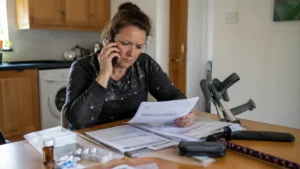
Whether another assessment is needed depends largely on how clearly your change has been explained and whether the available evidence allows the DWP to make a decision.
Worsening Conditions, New Support Needs, And Mobility Changes
A further assessment becomes more likely when your reported change could alter the points awarded for daily living or mobility activities.
Examples include:
- needing more supervision or prompting
- requiring physical assistance with everyday tasks
- starting to use mobility aids or other equipment
- experiencing increased pain, fatigue, breathlessness, or cognitive difficulties
- significant changes in mental health affecting daily activities
A new diagnosis alone does not automatically change your award. The DWP considers how the condition affects your ability to complete activities safely, repeatedly, to an acceptable standard, and within a reasonable time.
When Strong Evidence May Lead To A Paper-Based Review?
In some cases, another assessment is not necessary because the evidence already provides a clear picture of your current needs.
Recent medical reports, occupational therapy assessments, care plans, or specialist letters explaining your functional difficulties may allow the DWP to make a paper-based decision.
Keeping your evidence relevant and focused on how your condition affects everyday life is often more helpful than submitting large amounts of unrelated medical paperwork.
Why Fluctuating Conditions Can Need More Explanation?
Conditions that vary from day to day often require additional explanation because the DWP considers how you are affected on the majority of days.
For example, someone living with multiple sclerosis or fibromyalgia may have good and bad days.
Explaining how often symptoms occur, what support is needed, and whether activities can be completed safely and repeatedly provides a more accurate picture than simply saying the condition “comes and goes.”
A practical example is someone who can prepare a meal once but is unable to repeat the task later because of severe fatigue or pain.
Although they can complete the activity occasionally, they may still be considered unable to do it reliably under the PIP assessment rules.
What Happens After You Report A PIP Change Of Circumstances?
Once your change has been reported, the DWP begins reviewing your claim. The exact process varies, but it generally follows the same stages.
First, your change is recorded and considered alongside your existing claim.
You may then be asked to provide further information or complete a questionnaire explaining how your daily living or mobility needs have changed.
If additional evidence is required, the DWP may request medical information or ask you to submit supporting documents yourself.
The information is then reviewed to determine whether a paper-based decision is possible or whether another assessment is needed.
After the review is complete, you’ll receive a written decision explaining whether your award has increased, decreased, remained unchanged, or ended.
While your review is ongoing, many claimants continue receiving their existing payments, although individual circumstances can affect this.
It is important to respond promptly to any requests for information and keep copies of everything you submit for your own records.
How Can You Explain Your Change Clearly To The DWP?
Providing a clear explanation helps the DWP understand what has changed and whether it affects your entitlement. Focus on describing the practical impact rather than simply naming your condition or diagnosis.
Before-And-After Wording That Helps Decision Makers
A simple way to explain your situation is by comparing what you could do before with what you can do now.
| Before | After |
| Could prepare meals with occasional help | Need supervision most days because of pain and fatigue |
| Walked short distances without an aid | Now require a walking stick and regular rests |
| Remembered medication independently | Need prompting to avoid missing doses |
| Managed appointments alone | Need support due to anxiety or cognitive difficulties |
This approach clearly demonstrates how your needs have changed instead of simply stating that your condition has worsened.
Evidence That Supports Daily Living And Mobility Changes
The strongest evidence usually explains how your condition affects everyday activities rather than confirming a diagnosis alone.
Useful evidence may include:
- Recent consultant or GP letters describing functional limitations
- Occupational therapy or physiotherapy reports
- Care plans or support worker records
- Mental health assessments where relevant
- Falls assessments or mobility reports
- Medication information where side effects affect daily living
Try to ensure that your evidence is recent, consistent with your explanation, and directly related to your daily living or mobility difficulties.
Real-Life Example: Reporting A Worsening Mobility Problem
Imagine you previously walked to your local shop without assistance. Over recent months, worsening arthritis means you now need a walking stick, must stop several times because of pain, and cannot repeat the journey later the same day.
Rather than saying, “My arthritis has become worse,” you could explain how it affects your mobility, the support you now need, and the risks involved if you attempt the activity without assistance.
This gives the decision maker a much clearer understanding of your current circumstances.
What Outcomes Can Happen After A PIP Change Review?

After reviewing your change of circumstances, the DWP will make a new decision based on all the available evidence.
Possible outcomes include:
- Your award increases
- Your award decreases
- Your award stays the same
- Your award ends if you no longer meet the qualifying criteria
Because the entire award is reviewed, it is important to report changes accurately and provide evidence that reflects your current needs.
Confirmed Facts, Proposed Changes, And Common Misinformation
Many people come across conflicting advice online. Understanding the difference between facts and misconceptions can help you make informed decisions.
| Confirmed Facts | Common Misinformation |
| Reporting a relevant change may trigger a review. | Every reported change automatically results in another assessment. |
| The DWP can make a paper-based decision if sufficient evidence is available. | A face-to-face assessment always takes place. |
| Awards can increase, decrease, stay the same, or end after a review. | Reporting a worsening condition guarantees a higher award. |
| Administrative changes should still be reported. | Updating bank details changes your PIP award. |
What To Do If You Think The PIP Decision Is Wrong?
If you believe the decision does not accurately reflect your needs, you can ask for a Mandatory Reconsideration. This gives the DWP an opportunity to review the decision again.
If you still disagree after the Mandatory Reconsideration, you may have the right to appeal to an independent tribunal.
Keeping copies of your evidence and correspondence can make this process easier if you need to challenge the decision.
Conclusion
So, does PIP change of circumstances mean another assessment? In many cases, the answer is no, but it certainly can.
Reporting a change prompts the DWP to review your claim and determine whether your current award still reflects your daily living and mobility needs.
Some people receive a paper-based decision, while others are invited to a telephone, video, or face-to-face assessment if more information is required.
The best approach is to report changes promptly, explain how your circumstances have changed using practical examples, and provide relevant evidence that clearly demonstrates the impact on your daily life.
By doing so, you give decision makers the information they need to reach a fair and informed outcome.
Frequently Asked Questions
Can The DWP Review My Entire PIP Award After I Report One Change?
Yes. When you report a relevant change of circumstances, the DWP reviews your current award as a whole rather than considering only the specific change you reported.
Will My PIP Payments Continue While The Review Is Taking Place?
In many cases, existing payments continue during the review process. However, individual circumstances can vary depending on the type of change being considered.
Do I Need Medical Evidence Before Reporting A Change?
You should report a relevant change as soon as possible, even if you are still gathering evidence. Supporting documents can often be submitted afterwards if requested.
Can My PIP Award Be Stopped Following A Change Of Circumstances?
Yes. If the review finds that you no longer meet the qualifying criteria, your award could end. Equally, it may increase, decrease, or remain unchanged.
Should I Report An Improvement In My Condition?
Yes. You are expected to report relevant improvements as well as deteriorations because they may affect your entitlement.
What Happens If I Forget To Report A Change?
Failing to report a change promptly could lead to overpayments, penalties, or legal action if incorrect information results in the wrong amount of benefit being paid.
Can Someone Else Contact The PIP Enquiry Line On My Behalf?
Yes. If someone is authorised to act for you, they can contact the enquiry line. You should also inform the DWP if the person acting on your behalf changes.
What is your reaction?