
Is My Tax Code Correct? | How to Check It in the UK

A tax code is likely to be correct when it reflects a person’s current employment, pension income, tax-free allowances, taxable benefits and any tax owed from an earlier year.
For the 2026/27 tax year, 1257L remains the standard code for many employees in England and Northern Ireland who have one job and receive the full £12,570 Personal Allowance.
However, 1257L is not correct for everyone. Someone living in Scotland or Wales, holding multiple jobs, receiving taxable company benefits or earning more than £100,000 may legitimately have a different code.
What Is a Tax Code?
A tax code tells an employer or pension provider how much Income Tax to deduct through PAYE. It normally consists of numbers followed or preceded by one or more letters.
The numbers usually represent the tax-free income allocated to that particular job or pension. Multiplying the number by ten provides an approximate value of the allowance.
For example:
- 1257L normally provides £12,570 of tax-free income.
- 1057L normally provides approximately £10,570.
- 0T provides no Personal Allowance through that source of income.
- A K code indicates that untaxed income or deductions are greater than the available allowance.
The letters describe the taxpayer’s circumstances or the way the code must be applied.
A tax code only controls Income Tax collected through PAYE. It does not determine National Insurance, workplace pension contributions or student loan deductions.
What Should My Tax Code Be in 2026/27?
There is no single correct tax code for every UK taxpayer. The appropriate code depends on where the person lives and their financial circumstances.
For someone with one job, no taxable benefits, no outstanding tax and income below £100,000, the likely codes are:
| Location | Likely standard tax code | Meaning |
| England | 1257L | Full standard Personal Allowance |
| Northern Ireland | 1257L | Full standard Personal Allowance |
| Wales | C1257L | Welsh Income Tax rates and full allowance |
| Scotland | S1257L | Scottish Income Tax rates and full allowance |
A Scottish employee can read more about the S1257L tax code and why the “S” is important.
These are common codes, not guaranteed answers. A different code may still be correct if HMRC has adjusted the person’s allowance.
How Can Someone Check Whether Their Tax Code Is Correct?
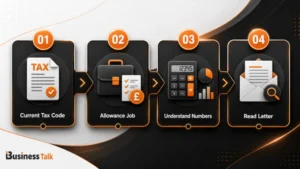
The most reliable check involves comparing the code on the payslip with the information HMRC holds.
1. Find the Current Tax Code
A tax code can normally be found on:
- A payslip
- A P45
- A P60
- A pension statement
- A PAYE Coding Notice
- The individual’s HMRC online tax record
Someone with several jobs or pensions should check every code separately. It is normal for different income sources to use different codes.
2. Check Which Job Uses the Personal Allowance
The full Personal Allowance will normally be allocated to the main job or pension. A second job may use BR, D0 or another code because the allowance is already being used elsewhere.
A potential problem arises when the allowance is:
- Missing from every job
- Applied to the wrong job
- Divided in an unsuitable way
- Applied in full to more than one job
- Still attached to employment that has ended
Two employers using 1257L at the same time could result in too much tax-free income being given and a later tax bill. Conversely, BR on a person’s only job could result in excessive deductions.
3. Understand the Numbers
The number in a code shows the approximate tax-free amount allocated to that employment or pension.
Suppose an employee is entitled to the £12,570 standard allowance but receives taxable medical insurance worth £1,500. HMRC might reduce the allowance to approximately £11,070, producing a code around 1107L.
The precise calculation can be more complicated when HMRC includes:
- Tax owed from an earlier year
- Estimated savings interest
- State Pension income
- Company cars or medical insurance
- Employment expenses
- Marriage Allowance
- Other untaxed income
A reduced code is not automatically an error. The important question is whether the deduction shown in HMRC’s calculation relates to income or benefits the person actually receives.
4. Read the Letter
The letter can be just as important as the number.
| Code or letter | General meaning |
| L | The person qualifies for the standard Personal Allowance |
| M | The person has received part of their spouse or civil partner’s allowance |
| N | The person has transferred part of their allowance to a spouse or civil partner |
| T | HMRC has included another calculation in the allowance |
| BR | All income from that job or pension is taxed at the basic rate |
| D0 | All income from that source is taxed at the higher rate |
| D1 | All income from that source is taxed at the additional rate |
| 0T | No Personal Allowance is available through that income source |
| K | Untaxed income and deductions exceed the available allowance |
| NT | No tax is deducted from that income |
| S | Scottish Income Tax rates apply |
| C | Welsh Income Tax rates apply |
| W1, M1, X or NONCUM | The code is being applied on a non-cumulative basis |
Marriage Allowance can produce an M or N code. The 1383M tax code is one example of how transferred allowance may appear.
Is 1257L the Correct Tax Code?
The 1257L tax code is generally correct when all the following apply:
- The person lives in England or Northern Ireland.
- It is their main or only PAYE income.
- They qualify for the full £12,570 Personal Allowance.
- Their adjusted net income does not exceed £100,000.
- They do not have taxable benefits that need to be collected through PAYE.
- HMRC is not collecting an earlier underpayment.
- No additional untaxed income needs to be included.
A Welsh taxpayer would usually see a “C” prefix, while a Scottish taxpayer would normally see an “S”.
A code such as 1257LX provides the same allowance figure but applies it on an emergency or non-cumulative basis. That can produce a different deduction from ordinary cumulative 1257L.
Is BR the Correct Code for a Second Job?
BR means all income from that job or pension is taxed at the basic rate without a Personal Allowance.
It can be correct when the full allowance is already being used by a main job. However, BR may be wrong if:
- It appears on the person’s only job.
- The main job pays less than the available Personal Allowance.
- Total income takes the person into a higher tax band.
- The employment details held by HMRC are outdated.
- The person has recently changed jobs and both employments appear active.
BR also does not guarantee that the final tax bill will be correct. A person whose combined income enters the higher-rate band may need a different code on the second job.
A variation such as the BRX tax code applies basic-rate deductions on a non-cumulative basis.
What Does an Emergency Tax Code Mean?
An emergency tax code normally ends in:
- W1 for weekly pay
- M1 for monthly pay
- X where pay dates vary
- NONCUM in some payroll systems
Under an emergency code, each payment is considered separately rather than taking account of total income and tax paid since the beginning of the tax year.
For example, 1257L M1 gives one month’s portion of the Personal Allowance but does not look back at earlier months. This may prevent a sudden adjustment, but it can also cause someone to pay too much or too little.
Emergency codes commonly appear after:
- Starting a new job without a P45
- Returning to work after a break
- Beginning to receive a pension
- Receiving a new taxable company benefit
- Payroll receiving incomplete employment information
The detailed meaning of a NONCUM tax code is especially important for someone whose deductions suddenly change after starting employment.
An emergency code is not necessarily incorrect during the first few weeks of a new job. It deserves investigation if it remains after HMRC has received all the necessary information.
When Is a K Tax Code Correct?
A K code is used when deductions and untaxed income included in the tax calculation exceed the person’s available allowances.
It may appear when someone:
- Receives taxable State Pension alongside employment or a private pension
- Has significant taxable company benefits
- Owes tax from an earlier year
- Receives other income that is not taxed at source
- Has had their Personal Allowance reduced or removed
The number following K does not represent tax-free income. It effectively increases the amount of income on which PAYE is calculated.
A K code should be checked carefully because an outdated benefit, incorrect pension figure or duplicated underpayment can noticeably reduce take-home pay. The K tax code requires a different calculation from an ordinary L code.
Why Might a Correct Tax Code Suddenly Change?
A change does not automatically mean HMRC has made a mistake.
Tax codes can be updated when a person:
- Starts or leaves a job
- Takes on additional employment
- Begins receiving State Pension or a private pension
- Receives or stops receiving a company benefit
- Claims employment expenses
- Applies for Marriage Allowance
- Has savings interest above their available allowance
- Needs to pay the High Income Child Benefit Charge through PAYE
- Owes tax from an earlier year
- Has an updated estimate of annual income
- Moves to or from Scotland or Wales
Anyone asking why their tax code has changed should compare the new PAYE Coding Notice with the previous one. The difference will often identify the adjustment.
What Are the Warning Signs of an Incorrect Tax Code?
A code may need checking if:
- The employee has only one job but is using BR, D0 or 0T.
- A former employer is still listed as an active employment.
- The full Personal Allowance appears against two jobs.
- A Scottish resident does not have an S code.
- A Welsh resident does not have a C code.
- An old company car or medical benefit is still included.
- The estimated annual salary is significantly inaccurate.
- An emergency code remains long after starting the job.
- State Pension or private pension income has been duplicated.
- A previous underpayment appears more than once.
- The code changes but the person’s circumstances have not.
- Take-home pay unexpectedly falls without a salary or benefit change.
A change in net pay alone does not prove that the code is wrong. Overtime, bonuses, pension contributions, National Insurance, student loans and salary sacrifice arrangements can also affect the final payment.
How Does Income Above £100,000 Affect the Code?
The standard Personal Allowance is reduced by £1 for every £2 of adjusted net income above £100,000. It is completely removed when adjusted net income reaches £125,140.
A person earning above £100,000 may therefore receive a lower number or a 0T code. The code can become inaccurate if HMRC’s income estimate is substantially different from the final amount earned.
Bonuses, benefits, pension contributions and Gift Aid donations can affect adjusted net income, so a simple comparison with gross salary may not provide the full answer.
How Do Multiple Jobs and Pensions Affect Tax Codes?
Each PAYE income source receives its own code. The Personal Allowance can be:
- Allocated entirely to one job
- Divided between two income sources
- Applied to a pension instead of employment
- Reduced because of untaxed State Pension
- Removed from a second job through BR, D0 or D1
The combination matters more than any code viewed in isolation.
For example, 1257L on a main job and BR on a small second job may be reasonable. BR on both jobs would usually mean no Personal Allowance is being used. Receiving 1257L on both could give twice the intended allowance.
How Can an Incorrect Tax Code Be Corrected?
The individual should first review the employment, pension, benefit and estimated income details held by HMRC.
They may need to correct:
- The date a previous job ended
- The identity of their main employer
- Estimated income for the current tax year
- Pension income
- Company benefits
- Employment expenses
- Other untaxed income
A new employee should give their employer a P45. If no P45 is available, the employer’s starter checklist should be completed accurately.
An employer cannot normally create a new tax code simply because an employee believes the existing one is wrong.
The employer must use the code provided through the PAYE system, although payroll can check whether the latest HMRC notice has been applied.
If HMRC changes the code, it normally sends the update to both the taxpayer and employer.
Monthly employees should usually see it on the next or following payslip, while weekly employees may not see it until their third payslip.
Will Overpaid Tax Be Refunded Automatically?

An in-year correction to a cumulative tax code may result in an automatic refund through payroll. The refund can appear as a lower deduction or a negative PAYE amount on a payslip.
If the tax year has ended, HMRC may review the person’s record and issue a tax calculation. Depending on the circumstances, the refund may need to be claimed.
Someone who suspects an overpayment can investigate whether HMRC owes them a tax rebate. They should be cautious of unsolicited messages promising a refund in return for bank details or an upfront fee.
Worked Example: Is 1257L Correct on a £32,000 Salary?
Consider an employee in England with:
- One job
- Annual salary of £32,000
- No company benefits
- No other taxable income
- No outstanding tax
- Full Personal Allowance
The likely code is 1257L.
The approximate taxable income is:
£32,000 − £12,570 = £19,430
At the basic rate of 20%, the approximate annual Income Tax is:
£19,430 × 20% = £3,886
This is an illustrative annual calculation. Actual monthly PAYE deductions can differ because of payroll rounding, cumulative calculations, bonuses or changes during the year.
If the same employee received a taxable company benefit, the code could be lower even though their salary remained unchanged.
Is the Employer Responsible for a Wrong Tax Code?
HMRC is generally responsible for determining the tax code, while the employer is responsible for applying the code received.
The employer should be contacted if:
- The payslip does not show the latest code issued by HMRC.
- The P45 was not processed correctly.
- Incorrect starter information was submitted through payroll.
- A new HMRC code has not appeared after sufficient time.
HMRC should be contacted when the underlying income, allowance, employment or benefit information is incorrect.
Frequently Asked Questions
How do I know if 1257L is correct?
It is likely to be correct for a person in England or Northern Ireland with one main job, the full Personal Allowance and no adjustments. Their HMRC calculation should still be checked.
Is 1257L the correct code for everyone?
No. Scottish and Welsh taxpayers use regional prefixes, while people with multiple incomes, benefits, high earnings or unpaid tax may have different codes.
Why am I on BR when I only have one job?
HMRC may believe the Personal Allowance is being used elsewhere or may not have received complete employment details. The employment record should be checked.
Does an emergency tax code mean I am paying more tax?
Not always. It calculates each pay period separately, which may result in too much or too little tax depending on earlier income and deductions.
Can an employer change my tax code?
An employer generally applies the code supplied by HMRC. Payroll can correct an administrative mistake but cannot independently decide a person’s allowances.
Does my tax code affect National Insurance?
No. National Insurance is calculated separately and is not controlled by the PAYE tax code.
Can I have more than one tax code?
Yes. Each job or PAYE pension can have its own code, but the combined allocation of allowances must be correct.
Will my tax code automatically reset in April?
HMRC may issue a new code for the tax year, but existing adjustments can continue if they remain relevant. The first payslip after 6 April should be checked.
Is a lower tax-code number always wrong?
No. The number may be reduced because of company benefits, untaxed pension income, an earlier underpayment or another valid adjustment.
Can a tax code be correct but the PAYE deduction still look wrong?
Yes. A bonus, irregular payment, emergency basis, cumulative adjustment or payroll error can change the deduction even when the code itself is valid.
What is your reaction?