What Does Council Tax Pay For? | Services, Bill Breakdown & 2026/27 Rules

Last Updated on – 21-09-2026
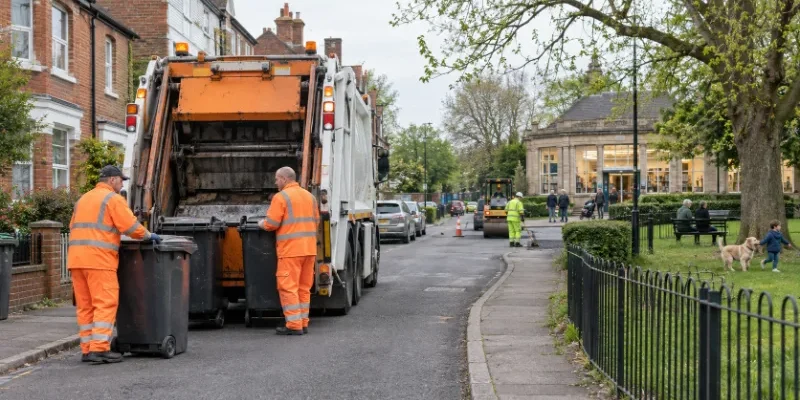
Council Tax helps fund local public services including adult social care, children’s services, rubbish and recycling, roads, libraries, parks, environmental health and local administration.
Depending on where a household lives, the bill can also contain amounts collected for police, fire, combined authorities, town or parish councils and other bodies.
However, the council that sends the bill does not necessarily keep all the money.
In many parts of England and Wales, the billing authority collects Council Tax on behalf of several organisations and then passes each organisation its share.
Council Tax is also only one source of local-government funding. Councils can receive government grants, business-rates income, fees, charges and other funding.
Islington Council, for example, explicitly states that Council Tax represents only a relatively small part of its overall funding.
The position is different again in Scotland, while Northern Ireland does not use Council Tax at all and instead operates a domestic rates system.
What Services Does Council Tax Pay For?
The exact spending mix varies considerably between councils because local authorities have different responsibilities, demographics and spending pressures.
Council Tax can contribute towards:
| Service | Examples of What the Money Can Support |
| Adult social care | Support for older and disabled adults, assessments and community care |
| Children’s services | Children’s social care, looked-after children and safeguarding |
| Waste services | Household rubbish collection, recycling and waste disposal |
| Roads and transport | Local roads, street lighting, road maintenance and some transport functions |
| Libraries | Libraries, archives and community facilities |
| Parks and leisure | Parks, playgrounds, leisure facilities and recreation |
| Housing | Homelessness services, housing advice and local housing functions |
| Environmental health | Food safety, pollution control and environmental enforcement |
| Planning | Planning applications, local planning and development functions |
| Trading standards | Consumer protection and local regulatory work |
| Local democracy | Elections, electoral registration and council administration |
| Police and fire | Included through separate precepts or wider authorities in some parts of England and Wales |
MoneyHelper lists police and fire, parks and leisure, libraries and education services, waste, highways, street cleaning, environmental health, trading standards and local administration among the services supported by Council Tax.
This does not mean every pound paid in Council Tax is allocated directly to one identifiable service. Councils combine Council Tax with their other funding before meeting their overall spending requirements.
Who Actually Gets the Money From a Council Tax Bill?

This is one of the most important parts of understanding Council Tax.
The council shown at the top of the bill is normally the billing authority.
In England, billing authorities include shire districts, metropolitan districts, unitary authorities and London boroughs. They may also collect amounts requested by other public bodies.
An amount that another authority requires the billing council to collect is commonly called a precept.
Government statistics explain that Council Tax bills can include amounts for county councils, police and crime commissioners, fire authorities, combined authorities, parish councils and other bodies depending on the area.
| Area | How the Bill Can Be Structured |
| Two-tier England | District council + county council + police + fire where separately charged + parish/town council and, in some areas, combined-authority charges |
| Unitary England | Unitary authority plus relevant police, fire, parish and combined-authority charges |
| London | London borough plus Greater London Authority charges, which help fund London-wide functions including policing, fire and transport |
| Wales | County/county borough council plus police and, where applicable, community council |
| Scotland | Council Tax set by the local council; Scotland does not use the same separate local police and fire precept structure as England |
| Northern Ireland | No Council Tax; domestic rates contain regional and district elements |
For 2026/27, the average English Band D bill is £2,392, including adult social care and parish precepts.
A Real 2026/27 Council Tax Bill Breakdown
Wyre Forest provides a useful example because it publishes exactly where an average Band D Council Tax bill goes.
For 2026/27, its average Band D total is £2,512.47.
| Organisation | 2026/27 Amount | Share of Bill |
| Worcestershire County Council | £1,760.80 | 70.1% |
| Police and Crime Commissioner for West Mercia | £306.50 | 12.2% |
| Wyre Forest District Council | £258.08 | 10.3% |
| Hereford & Worcester Fire Authority | £107.22 | 4.2% |
| Average parish/town council | £79.87 | 3.2% |
| Total | £2,512.47 | 100% |
That means only around 10p of every £1 on this particular bill is retained for Wyre Forest District Council’s own services.
The much larger county council share helps pay for services including adult social care, looked-after children, roads and paths, libraries and waste disposal.
The district council’s smaller share covers functions including waste collection, planning, housing, parks, elections and business support.
This is only an example. A household in London, a unitary authority or another county will see a different split.
Where Does a Council Actually Spend Its Share?
Published council budgets provide a better picture than a generic list of services.
Islington Council’s 2026/27 budget, for example, shows how much spending remains to be met from Council Tax after other income is taken into account.
| Islington Service Area | Planned Spending | Other Income | Amount Shown as Needed From Council Tax |
| Health and Social Care | £209.992m | £81.503m | £128.489m |
| Children and Young People | £351.450m | £269.064m | £82.385m |
| Homes and Neighbourhoods | £61.842m | £29.812m | £32.030m |
| Community Wealth Building | £54.035m | £27.438m | £26.597m |
| Resources | £212.010m | £170.330m | £41.680m |
| Strategy and Programmes | £5.675m | £2.336m | £3.340m |
Islington’s overall 2026/27 Council Tax requirement is stated as £132.331 million after its various income streams and central budget adjustments are taken into account.
The £128.489 million Health and Social Care figure is particularly important, but it should not be interpreted as Council Tax funding the NHS.
Local councils have major responsibilities for adult social care and local support services, whereas Council Tax is not the funding mechanism for NHS healthcare.
MoneyHelper specifically distinguishes Council Tax-funded local services from health services.
What Does Council Tax Not Pay For?
Council Tax is not a general UK tax that finances every public service.
It does not directly fund the NHS in the same way national government spending does. It also does not by itself finance the entire local-authority budget.
Government grants, business rates, locally generated fees and other income can all be significant.
There are also major geographical differences. In Scotland, Police Scotland and the Scottish Fire and Rescue Service are funded through the Scottish Government budget rather than appearing as separate local police and fire precepts of the type seen on many English bills.
The Scottish Budget provides approximately £1.7 billion for the Scottish Police Authority and £436 million for the Scottish Fire and Rescue Service in 2026/27.
Scottish households can nevertheless see water and wastewater charges on the same bill as Council Tax.
These are separate Scottish Water charges collected by councils on Scottish Water’s behalf. A Band D property connected to both services has combined unmetered water and wastewater charges of £652.32 for 2026/27.
How Do Council Tax Bands Work?
A property’s bill does not simply rise every time its current market value increases.
In England, existing Council Tax bands are based on what a property would have been worth on 1 April 1991.
In Wales, the valuation date is 1 April 2003. Newer properties are valued by estimating what they would have been worth at the relevant historic valuation date.
| Band | England: 1 April 1991 Value | Wales: 1 April 2003 Value |
| A | Up to £40,000 | Up to £44,000 |
| B | £40,001–£52,000 | £44,001–£65,000 |
| C | £52,001–£68,000 | £65,001–£91,000 |
| D | £68,001–£88,000 | £91,001–£123,000 |
| E | £88,001–£120,000 | £123,001–£162,000 |
| F | £120,001–£160,000 | £162,001–£223,000 |
| G | £160,001–£320,000 | £223,001–£324,000 |
| H | More than £320,000 | £324,001–£424,000 |
| I | Not used | More than £424,000 |
Wales therefore has nine bands, A to I, while England currently has eight.
Council Tax in England
England’s average Band D Council Tax for 2026/27 is £2,392, up £111 or 4.9% from £2,280 in 2025/26. The actual amount differs substantially by area.
England contains several local-government structures. A resident in a two-tier shire area may effectively be contributing to a county council, district council, police body, fire authority and parish council through one bill.
A unitary authority performs functions that would otherwise be divided between county and district councils.
London operates differently again. A borough’s bill includes the borough requirement and the Greater London Authority element.
Islington’s 2026/27 Band D total, for example, is £2,107.87, incorporating the borough amount, adult social care precept and a £510.51 GLA element.
Council Tax in Wales
Wales has 22 county and county borough councils and uses nine Council Tax valuation bands.
For 2026/27, the average Welsh Band D Council Tax is £2,283. That consists, on average, of £1,831 for county councils, £400 for police and £52 for community councils.
The overall Band D figure ranges from £2,013 in Cardiff to £2,594 in Merthyr Tydfil.
Welsh Government statistics also show that Council Tax provides about 30% of the £10 billion budget requirement for 2026/27.
That illustrates why describing Council Tax as if it pays the complete cost of council services is misleading.
Wales has also introduced significantly different arrears protections from England from 1 April 2026, covered below.
Council Tax in Scotland
Scotland operates Council Tax but uses its own valuation bands and rules.
Current Scottish bands are still based on 1991 property values. The Scottish Government’s 2026 consultation data gives the following average gross bills for 2026/27:
| Scottish Band | 1991 Property Value | Scotland Average 2026/27 |
| A | Up to £27,000 | £1,102 |
| B | £27,001–£35,000 | £1,286 |
| C | £35,001–£45,000 | £1,470 |
| D | £45,001–£58,000 | £1,653 |
| E | £58,001–£80,000 | £2,172 |
| F | £80,001–£106,000 | £2,687 |
| G | £106,001–£212,000 | £3,238 |
| H | More than £212,000 | £4,051 |
The average Scottish Band D Council Tax is therefore £1,653 for 2026/27, before separate water and wastewater charges where applicable.
Another important 2026 change concerns second and long-term empty homes. From 1 April 2026, Scotland no longer has a national statutory cap on the Council Tax premium councils can set for these properties.
The national default premium is 100%, but councils can vary the premium according to the legislation and local policy.
Does Northern Ireland Have Council Tax?
No. Northern Ireland uses domestic rates rather than Council Tax.
Domestic rates are calculated using a property’s capital value based on 1 January 2005 values.
The rate bill combines a regional rate with a district rate set for the relevant council area. Land & Property Services assesses and collects the rates.
The calculation is broadly:
Rateable capital value × (regional rate + district rate) = gross rates payable
For domestic-rating purposes, the capital value used in the calculation is capped at £400,000.
The Northern Irish regional rate helps fund regional services, while the district rate supports council services.
As a result, direct comparisons between a Northern Irish rates bill and an English, Welsh or Scottish Council Tax bill can be misleading.
Who Can Get a Council Tax Discount, Reduction or Exemption?
A full Council Tax bill generally assumes at least two chargeable adults are living in the property. A number of rules can reduce the amount payable.
| Circumstance | Possible Effect |
| One chargeable adult | Usually a 25% single-person discount |
| Full-time students | Students can be disregarded; qualifying student-only homes can be exempt |
| Low income | Council Tax Reduction/Support may reduce the bill, subject to the applicable scheme |
| Certain apprentices and young people | May be disregarded |
| Severe mental impairment/significant cognitive impairment | A disregard, discount or exemption may apply where qualifying conditions are met |
| Disability-related property needs | Disabled Band Reduction can lower the property to the next band’s charge; Band A receives a reduction instead |
| Second adult on a low income | Second Adult Rebate may apply under the relevant local scheme |
| Care leavers | Rules depend on nation and council; Wales has a specific national exemption for qualifying care leavers under 25 |
| Empty or second homes | Discounts, exemptions or premiums can apply depending on the nation, council and circumstances |
GOV.UK confirms that a Band D household qualifying for the Disabled Band Reduction Scheme pays the Band C rate, while an eligible Band A household receives a 17% reduction.
Second Adult Rebate should not be described as universally available on identical terms.
Local Council Tax Reduction schemes differ. Some English councils restrict it to people of State Pension age, while others have different rules.
Wales has particularly clear national care-leaver rules. A qualifying care leaver aged 18 to under 25 can receive a Class X exemption where the household meets the prescribed conditions.
If a care leaver lives with one chargeable adult, that adult may instead receive a 25% discount because the care leaver is disregarded.
England does not have one identical blanket care-leaver Council Tax exemption across every authority.
Local offers can be more generous: government guidance gives examples of English councils providing full Council Tax exemptions to care leavers up to age 25.
What About Empty Homes and Second Homes?
An empty or second property should not automatically be assumed to receive a Council Tax discount.
In England, councils have powers to charge a premium of up to 100% extra on second homes from April 2025.
Long-term empty homes can attract progressively higher premiums, depending on how long they have remained empty and whether an exception applies.
Scotland changed its framework again from April 2026, allowing councils greater discretion over the premiums imposed on second and long-term empty homes.
Rules can therefore differ materially according to location, length of vacancy, ownership changes, renovation and the reason a property is not a person’s main residence.
Can Council Tax Be Paid Over 12 Months Instead of 10?
Yes. Council Tax is normally divided into 10 monthly instalments, but households can ask their local council to spread the bill over 12 months.
Under the normal April-to-January 10-instalment schedule, February and March can have no instalment due.
Those are not genuinely “Council Tax-free” months; the same annual bill has simply been collected over ten payments.
iBusinessTalk has a separate explanation of the 10-month Council Tax payment schedule and how the February and March payment break works.
Spreading the bill across 12 months reduces each monthly instalment and may help households that are struggling with cash flow.
What Should Someone Do If They Cannot Afford Council Tax?
The council should be contacted as early as possible rather than waiting for the account to enter formal recovery.
Options may include spreading payments over 12 months, checking eligibility for Council Tax Reduction, correcting missing discounts and discussing an affordable repayment arrangement.
GOV.UK explicitly advises residents who are struggling to contact their council as soon as possible.
Council Tax is generally treated as a priority debt because non-payment can progress into formal court and enforcement procedures.
What Happens If Council Tax Is Not Paid?
The recovery process is not identical throughout Great Britain.
| Nation | Typical Position |
| England | A missed instalment can trigger a reminder giving seven days to pay. Continued non-payment can make the balance for the entire year due, followed by a liability-order application and enforcement. |
| Wales | From 1 April 2026, new rules provide a minimum 63-day period from a missed payment before a council can apply to court for a liability order for the unpaid annual balance. |
| Scotland | Unpaid Council Tax can ultimately lead to a summary warrant. A 10% charge is added to the debt, and sheriff-officer fees may also be incurred. |
| Northern Ireland | Domestic rates use a separate recovery system administered by Land & Property Services rather than the Council Tax process. |
In England, GOV.UK states that the reminder gives seven days to pay. Failure to do so can result in the full year’s balance becoming due.
A council can then seek a magistrates’ court liability order, with legal costs potentially added.
MoneyHelper illustrates why early contact is important: a £217 monthly bill paid over ten months represents £2,170 for the year, so losing the right to instalments can turn a missed monthly payment into a demand for a much larger outstanding balance.
Wales: The New 63-Day Rule
From 1 April 2026, Wales introduced a more extended statutory process.
The Welsh Government says a household must have at least 63 days from the date an instalment is missed before the council can apply for a court liability order for the unpaid annual balance.
The framework is intended to allow more time for communication, debt advice and repayment arrangements.
Under the confirmed structure, a final notice cannot simply accelerate the entire annual bill after the previous much shorter timetable.
The reforms provide 41 days before the relevant final-notice stage and a further 21 days before the remaining annual balance becomes due, with recovery action following after the minimum period.
Scotland: Summary Warrants and the 10% Addition
Scotland uses a different process.
A council can seek a summary warrant for unpaid Council Tax. When a summary warrant is granted, an additional charge equal to 10% of the debt is added. Sheriff-officer fees can also be added.
A formal Charge for Payment then gives 14 days to pay before further action can be taken. Potential enforcement can include arrestment of wages or money in a bank account.
Can a Council Tax Band Be Challenged?
Yes, but a challenge should be based on evidence rather than simply on the view that the bill is expensive.
For England and Wales, Council Tax valuation work is now carried out by the Valuation Office within HMRC. The former Valuation Office Agency was integrated into HMRC on 1 April 2026, although the statutory valuation functions continue.
A band challenge can result in the property:
| Possible Outcome | What It Means |
| Band reduced | Future bills can fall and an overpayment refund may be due |
| Band unchanged | Existing Council Tax continues |
| Band increased | The property can become liable for a higher Council Tax amount |
Similar neighbouring properties can also be reviewed during the process. Council Tax must continue to be paid while the challenge is considered.
If the band is subsequently reduced, the local council will revise the bill and deal with any refund due.
What If the Band Is Correct but the Council Tax Bill Is Wrong?
A band dispute and a bill dispute are different.
A resident who believes the wrong person has been made liable, a discount or exemption has been missed, or the amount has otherwise been calculated incorrectly should first write to the council.
In England, the council has two months to respond. If its decision is disputed, an appeal can normally be made to the Valuation Tribunal within two months of the decision.
If the council fails to respond, an appeal can normally be made within four months from the original approach to the council.
A general complaint about council administration follows a different route. MoneyHelper says councils should normally take no longer than 12 weeks to resolve a complaint, after which the Local Government Ombudsman may be relevant in England.
That complaints process should not be confused with the statutory deadlines for Council Tax liability and valuation appeals.
In Scotland, a Council Tax band can be challenged through the Scottish Assessors system.
Where a council or assessor decision remains disputed and appeal rights exist, the case can go to the First-tier Tribunal for Scotland’s Local Taxation Chamber. Council Tax should continue to be paid while the dispute is outstanding.
Who Is Legally Responsible for Paying Council Tax?

Council Tax does not automatically fall on the property owner in every situation.
In England and Wales, liability normally follows a hierarchy. The person nearest the top who lives in the property is generally liable.
| Priority | Person Normally Liable |
| 1 | Resident freeholder |
| 2 | Resident leaseholder |
| 3 | Resident tenant |
| 4 | Resident licensee |
| 5 | Another resident |
| 6 | Non-resident owner where no resident is liable |
Spouses, civil partners and couples living together can be jointly liable, while joint owners or tenants at the same level of the hierarchy can also be jointly and severally responsible for the bill.
There are exceptions where the owner is liable even though other people live in the property.
These can include certain houses in multiple occupation, care homes, some hostels, religious-community properties and specified accommodation.
What Is Changing for High-Value Homes From April 2028?
Council Tax is due for a significant change at the top end of the property market, but England and Scotland are taking different approaches.
England: High Value Council Tax Surcharge
From April 2028, owners of residential properties in England worth £2 million or more using 2026 values are due to face the new High Value Council Tax Surcharge.
This is separate from the existing Council Tax bands, which remain based on 1991 values. Owners rather than occupiers will be liable for the surcharge.
| 2026 Property Value | Annual Surcharge |
| £2m–£2.5m | £2,500 |
| £2.5m–£3.5m | £3,500 |
| £3.5m–£5m | £5,000 |
| More than £5m | £7,500 |
The government expects fewer than 1% of English residential properties to fall within the charge.
Scotland: New Bands I and J
Scotland is not simply copying the English surcharge.
The Scottish Government plans to introduce two additional Council Tax bands from 1 April 2028, based on targeted 2026 property values:
| New Scottish Band | Proposed Property Range |
| Band I | More than £1m and up to £2m |
| Band J | More than £2m |
Existing homes below the £1 million threshold remain within the established A–H framework under the policy as announced.
The Scottish Government consulted during 2026 on the rates that should apply to Bands I and J, so proposed charge levels should not be presented as final until the relevant legislation and rates are settled.
Frequently Asked Questions
Does Council Tax pay for the NHS?
No. Council Tax contributes to council services such as adult social care, but it is not the funding mechanism for NHS healthcare. This distinction matters where council budgets use headings such as “Health and Social Care”.
Does Council Tax pay for roads?
Yes, Council Tax can contribute to local highway functions such as road maintenance, street lighting and street cleaning. Responsibility depends on the type of road and the local-authority structure.
Does Council Tax pay for the police?
In England and Wales, Council Tax bills can contain an amount for policing. In Scotland, policing is funded through the Scottish Government budget rather than a separate local police Council Tax precept.
Why does a Council Tax bill show several organisations?
The billing council can collect money for other authorities. In two-tier areas this can include county, district, police, fire and parish or town council amounts. The collecting council then passes the relevant sums to those organisations.
Is Council Tax based on the current value of a home?
Not for the existing bands. England’s bands use estimated values at 1 April 1991, Wales uses 1 April 2003 and Scotland’s existing A–H system also uses 1991 values.
Can Council Tax be paid over 12 months?
Yes. Although bills are usually divided into ten monthly instalments, a council can be asked to spread payments over 12 months.
What happens after one missed Council Tax payment?
The answer depends on the nation. In England, a reminder can give seven days to bring the account up to date.
Wales has had a minimum 63-day route before a council can apply for a liability order since April 2026. Scotland operates a separate summary-warrant system for arrears.
Can a Council Tax challenge make the bill higher?
Yes. A valuation review can result in the band moving down, staying the same or moving up. Relevant neighbouring properties can also be reviewed.
Does Northern Ireland have Council Tax?
No. Northern Ireland uses domestic rates calculated from a property’s rateable capital value and the applicable regional and district rates.
What is your reaction?