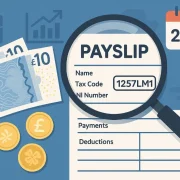
1269L Tax Code: What It Means in 2026/27?

Last Updated on 16.09.2026
If 1269L tax code appears on your payslip, it normally means HMRC has allocated roughly £12,690 of tax-free income to that employment or pension before Income Tax is calculated.
However, 1269L is not the standard UK tax code for 2026/27. The standard Personal Allowance remains £12,570, and HMRC confirms that 1257L continues to be the code used for most people with one job or pension and straightforward tax affairs.
The difference usually means HMRC has made a personal adjustment to your tax-free allowance. For example, you may have received additional tax relief for qualifying employment expenses or professional costs.
Is 1269L the New Standard Tax Code?
No. 1269L is not the new standard tax code for 2025/26 or 2026/27.
HMRC’s official figures show that the Personal Allowance remained £12,570 in:
| Tax Year | Standard Personal Allowance | Common Standard Code |
| 2024/25 | £12,570 | 1257L |
| 2025/26 | £12,570 | 1257L |
| 2026/27 | £12,570 | 1257L |
HMRC’s current Income Tax rates and allowances confirm the £12,570 figure for 2026/27.
Government policy also maintains the Personal Allowance at £12,570 through to 5 April 2031, rather than increasing it to £12,690.
Therefore, someone receiving 1269L has normally received an individually adjusted tax code rather than a nationwide increase in the Personal Allowance.
Anyone unsure whether their current code matches their circumstances can start by checking whether their tax code is correct.
What Does the 1269L Tax Code Mean?
The number in an ordinary tax code broadly indicates how much tax-free income is being allocated through that PAYE source.
For 1269L:
- 1269 broadly represents £12,690 of tax-free income
- L indicates entitlement to the standard Personal Allowance system
- PAYE uses the code to calculate Income Tax deducted from wages or pension income
This does not mean HMRC is paying you £12,690. It means approximately that amount of income can be received through the relevant PAYE source before Income Tax is applied, subject to your wider tax circumstances.
A tax code controls Income Tax. It does not directly determine National Insurance, workplace pension contributions or student loan deductions.
How Is a 1269L Tax Code Built?
HMRC normally starts with your Personal Allowance and adjusts it according to information held about your income, deductions and tax reliefs.
A simplified 1269L calculation could look like this:
| Tax Code Component | Amount |
| Standard Personal Allowance | £12,570 |
| Additional qualifying allowance | £120 |
| Approximate adjusted allowance | £12,690 |
| Resulting tax code | 1269L |
The extra £120 does not necessarily come from one particular expense. The exact calculation should be checked through your HMRC account or Tax Code Notice.
Possible adjustments can include:
- Flat-Rate Employment Expenses
- Qualifying Uniform Or Tool Costs
- Professional Fees And Subscriptions
- Other Employment Expense Relief
- Corrections To Earlier HMRC Estimates
- Changes To Other Allowances Or Deductions
HMRC confirms that claiming expenses eligible for tax relief is one reason a person’s tax code can change.
Why Might HMRC Add £120 to Your Allowance?
One possible explanation is a flat-rate employment expense.
HMRC has agreed fixed deductions for certain industries and occupations. Its current tables contain several £120 allowances.
For example, some building workers and stonemasons have a £120 flat-rate expense figure. Other occupations have different amounts.
HMRC also accepts £60 as a reasonable annual laundry expense in certain qualifying uniform or protective-clothing situations where no nationally agreed rate applies.
Examples include:
| Possible Expense | Example Allowance |
| Qualifying uniform laundry | £60 |
| Certain building workers | £120 |
| Stonemasons | £120 |
| Joiners and carpenters | £140 |
These figures are tax deductions, not cash refunds of the same amount. A basic-rate taxpayer receiving a £120 deduction would normally save £24 in Income Tax, because 20% of £120 is £24.
Professional membership fees and subscriptions may also qualify when the employee pays them personally and the organisation or fee meets HMRC’s conditions.
1269L Vs 1257L: What Is the Difference?
The key difference is the amount of tax-free income allocated through PAYE.
| Feature | 1257L | 1269L |
| Approximate Tax-Free Amount | £12,570 | £12,690 |
| Difference | — | £120 More |
| Standard 2026/27 Code? | Yes, for many taxpayers | No |
| Personal Adjustment Likely? | Not necessarily | Usually |
| Approximate Basic-Rate Saving | — | £24 A Year |
Someone on 1269L may therefore pay slightly less Income Tax than an otherwise identical person on 1257L.
The difference should not automatically be treated as an error. What matters is whether the additional £120 reflects a relief or adjustment you are genuinely entitled to.
How Much Tax Would You Pay With 1269L?
The effect depends on your income and tax band.
For employees in England, Wales and Northern Ireland, the 2026/27 basic, higher and additional Income Tax rates remain 20%, 40% and 45%. Scotland has separate bands.
Example 1: £30,000 Salary
Assume an employee earns £30,000 and has no other adjustments.
Using 1269L:
£30,000 − £12,690 = £17,310 taxable
£17,310 × 20% = £3,462 approximate Income Tax
Under a standard £12,570 allowance, the comparable Income Tax would be about £3,486.
The additional £120 allowance therefore saves approximately £24 a year, or around £2 a month.
Example 2: £60,000 Salary
A £60,000 employee has income reaching the higher-rate band.
With the additional £120 allowance, the potential Income Tax saving can be around £48 annually where that extra allowance would otherwise relate to income taxed at 40%.
These examples are simplified. Actual PAYE can differ because of previous earnings, pension contributions, taxable benefits, salary sacrifice, other income and changes made during the tax year.
Who Might Receive the 1269L Tax Code?

A 1269L tax code may appear where HMRC believes your PAYE tax-free amount should be slightly higher than the normal £12,570 Personal Allowance.
Possible situations include:
- You Claimed Qualifying Employment Expenses
- You Pay Eligible Professional Subscriptions
- HMRC Corrected Your Previous Tax Code
- A Previous Deduction Was Removed
- Your Allowances Changed During The Year
It should not be assumed that everyone doing the same job will receive 1269L. Tax codes are based on individual circumstances.
What Does 1269L W1 or M1 Mean?
If your payslip shows 1269L W1, 1269L M1, 1269L X or NONCUM, the code is being operated on an emergency or non-cumulative basis.
The difference is important.
With an ordinary cumulative tax code, payroll considers your pay and Income Tax across the tax year so far.
With W1 or M1:
- W1 calculates tax using the current week’s pay only
- M1 calculates tax using the current month’s pay only
- Previous Pay And Tax Are Ignored
- The Calculation Treats Each Period Separately
HMRC explains that this can result in too much or too little tax being collected.
A similar issue applies to codes such as 1257L M1 and other emergency tax codes.
If you recently started a job and HMRC does not yet have your previous pay details, an emergency code can be temporary.
HMRC says updating the code after receiving employer information can take up to 35 days from starting the job.
What Are S1269L and C1269L?
Regional prefixes can also appear.
S1269L means HMRC considers you a Scottish taxpayer and the adjusted allowance is being used with Scottish Income Tax rates.
C1269L means Welsh Income Tax rules apply.
HMRC uses:
- S For Scottish Taxpayers
- C For Welsh Taxpayers
A Scottish employee receiving the normal £12,570 allowance would commonly have S1257L. More detail on how that prefix works is available in the S1257L tax code explanation.
The Personal Allowance itself remains UK-wide, although Scotland has different Income Tax bands and rates.
Why Has My Tax Code Changed From 1257L to 1269L?
A move from 1257L to 1269L normally means the amount of tax-free income allocated through PAYE has increased by roughly £120.
Possible reasons include a newly recognised employment expense, professional subscription or another HMRC adjustment.
Do not assume the change reflects a national increase in the Personal Allowance. It does not.
Check the breakdown shown in your HMRC online account or Tax Code Notice to identify the actual adjustment.
Why Has My Tax Code Changed From 1269L Back to 1257L?
The reverse can also happen.
HMRC may remove an allowance when:
- An Expense Relief No Longer Applies
- A Previous Estimate Has Changed
- Your Employment Circumstances Change
- Information Supplied To HMRC Is Updated
- An Adjustment Is Recalculated For A New Tax Year
If you still incur the expense that originally increased your tax-free allowance, check whether the relief remains included before assuming the new code is correct.
How Do You Check Whether 1269L Is Correct?
Start by comparing your payslip with your HMRC tax-code breakdown.
Check:
- Your current tax code
- Your estimated annual income
- Employment expenses included
- Professional subscriptions or reliefs
- Taxable workplace benefits
- Previous tax underpayments
- Other jobs or pensions
Employers generally use the tax code HMRC supplies. They cannot simply choose a different code because an employee believes theirs is wrong.
If you have recently changed jobs, ensure your employer has the necessary previous pay information. If your P45 is missing, the article explaining what to do when you cannot obtain another P45 covers the available alternatives.
HMRC says that after it updates an incorrect code, it should normally tell you and your employer the new code within 15 working days.
Can You Claim Employment Expenses and Get 1269L?

Potentially.
Employees who personally pay qualifying work expenses may be able to claim Income Tax relief through HMRC. This can include eligible uniforms, tools, professional fees, subscriptions and certain other necessary employment costs.
HMRC’s job expense tax relief guidance explains the available categories.
For postal job-expense claims, form P87 can be used where the claim meets HMRC’s conditions and total expenses for the tax year are £2,500 or less.
Claims above £2,500 generally need to be made through Self Assessment. Eligible claims can also cover earlier tax years within HMRC’s time limits.
If relief relates to ongoing employment expenses, HMRC may reflect it in a future tax code. For previous years, HMRC may instead adjust the code or issue a refund.
Conclusion
The 1269L tax code is a genuine PAYE code, but it is not the standard tax code for 2026/27.
The standard Personal Allowance remains £12,570, normally represented by 1257L. A 1269L code broadly gives £12,690 of tax-free PAYE income, meaning HMRC has usually made an individual adjustment worth roughly £120.
That adjustment might relate to employment expenses, professional subscriptions or another change in your tax record.
The code is therefore not automatically good, bad or incorrect. The important question is why HMRC has given you the extra allowance. Checking the breakdown in your HMRC account is the quickest way to confirm whether 1269L matches your circumstances.
Frequently Asked Questions
What Does 1269L Mean on My Payslip?
1269L broadly means HMRC has allocated approximately £12,690 of tax-free income to that PAYE employment or pension before Income Tax is calculated.
Is 1269L the Standard Tax Code for 2026/27?
No. The standard code for many people remains 1257L, reflecting the £12,570 Personal Allowance.
Is 1269L Better Than 1257L?
It provides approximately £120 more tax-free allowance. That can reduce Income Tax, but it is only beneficial if you are genuinely entitled to the adjustment.
Why Did My Tax Code Increase From 1257L to 1269L?
HMRC may have added an allowance or tax relief, such as qualifying employment expenses. Check your HMRC tax-code calculation for the exact reason.
Why Did My Tax Code Go Back From 1269L to 1257L?
An allowance may have been removed, recalculated or no longer carried in your current coding calculation. Check whether any employment expense or other relief you still qualify for remains recorded.
Is 1269L W1 or M1 an Emergency Tax Code?
Yes. W1 and M1 mean tax is being calculated using only the current weekly or monthly pay period instead of your cumulative pay and tax for the year.
Can a Scottish or Welsh Taxpayer Have 1269L?
Yes, but it would normally have a regional prefix. A Scottish taxpayer could see S1269L, while a Welsh taxpayer could see C1269L.
What is your reaction?