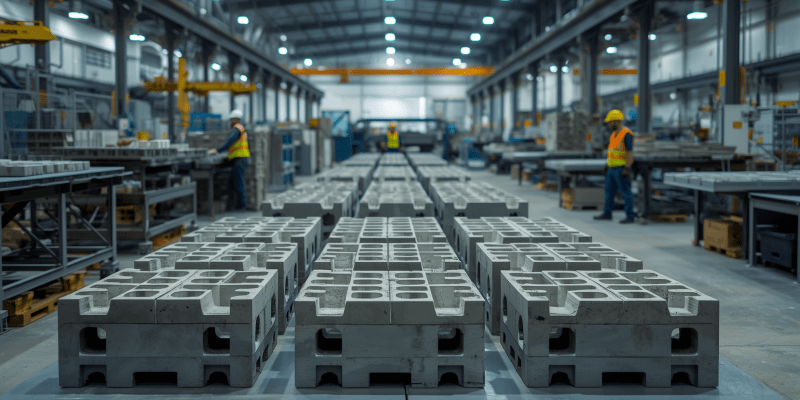
Concrete Lego Block Moulds

Concrete lego block moulds are revolutionising the way modular building blocks are produced for the construction industry.
Designed for efficiency and versatility, these moulds enable manufacturers to create interlocking blocks quickly and with consistent quality.
The use of automation and digital design is driving further innovation in this specialised area of concrete manufacturing.
Over recent years, demand for modular construction solutions has brought concrete lego block moulds to the forefront of building and infrastructure projects.
Manufacturers such as betonblock are embracing advanced production processes that blend precision moulding with technological advances.
By leveraging automation and digital tools, businesses can achieve greater flexibility, meet customisation requirements, and maintain quality in a competitive market.
Automation in Concrete Lego Block Mould Production
The introduction of automation has significantly altered how concrete lego block moulds are produced.
Automated systems, including CNC machining and robotic material handling, allow factories to minimise manual intervention and reduce variability in each mould created.
This leads to fewer quality issues, more predictable outcomes, and steady throughput, meeting the demands of modern construction schedules.
Facilities utilising automated machinery can quickly adapt to shifting batch requirements and tight lead times.
Automation helps process large or varied orders efficiently, ensuring consistent results even with frequent design changes.
These improvements benefit both large-scale manufacturers and projects requiring quick scalability.
Beyond the factory floor, automation extends to inventory management and scheduling systems that coordinate mould production with downstream concrete casting operations.
Integrated software platforms track mould usage cycles, maintenance schedules, and wear patterns, enabling predictive maintenance that prevents unexpected downtime.
This holistic approach to automation ensures that moulds remain in optimal condition throughout their service life, maximising return on investment while maintaining the precision required for interlocking block systems.
The Role of Digital Design in Mould Development
Digital design tools have transformed the way concrete lego block moulds are conceptualised and manufactured.
Computer-aided design (CAD) enables rapid prototyping and design revisions, so manufacturers can address diverse project needs.
By storing parametric models, teams can produce unique block profiles with minimal manual adjustment, maintaining consistency throughout each run.
With digital workflows, it becomes easier to tailor moulds for specific interlocking features or custom dimensions.
The ability to virtually simulate production processes and check mould integrity before fabrication helps streamline development.
Integrating design-for-manufacture principles reduces unnecessary steps and supports optimal production efficiency.
Advanced simulation software now allows engineers to test mould performance under various concrete mix conditions and curing scenarios before physical production begins.
These virtual testing environments can predict potential issues such as air pocket formation, release difficulties, or dimensional distortion caused by thermal expansion.
By identifying and resolving these challenges digitally, manufacturers significantly reduce the cost and time associated with physical prototyping, while ensuring that final moulds deliver consistent results across thousands of casting cycles.
Quality Control, Traceability, and Long-term Value
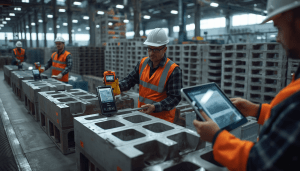
Quality assurance in producing concrete lego block moulds increasingly relies on digital measurement and real-time documentation.
Technologies such as laser scanning and automated inspection allow teams to monitor tolerances closely and ensure each mould meets industry standards.
Comprehensive databases enable manufacturers to track individual moulds, which is critical for accountability and compliance purposes.
Financially, adopting these technological advances helps reduce waste and optimise labour.
The integration of efficient design and automation positively affects the long-term cost-benefit analysis for manufacturers.
By supporting high-volume or customised production goals, concrete lego block moulds exemplify how innovation continues to shape the future of construction manufacturing.
The implementation of blockchain technology and IoT sensors is emerging as a frontier in mould traceability, creating immutable records of production parameters, material specifications, and performance metrics throughout the mould lifecycle.
These digital twins enable manufacturers to analyse patterns across multiple production runs, identifying opportunities for continuous improvement and ensuring regulatory compliance across international markets.
As sustainability becomes increasingly important, this level of documentation also supports environmental reporting by tracking material efficiency and energy consumption associated with each mould’s production and use.
What is your reaction?