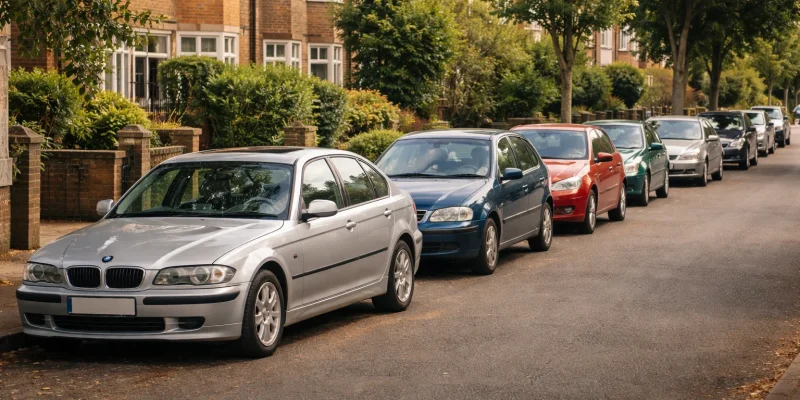
Road Tax Petition Calling For Fairer VED On 20–39-Year-Old Cars

The road tax petition is a public call to reduce Vehicle Excise Duty (VED) by 50% for cars aged 20 to 39 years. It argues that taxing these vehicles at full rate is environmentally and economically counterproductive.
The petition has already gathered over 19,700 signatures, signalling widespread support for fairer VED.
Key Points of the Petition:
| Issue Addressed | Petition’s Argument |
| Environmental Impact | Keeping older cars is greener than building new ones due to embedded carbon savings |
| Unfair Taxation | Current VED penalises low-mileage, well-maintained vehicles unfairly |
| Heritage and Local Industry | Supports UK car culture and restoration businesses |
| Practical Proposal | Calls for 50% VED cut for 20–39-year-old “Young-Timer” cars |
| Government Engagement | Eligible for official response and future Parliamentary debate |
Why Are Owners Of 20–39-Year-Old Cars Facing Unfair VED?

The road tax petition at the heart of this discussion stems from growing dissatisfaction among owners of older vehicles who feel that they are being unfairly penalised under the current Vehicle Excise Duty (VED) structure.
While VED is supposed to incentivise cleaner and more efficient vehicles, its current implementation results in disproportionate taxation for those who choose to keep older, well-maintained vehicles on the road.
The Rise Of Emissions-Based Tax And Its Impact
Since the early 2000s, the UK’s road tax system has shifted toward an emissions-based model.
For vehicles registered after March 2001, VED is determined by CO₂ emissions. For those registered earlier, it is based on engine size.
On the surface, this seems like a fair system aimed at reducing environmental impact. However, in practice, it fails to account for how a vehicle is actually used.
A significant number of 20 to 39-year-old vehicles are no longer used for daily commuting. They are often weekend vehicles, second cars, or even collector’s items used for specific occasions.
Their annual mileage is significantly lower than newer vehicles used as daily drivers. Yet, the tax bands they fall into make no distinction.
Many owners are paying hundreds of pounds each year for vehicles that may only cover a few thousand miles annually.
The emissions may be higher per mile, but the total emissions over the course of a year are often lower than those produced by newer, supposedly cleaner vehicles that are driven more frequently.
How Current VED Bands Affect Older But Functional Cars
VED for older vehicles tends to fall in the higher tax brackets because these vehicles were not designed to meet today’s emissions standards.
However, this fails to consider improvements through maintenance, modifications, and limited use.
For example:
| Car Age | Annual Mileage | Engine Type | VED Rate | Total Emissions (Est.) |
| 1999 petrol saloon | 2,500 miles | 2.0L | £325 | 1.1 tonnes CO₂ |
| 2023 diesel SUV | 12,000 miles | 2.0L | £180 | 2.4 tonnes CO₂ |
This table shows that despite the older vehicle’s higher tax rate, its environmental impact may actually be lower due to its limited use.
The emissions profile of a car must be evaluated in context, not just by age or model year.
I own a 2001 Saab 9-3. It’s mechanically sound, safe, and drives beautifully. I use it only for weekend drives or occasional trips to visit family.
Yet, I pay more in road tax than a neighbour’s 2022 hybrid that’s on the road every day.
This doesn’t feel like a system that encourages sustainability or fairness. It feels like a system designed for simplicity, even if it’s unjust.
What Is The Petition Actually Calling For?
The petition proposes a simple yet potentially transformative change: introduce a 50 percent reduction in Vehicle Excise Duty for vehicles aged 20 to 39 years.
This age bracket, often referred to as “Young-Timers,” sits between modern cars and those officially considered historic (40 years or older under current tax exemption rules).
The logic is clear. If a vehicle reaches 40 years and becomes tax-exempt, there is value in supporting its transition toward that point, especially if it is well-maintained and used responsibly.
The proposal is to establish a “Transition to Historic” category that acknowledges the ongoing usefulness of these cars while recognising their diminishing financial and environmental return on continued taxation.
The petition suggests this would:
- Support sustainable motoring practices
- Encourage vehicle preservation and maintenance
- Reduce premature scrappage of functional cars
- Recognise the carbon value embedded in older cars
- Support local automotive restoration and repair industries
The core argument is that the current VED structure does not accommodate a transitional phase for older vehicles, forcing many off the road before they reach their full potential lifespan.
Here is a breakdown of the proposed new VED structure:
| Vehicle Age | Current VED Range | Proposed VED Under Petition |
| 0–10 years | £0–£600+ | No change |
| 10–20 years | £200–£395 | No change |
| 20–39 years | £325–£395 | 50% discount: £162.50–£197.50 |
| 40+ years | £0 (historic vehicle exemption) | £0 |
Introducing a 50% reduction would not only relieve financial pressure on owners but also signal a more thoughtful, environmentally-aware approach to taxation.
Is It Greener To Keep A 20-Year-Old Car Than Buy A New One?
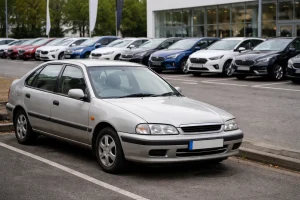
One of the most compelling arguments in the road tax petition revolves around embedded carbon, the environmental cost already paid when a vehicle was first built.
Many newer vehicles may offer lower emissions per mile, but the carbon cost of building them in the first place can outweigh their environmental benefits, especially if they replace a perfectly functioning car.
The Environmental Cost Of Manufacturing New Vehicles
Producing a new car, especially one with complex electronics or hybrid/electric systems, involves:
- Mining and refining rare earth metals
- Transporting materials across global supply chains
- Manufacturing in energy-intensive factories
- Battery production, which is especially carbon-heavy
Research from the International Energy Agency (IEA) suggests that the manufacturing process alone contributes 6 to 35 tonnes of CO₂ to the atmosphere per vehicle.
This carbon debt can take years to offset through lower emissions during driving.
Here is a comparison of lifecycle emissions for different types of vehicles:
| Vehicle Type | Manufacturing Emissions | Annual Driving Emissions | Time to Carbon Break-Even |
| Petrol (new) | 6.5 tonnes | 1.7 tonnes | 4 years |
| Electric (new) | 13 tonnes | 0.8 tonnes | 7–9 years |
| 20–39-year-old (existing) | 0 tonnes | 1.1 tonnes | Already offset |
These figures show that older vehicles, if maintained and driven responsibly, often have a lower net carbon footprint than their newer counterparts.
Encouraging people to scrap these vehicles prematurely simply replaces low-impact cars with high-carbon replacements.
Understanding Embedded Carbon And Vehicle Lifespan
Embedded carbon refers to all the emissions already created in the process of making a vehicle, from mining metals to assembling components.
Once the vehicle is built, those emissions are “sunk,” and keeping that vehicle on the road longer avoids the need for another round of production.
A government sustainability advisor I spoke with said:
“From a net-zero standpoint, reducing new manufacturing is critical. We have to move away from a ‘newer is always better’ mindset. The environmental cost of building something new often outweighs its efficiency benefits unless it is used heavily for years. Keeping existing vehicles on the road, especially low-mileage ones, is aligned with circular economy principles.”
This perspective adds weight to the petition’s environmental rationale. It is not about holding on to polluting vehicles indefinitely, but recognising when replacement causes more harm than good.
How Does This Petition Support UK Heritage And Local Industries?
Beyond the environmental and tax arguments, this road tax petition also raises important points about British heritage and skilled labour.
Cars from the 1980s, 1990s and early 2000s form part of the UK’s rich automotive history. They represent iconic designs, engineering transitions, and cultural touchpoints for different generations.
Preserving these vehicles supports more than just nostalgia. It keeps skilled tradespeople in work, mechanics, welders, auto-electricians, parts suppliers and restorers, many of whom are small business owners and specialists.
Examples Of “Young-Timer” Vehicles With Cultural Significance:
| Make | Model | Production Years | Heritage Value |
| BMW | E36 3 Series | 1990–2000 | Touring car legacy |
| Jaguar | X-Type | 2001–2009 | Compact luxury made in UK |
| Rover | 75 | 1998–2005 | Last of the British Rovers |
| Ford | Puma | 1997–2002 | Iconic small coupe |
Each of these models has a following, a supply chain, and in many cases, a preservation community. Penalising their owners with high tax undermines the viability of keeping them on the road.
Supporting these cars means supporting the continuation of British motoring identity, as well as the practical knowledge and tools used to maintain them.
A reduction in VED could help sustain a viable future for these trades and communities.
Why Should Low-Mileage Older Vehicles Be Taxed Less?
The assumption behind current VED bands is that older vehicles pollute more and therefore should be taxed more. But this logic breaks down when real-world usage is taken into account.
Many 20–39-year-old cars:
- Are used occasionally, not daily
- Are meticulously maintained by enthusiast owners
- Often emit fewer total annual emissions due to low mileage
- Have a long-standing environmental investment already made in them
Here is a usage comparison:
| Vehicle Age | Typical Usage | Annual Mileage | Emissions Output |
| 22-year-old saloon | Weekend/leisure | 2,500 miles | 1.1 tonnes |
| 2-year-old diesel SUV | Commuting/family | 12,000 miles | 2.4 tonnes |
This clearly demonstrates that VED based solely on a car’s original emissions rating does not align with actual environmental impact.
From my own experience, my 2002 Mercedes CLK is used primarily on weekends. I spend more on fuel additives and servicing than most people do on their new car leases.
Yet I’m penalised for choosing to preserve and enjoy a reliable vehicle rather than buy something new.
I’ve had people ask why I don’t switch to something modern and “greener.” My answer is simple: “I’ve already paid the carbon debt.
Why take on another?” This mindset is becoming more common among owners who want to do the right thing environmentally and economically, but find themselves constrained by rigid tax policies.
Will The Government Listen To The Public On VED Reform?

The petition has already exceeded 19,700 signatures, which has triggered the requirement for a formal government response.
If momentum continues and it reaches 100,000 signatures, it will be considered for debate in Parliament.
What Happens After 10,000 Signatures?
Once this threshold is passed, the relevant departmentm typically the Department for Transport or the Treasury, must respond in writing.
The response often outlines current policy rationale and whether changes are under consideration.
Past examples show that high-visibility petitions do lead to internal reviews, especially when supported by credible data and public support.
The 100,000 Signature Debate Threshold
When a petition crosses 100,000 signatures, it qualifies for debate in the House of Commons. While this does not guarantee a change in law, it does bring the issue into public and political focus.
MPs are more likely to engage with topics their constituents care about, especially if the issue affects thousands of households.
Parliament’s Track Record On Transport-Related Petitions
Parliament has previously acted on petitions involving ULEZ zones, fuel duty freezes, and classic car legislation. While progress is often slow, a well-supported petition increases the chances of policy reviews.
This road tax petition fits squarely within the scope of issues Parliament has historically debated, and with the right pressure, it could help shape the future of sustainable motoring policy.
Conclusion
In summary, the road tax petition highlights a practical, environmentally conscious solution to support owners of 20–39-year-old vehicles.
By advocating for a 50% VED reduction, it promotes sustainability, preserves automotive heritage, and supports local industries.
With over 19,700 signatures and growing public support, the petition signals a collective push for smarter, fairer taxation.
If implemented, this change could mark a significant step toward a more balanced and responsible vehicle tax system in the UK.
FAQs About the Road Tax Petition for Older Vehicles
What is Vehicle Excise Duty (VED) and how is it calculated in the UK?
VED is a tax on vehicles used on UK public roads. For newer cars, it’s based on CO₂ emissions. For older cars (registered before March 2001), it’s based on engine size.
Why are cars older than 20 years not exempt like 40-year-old classics?
Current legislation only offers tax exemption once a car hits 40 years. The 20–39-year age group isn’t recognised in VED exemptions, despite many of these vehicles being low usage and heritage-relevant.
What qualifies a car as “historic” in the UK for tax purposes?
Cars aged 40 years or more automatically become tax and MOT exempt under the current rules, assuming they are kept in original condition.
Can reducing VED on older cars really help the environment?
Yes. Preserving existing vehicles prevents the carbon debt of building new ones, especially if the older car is well-maintained and used responsibly.
What is “embedded carbon” and why does it matter?
Embedded carbon refers to the emissions created during a product’s manufacturing. For vehicles, this includes steel, plastics, electronics, and energy used in production.
How likely is it that the government will act on this petition?
The petition’s growing support increases the chance of parliamentary debate. While law changes are never guaranteed, strong public backing can lead to reviews or adjustments.
What are some examples of “Young-Timer” vehicles affected by this?
Cars like the Audi TT Mk1, Jaguar X-Type, Saab 9-5, and even early Toyota Prius models fall into this category. These vehicles are often well-kept and culturally significant.
What is your reaction?