
Sustainable Property Investment: Lessons the UK and Portugal Share

Sustainable property investment is no longer a niche consideration. It is becoming a central part of how real estate is designed, built, and managed in both the UK and Portugal.
Rising energy costs, tighter environmental regulations, and long-term investor expectations are pushing both markets toward greener building practices.
Reports from the UK Green Building Council and the European Environment Agency highlight a shared direction: lower-carbon construction, improved energy efficiency, and more responsible use of materials.
While the UK and Portugal differ in climate and housing stock, the underlying shift is aligned.
This convergence is particularly visible in markets with strong international interest, including coastal regions where lifestyle demand and environmental standards are increasingly linked, such as Algarve property, where sustainability is now a key part of long-term value.
Why Sustainability is Becoming a Market Standard?
Sustainability is no longer positioned as an optional upgrade. It is becoming a baseline expectation for new developments and renovated properties.
In both the UK and Portugal, this shift is driven by three core pressures:
- Rising energy prices
- Stricter building regulations
- Increased buyer awareness of long-term running costs
Properties that ignore efficiency standards are gradually becoming harder to sell or let, especially in competitive markets.
Why Is Sustainable Property Investment Becoming Essential in the UK and Portugal?
Energy Efficiency as a Shared Priority
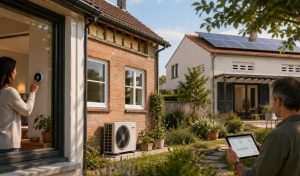
Energy efficiency is one of the strongest links between the two markets. Both countries are focusing on reducing household energy consumption through better insulation, improved heating systems, and smarter building design.
In the UK, retrofit programmes are encouraging upgrades to older housing stock, which makes up a large proportion of the market.
In Portugal, newer developments are increasingly designed with energy performance in mind from the outset.
This difference in starting point creates a shared outcome: improved efficiency across both existing and new housing supply.
Retrofitting Older Homes in the UK
The UK faces a unique challenge due to its ageing housing stock. Many properties were built before modern energy standards existed, which makes retrofitting essential.
Common improvements include loft insulation, cavity wall insulation, double or triple glazing, and upgraded heating systems.
These changes are often supported by government schemes and grants designed to improve national energy performance.
The goal is not only environmental. It is also financial. Lower running costs make homes more attractive to buyers and tenants, supporting long-term market stability.
New Build Sustainability in Portugal
Portugal’s approach is slightly different due to a higher proportion of newer or recently renovated housing in key areas.
In regions such as the Algarve, sustainability is often integrated into design rather than added later.
Developments increasingly focus on:
- Passive cooling and ventilation
- Solar energy integration
- Water efficiency systems
- Locally sourced construction materials
This proactive approach reduces the need for large-scale retrofitting later in the lifecycle of the property.
Materials and Construction Methods
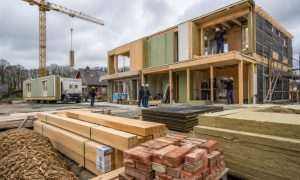
Both countries are adapting construction methods to reduce environmental impact. The UK is expanding the use of timber and off-site construction techniques, while Portugal is increasing attention on sustainable materials and thermal performance in warmer climates.
The European Environment Agency has noted a wider shift across Europe toward reducing embodied carbon in construction materials.
This includes minimising emissions during production, transport, and building processes.
The result is a gradual move away from traditional high-emission materials and towards more efficient alternatives.
Climate Differences, Similar Goals
Although the UK and Portugal have very different climates, their sustainability goals are increasingly aligned.
In the UK, the focus is on retaining heat and reducing energy loss during colder months. In Portugal, particularly in coastal regions, the emphasis is on cooling efficiency and managing energy use during warmer periods.
Despite these differences, both property markets are working toward the same outcome: reducing overall energy demand while improving comfort and liveability.
Investor Expectations are Changing
Sustainability is also influencing investor behaviour. Buyers are now factoring in long-term running costs, environmental performance, and future compliance requirements when assessing property value.
This is particularly relevant in international markets, where investors compare opportunities across countries. A property with strong energy performance is more likely to attract long-term interest and retain value over time.
Regulation is Driving Alignment
Government policy is playing a key role in shaping sustainable property investment.
In the UK, building regulations are becoming stricter, with increased focus on energy performance certificates and carbon reduction targets. In Portugal, EU-wide environmental frameworks are influencing construction standards and renovation practices.
While the pace of change differs, the direction is consistent. Both markets are moving toward higher minimum standards for energy efficiency and environmental performance.
The Role of Renovation in Both Markets
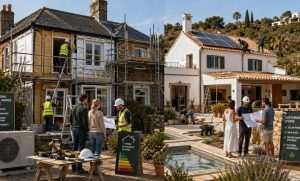
Renovation is central to sustainability in both the UK and Portugal, but for different reasons.
In the UK, renovation is often about upgrading older housing stock to meet modern standards. In Portugal, it is frequently about improving comfort, efficiency, and adapting properties for year-round use.
In both cases, renovation extends property lifespan, reduces waste, and improves market competitiveness.
Technology and Smart Efficiency Systems
Smart home systems are becoming part of sustainable property strategies. Energy monitoring, automated heating controls, and smart lighting systems help reduce unnecessary consumption.
These technologies are increasingly common in both markets, particularly in new builds and high-end renovations.
They allow homeowners and investors to manage energy use more precisely, supporting both cost savings and environmental goals.
Long-term Value and Market Resilience
Sustainable properties are proving more resilient in changing market conditions. Lower running costs, regulatory compliance, and modern design standards all contribute to stronger long-term performance.
In both the UK and Portugal, properties with better energy ratings tend to attract more consistent demand and maintain value more effectively during market fluctuations.
Final Thoughts
Sustainable property investment in the UK and Portugal is evolving along similar lines, even if the starting points differ. Both markets are responding to the same pressures: energy costs, environmental responsibility, and changing buyer expectations.
From retrofitting older UK homes to integrating efficiency into new Portuguese developments, the direction is clear. Sustainability is becoming a defining feature of property value, not an optional consideration.
As this trend continues, investors who prioritise energy efficiency and long-term environmental performance are likely to be better positioned across both markets, particularly in high-demand areas.
What is your reaction?