
How Startups Can Build Brand Identity With Custom Apparel?

Building a recognisable brand from scratch is genuinely one of the harder things about running a startup. Budgets are tight, competition is fierce, and every interaction with the outside world counts.
Custom apparel has quietly become one of the more practical ways for early-stage businesses to create a consistent, visible identity.
From team uniforms to everyday accessories like custom backpacks, the right branded items can shape how people perceive you long before you’ve had a chance to explain what you actually do.
Why Custom Apparel Matters for Startup Brand Identity?
Why Brand Identity Matters Early on?

Brand identity is about much more than a logo or a colour scheme. It’s the feeling someone gets when they encounter your business – and whether that feeling is consistent across every touchpoint.
For startups competing against more established players, that consistency can be the difference between being taken seriously and being overlooked.
Custom apparel contributes to this in ways that are easy to underestimate. It gets worn at events, appears in photos, and shows up on video calls. Done well, it communicates that your team has a clear sense of who you are – and that you care about the details.
Creating Consistency Across Touchpoints
Most startups are operating across several channels at once: social media, a website, in-person meetings, and industry events. Keeping things coherent across all of those isn’t easy, particularly in the early days when everything feels a bit ad hoc.
Branded clothing is one of the more tangible ways to pull things together. When your team turns up to a client meeting or a conference in a consistent, well-designed kit, it creates a unified impression that’s difficult to achieve through digital channels alone.
It signals that you’re organised and intentional – not just winging it. Consistent branding also quietly communicates reliability, which genuinely matters when someone is deciding between you and a competitor they already know.
Choosing the Right Apparel for Your Brand
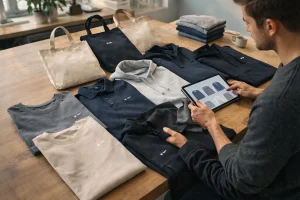
Not every type of branded clothing will be the right fit. The items you choose should reflect your company culture, your audience, and how your team actually operates day to day.
A tech startup might lean towards relaxed, understated pieces – minimalist t-shirts or a decent hoodie.
A service-based business might want something sharper: branded polos or smart casual wear that reads as professional without being stiff. Neither approach is wrong; it just depends on who you are and who you’re trying to reach.
Practicality matters more than people tend to think. If your team isn’t actually going to wear something, it won’t do anything for your brand. The best-performing branded items are the ones people genuinely want to put on.
Supporting Team Identity and Culture
There’s an internal dimension to this as well. For startups – particularly those growing quickly or working with remote teams – a shared sense of identity is genuinely valuable.
Branded clothing can reinforce that sense of belonging, especially around significant moments like a product launch or a big industry event. It’s a simple gesture, but it works.
For distributed teams in particular, receiving a physical item connected to the company has a warmth to it that a Slack message simply can’t replicate.
Using Apparel in Marketing and Visibility
One of the more underrated aspects of branded clothing is how naturally it fits into marketing without feeling like marketing.
When your team wears branded kit in co-working spaces, at events, or just going about daily life, it creates genuine exposure in organic settings.
It also translates well to social media – featuring your team and your branded items in content reinforces your visual identity without much additional effort.
For startups not yet in a position to spend heavily on paid advertising, this kind of visibility is particularly useful. It’s cost-effective, it’s authentic, and you maintain full control over how your brand is being represented.
Apparel as Part of Customer Experience
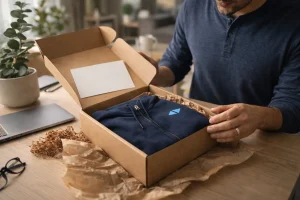
Branded items can also factor into how customers experience your business directly. Welcome packs, promotional giveaways, loyalty gestures – including thoughtfully chosen apparel in any of these can make an interaction far more memorable.
Items that feel genuinely useful land very differently from things that are clearly just promotional filler.
When something is good, people use it – and every time they do, your brand is quietly in the room. A well-designed piece that someone reaches for regularly is doing long-term work for your brand recognition, well after the initial interaction.
Balancing Creativity and Simplicity
The temptation when designing branded clothing is to pack in too much – elaborate graphics, multiple colours, excessive detail. In practice, the simpler approach tends to age better and travel further.
Clean designs, a restrained colour palette, and subtle branding are worn more often and more widely.
That longevity is where the real value lies. An item someone wears regularly for two years is worth considerably more to your brand than something stuffed in a drawer after a fortnight.
Simplicity doesn’t mean boring, though. Limited-edition designs or event-specific pieces can introduce creativity without muddying your core identity.
Final Thoughts
Every decision a startup makes in its early days contributes to how it’s perceived – and branded apparel is no exception.
Used well, it supports consistency across your team, your marketing, and your customer relationships without requiring a significant budget.
The most effective approach isn’t about producing promotional items for the sake of it.
It’s about integrating your brand into everyday experiences in a way that feels natural and accurate – whether someone encounters it online, in person, or somewhere in between. As part of a broader branding strategy, custom apparel can quietly do a lot of the heavy lifting right from the very start.
What is your reaction?