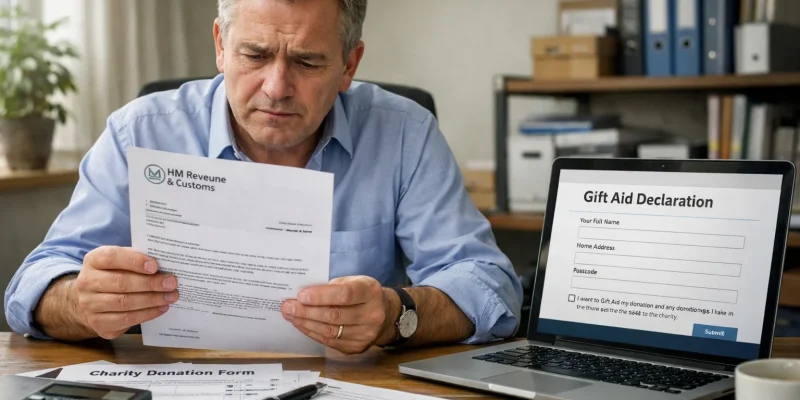
What Happens If You Gift Aid But Don’t Pay Tax?

Gift Aid is a valuable scheme that allows UK charities to claim back the basic rate of tax on donations made by individuals.
While it seems straightforward on the surface, complications arise when individuals make Gift Aid declarations without meeting the tax requirements.
Understanding the consequences of such actions is crucial for both donors and charities alike.
In this article, we’ll explore what Gift Aid is, the tax rules that govern it, and what happens if someone falsely or mistakenly claims Gift Aid while not paying enough tax.
This guide will help clarify the risks, responsibilities, and steps to take if you realise you don’t meet the eligibility requirements.
What Is Gift Aid And How Does It Work?

Gift Aid is a government initiative in the UK that allows registered charities to increase the value of donations made by individuals who pay tax in the UK.
It operates by reclaiming the basic rate of tax already paid by the donor on the money being donated.
When an individual gives money to a charity and confirms they are a UK taxpayer through a Gift Aid declaration, the charity can then reclaim an additional 25p from HMRC for every £1 donated.
This system significantly boosts charitable donations at no extra cost to the donor. For instance, if you donate £100, the charity ends up with £125 once the Gift Aid claim is processed, provided you have paid at least £25 in UK Income or Capital Gains Tax during that tax year.
For the Gift Aid scheme to be valid, the donor must complete a Gift Aid declaration.
This declaration confirms that they have paid enough tax in the relevant tax year to cover the amount the charity is reclaiming.
How Much Can Charities Reclaim Through Gift Aid?
| Donation Amount | Gift Aid Reclaim (25%) | Total Value to Charity |
| £10 | £2.50 | £12.50 |
| £50 | £12.50 | £62.50 |
| £100 | £25.00 | £125.00 |
| £200 | £50.00 | £250.00 |
Gift Aid applies only to donations from individuals, not from companies or other entities.
It is a mechanism that enhances the donor’s contribution and provides more resources to the charity without additional financial burden on the donor, provided they meet the tax requirements.
Who Is Eligible To Make A Gift Aid Declaration?
To be eligible to make a Gift Aid declaration, an individual must have paid enough UK Income Tax or Capital Gains Tax in the same tax year as the donation. This tax can come from various sources, including:
- Employment or self-employment income
- Pension income (state or private)
- Interest on savings and investments
- Dividends from shares
- Taxable capital gains
If the total tax paid in a tax year is lower than the total amount of tax being reclaimed through Gift Aid, the donor is not eligible, and HMRC will seek to recover the difference.
It’s also worth noting that tax on savings interest and dividends is included, but National Insurance contributions and Council Tax are not considered.
Why Does HMRC Expect You To Pay Tax Before Gift Aiding?
HMRC expects donors to have paid tax because the reclaimed amount given to charities is drawn from taxes the donor is presumed to have paid.
Gift Aid works on the basis that the donation has already been taxed. By claiming Gift Aid, the charity is effectively getting that tax refunded from HMRC.
A donor who makes a Gift Aid declaration is legally confirming that they are a UK taxpayer who has paid at least as much in Income or Capital Gains Tax as the charity will reclaim.
This confirmation is binding and if proven incorrect, HMRC has the authority to collect the underpaid tax from the donor.
Many individuals overlook this obligation, particularly if they have stopped working, are retired with non-taxable income, or have fallen below the personal allowance threshold.
In such cases, although the donation may have been well-intentioned, the Gift Aid declaration becomes invalid if not enough tax has been paid.
What Happens If You Haven’t Paid Enough Tax?

If you haven’t paid enough tax in the relevant tax year to cover the Gift Aid claimed by one or more charities, HMRC considers this an overclaim and holds the donor responsible.
This often results in a bill from HMRC requesting repayment of the tax amount equivalent to the Gift Aid claimed on your donations.
This situation is more common than expected, particularly among people with:
- Low-income levels
- Non-taxable pensions or benefits
- Tax-exempt investment income
- No income during part of the year due to unemployment or career breaks
Example Scenario:
Let’s assume a person donates £400 to a charity and ticks the Gift Aid box. The charity reclaims £100 from HMRC, bringing the total donation value to £500.
If that donor only paid £50 in tax that year, HMRC will pursue them for the remaining £50.
This shortfall must be repaid directly to HMRC. If left unpaid, the amount can be collected through adjustments in the individual’s tax code, added to their Self Assessment liability, or followed up through enforcement procedures.
Example Of Gift Aid Tax Shortfall
| Donation | Gift Aid Claimed | Required Tax Paid | Actual Tax Paid | Tax Shortfall |
| £400 | £100 | £100 | £50 | £50 |
| £200 | £50 | £50 | £20 | £30 |
How Does HMRC Recover Gift Aid From Non-Taxpayers?
HMRC typically becomes aware of Gift Aid issues through various channels. One of the most common is through Self Assessment tax returns, where taxpayers declare their income and charitable donations.
If there’s a mismatch between the declared tax paid and the amount of Gift Aid claimed by charities, HMRC initiates action.
Even if a person is not in Self Assessment, HMRC can still identify inconsistencies through routine audits or cross-referencing donor data with charity claims.
Recovery of the overclaimed tax may involve:
- Sending a formal notice requesting repayment
- Adjusting the individual’s tax code in future tax years
- Charging interest on the unpaid amount
- Pursuing legal action in severe or repeated cases
While HMRC generally treats such situations as errors rather than fraud, repeated or deliberate false declarations could lead to penalties.
What Should You Do If You Realise You’re Not Eligible?

If you become aware that you haven’t paid enough tax to cover your Gift Aid declarations, it’s important to act promptly. Failure to do so could result in interest charges or penalties from HMRC.
Here are the key steps to take:
- Inform All Charities: Contact the charities to which you’ve donated and inform them that your tax circumstances have changed. Ask them to stop claiming Gift Aid on your donations immediately.
- Cancel Existing Gift Aid Declarations: You have the right to cancel a declaration at any time. Once cancelled, the charity can no longer reclaim tax on any future donations from you.
- Review Your Tax Records: Check how much tax you’ve paid in the relevant tax year. If you’re unsure, contact HMRC or refer to your P60, P45, or Self Assessment records.
- Repay Any Shortfall: If you discover that Gift Aid has been overclaimed, contact HMRC to report the discrepancy. They will inform you of the amount owed and the method of payment.
Early action is crucial. HMRC may show leniency if the error is genuine and the donor acts quickly to rectify it.
Can You Cancel A Gift Aid Declaration?
Gift Aid declarations are not irrevocable. They can be cancelled by the donor at any time, and charities are obligated to stop claiming Gift Aid once they have been informed.
A cancellation applies to all donations made after the date of the cancellation. It does not typically affect past donations unless you also request the charity to stop any claims made within the last four years.
To cancel a Gift Aid declaration:
- Send a written notice (email or letter) to the charity
- Include your name, address, and details of the donations
- Request confirmation that the Gift Aid declaration has been cancelled
Charities are required to keep records of all Gift Aid declarations for at least six years, even if the declaration has been cancelled.
What Are The Risks For Charities Accepting Invalid Declarations?

Charities have a responsibility to ensure that Gift Aid claims are legitimate. While the primary responsibility lies with the donor, HMRC also holds charities accountable for due diligence.
If a charity repeatedly claims Gift Aid on donations from ineligible donors or fails to inform donors properly about the tax implications, HMRC may impose the following consequences:
- Require the charity to repay the Gift Aid amount
- Charge interest on the overclaimed amounts
- Apply financial penalties
- Suspend or revoke the charity’s Gift Aid status
Charities can mitigate these risks by:
- Providing clear guidance about Gift Aid eligibility on donation forms
- Including a checklist or example scenarios
- Regularly reviewing and auditing their Gift Aid records
- Training staff and volunteers who manage donations
Failure to comply with Gift Aid regulations can harm a charity’s finances and reputation. Therefore, establishing a strong compliance framework is essential.
How Can You Avoid Unexpected Tax Bills From Gift Aid?
To avoid receiving a bill from HMRC due to an invalid Gift Aid claim, donors should take proactive steps to monitor their tax status and donation activity.
Useful practices include:
- Calculate Your Tax Liability: Estimate your total tax paid in the current tax year. This includes tax on wages, pensions, savings, and investments.
- Match Donations With Tax Paid: Make sure that the total Gift Aid reclaimed on your donations does not exceed the amount of tax you have paid.
- Use HMRC Tools: HMRC provides online calculators that can help determine your eligibility for Gift Aid based on your income and tax.
- Cancel Declarations When Circumstances Change: If you retire, reduce your working hours, or have a change in financial situation, review your tax liability and update or cancel your Gift Aid declarations accordingly.
- Keep Accurate Records: Maintain a log of all your Gift Aid donations for each tax year. This can help you track how much tax must be paid to support the donations made.
Being cautious and well-informed is the most effective way to participate in the Gift Aid scheme without facing unexpected consequences.
Conclusion
Gift Aid is a beneficial scheme designed to boost charitable giving, but it comes with a responsibility.
The moment a donor signs a Gift Aid declaration, they are entering into a tax-related agreement with HMRC.
If a person does not pay enough UK Income or Capital Gains Tax to cover the amount reclaimed, they will be personally liable for the shortfall.
While Gift Aid maximises the value of charitable donations, it’s not suitable for everyone. Donors should regularly check their eligibility, and charities must maintain robust compliance practices.
Transparency and awareness are key to ensuring that the scheme works as intended—benefiting both donors and the charitable causes they support.
Frequently Asked Questions
Can you claim Gift Aid if you don’t work but pay some tax?
Yes, if you pay any UK Income or Capital Gains Tax—even on savings interest or dividends—you can claim Gift Aid, provided the total tax you pay covers the amount reclaimed by the charities.
What happens if a student claims Gift Aid but has no income?
If the student has not paid sufficient tax in the tax year, they will be liable to repay HMRC the amount the charity claimed through Gift Aid. It’s important for students to check their tax status before signing a declaration.
How do pensioners know if they qualify for Gift Aid?
Pensioners qualify if they pay enough Income Tax on their pension income. If the tax deducted from their pension covers the Gift Aid amount claimed by charities, they are eligible.
Is it illegal to claim Gift Aid if you’re not paying tax?
It’s not a criminal offence, but it is a false declaration. HMRC treats it as an error and requires the individual to pay back the tax claimed. Repeated or deliberate abuse may lead to further investigation or penalties.
Will HMRC always chase the donor for Gift Aid errors?
Yes, HMRC holds the donor responsible for ensuring they meet the criteria. They usually pursue the individual if there’s a shortfall between the tax paid and the Gift Aid claimed.
Can Gift Aid declarations be backdated or cancelled?
Yes, Gift Aid can be backdated for up to four years, but only if the donor was eligible in that period. Declarations can also be cancelled at any time for future donations.
How DO I check how much tax I’ve paid in a year for Gift Aid?
You can check your tax payments by reviewing your P60, payslips, Self Assessment account, or by contacting HMRC directly. This will help ensure you remain eligible for Gift Aid.
What is your reaction?