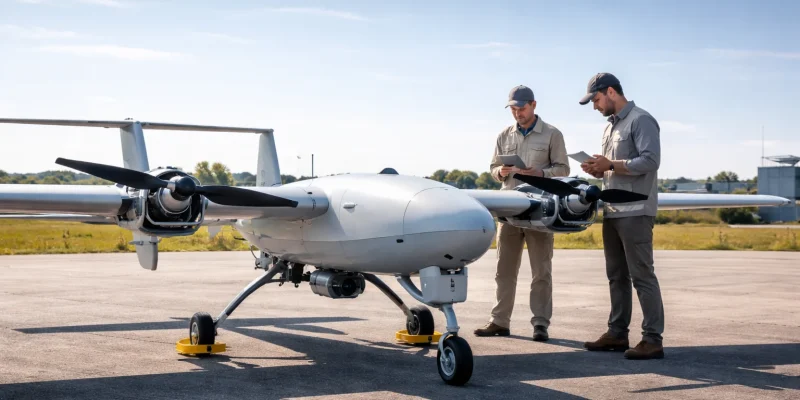
Emerging UAV Propulsion Technologies for Enhanced Performance

Looking to unlock more performance from your drone fleet?
The propulsion system is the heart of any UAV. It powers your aircraft and determines flight distance, speed, and endurance. Propulsion technology is advancing rapidly these days.
Take a look…
The old days of 25-minute battery-powered drones are a thing of the past. New propulsion technologies are emerging that are redefining the capabilities of unmanned aircraft systems.
This post explores what is going on in UAV propulsion technology today.
Summary of Articles in Series:
- Why UAV Propulsion Technology is Important
- Electric Propulsion Systems and How They Work
- Hybrid-Electric Systems Explained
- Hydrogen Fuel Cells: The Future of UAV Propulsion Systems?
- Selecting the Right Propulsion System for Your Needs
Why UAV Propulsion Technology is Important?
The UAV propulsion system market is expanding rapidly. According to MarketsandMarkets, the market will be worth $7 billion in 2025 and is expected to reach $11.3 billion by 2030. The compound annual growth rate (CAGR) is 10%.
The growth is happening for a reason. Propulsion technology is the one area that almost every industry can improve.
Better propulsion systems enable longer flight times, heavier payloads, faster speeds, and more endurance. That is a benefit all across the commercial and military sectors.
Knowledge of UAV components and their various technologies is important for anyone involved with drone sourcing and procurement.
Assembling UAV components from a trusted cube pilot partner in North America starts with understanding what is available now.
Propulsion technologies have an immediate and direct impact on mission performance.
Pretty simple, right?
But let’s dig into where things stand right now.
Electric Propulsion Systems and How They Work
Electric propulsion is the most common power plant for small to medium-sized UAVs today.
Electric motors are highly efficient and can achieve as much as 98% efficiency at cruise speeds.
They have an extremely low heat signature. Electric motors require much less maintenance than conventional internal combustion engines or turbine engines.
The advantages add up quickly:
- Silent operation: Ideal for surveillance and inspection tasks
- Zero emissions: No exhaust gas to clean up after missions
- Simple maintenance: Fewer moving parts means less downtime
- Modular design: Easy to swap components and upgrade over time
Electric propulsion is climbing at a 15.78% CAGR through 2030. The growth indicates how important electric power is for the direction of the industry.
But electric systems are only as good as the batteries that power them. Battery energy density is the one area where electric propulsion lags behind.
Lithium-ion batteries cannot store enough energy for long-endurance missions. Hybrid and alternative propulsion systems attempt to solve this problem.
Hybrid-Electric Systems Explained
Hybrid propulsion is where things get interesting. Hybrid UAVs use both electric motors and internal combustion engines or turbogenerators.
The result is greater range and endurance than possible with pure electric systems.
Picture a hybrid car. The electric motor does the takeoff and landing quietly. A combustion engine provides power during long-distance cruising.
The benefit is that the drone has significantly longer flight times but does not have to give up the stealth benefits of electric power.
This opens new possibilities, particularly for military applications where acoustic detection is a risk.
DARPA’s XRQ-73 SHEPARD hybrid drone is an example of what this technology can do.
The system provides multi-hour loiter capability without the thermal signature of a combustion engine.
The concept of hybrid propulsion works because it extends the endurance of electric systems while maintaining their other advantages.
A number of defense modernization programs worldwide are investing in these technologies.
The evidence is in the numbers. The hybrid segment is expected to experience the fastest growth rate of all, with a CAGR of over 17% through 2030.
Hydrogen Fuel Cells: The Future of UAV Propulsion Systems?
Hydrogen fuel cells may just be the most interesting propulsion technology for the UAV industry.
Fuel cells create electricity through an electrochemical reaction of hydrogen and oxygen. The only byproduct is water vapor.
Here are some interesting points about hydrogen propulsion:
Fuel cells provide three to four times higher energy density than batteries. The real-world effect is significantly longer flight times.
The most successful hydrogen-powered drones have exceeded two hours between refueling events.
That is a world away from the 25 minutes available from the majority of battery-powered drones. That difference is huge.
Other advantages include:
- Extended range: BVLOS missions become more realistic
- Rapid refueling: Swap hydrogen tanks in under one minute
- Zero emissions: Clean power for environmentally sensitive missions
- Efficiency at high altitude: Surpasses combustion engines
- Minimal maintenance: Fuel cell stack has no moving parts
Industry research has shown that hybrid systems that combine a fuel cell with a battery provide endurance improvements of more than 60% compared to single power systems.
The technology is already making an impact. Drone inspection companies are investigating hydrogen fuel cells as a way to maximize uptime and massively increase flight times for infrastructure inspection.
Selecting the Right Propulsion System for Your Needs
As you can see, different propulsion technologies are best suited to different mission requirements.
Pure electric propulsion remains the choice for short-range, low-noise applications.
The simplicity and low maintenance requirements make it well-suited to inspection, mapping, and aerial photography tasks.
Hybrid-electric power plants are the logical choice for longer-endurance missions that need the balance of range and low acoustic signature.
Hydrogen fuel cells are the go-to technology when maximum flight time is required.
Applications include pipeline inspections, border security, and other uses where hours of continuous flight is necessary.
When choosing a propulsion system, consider these important points:
- Mission duration needs
- Payload capacity requirements
- Operating environment
- Maintenance resources
- Regional regulatory constraints
Propulsion technologies are still rapidly developing. Solid-state battery technology is coming that may achieve energy densities above 400 Wh/kg. That would eventually narrow the gap with hybrid systems.
But for now, the smart strategy is to match propulsion systems to mission needs.
Final Thoughts
UAV propulsion technology is a rapidly changing area that has the ability to increase the performance of your drone fleet dramatically.
Electric propulsion remains the best choice for short-range UAVs where efficiency and minimal maintenance are key.
Hybrid systems offer extended range while still providing the stealth benefits of electric power.
Hydrogen fuel cells have the ability to provide three to four times the endurance of electric systems.
Selecting the right propulsion technology is a critical decision that directly impacts mission capability.
The growth in the UAV propulsion system market shows how important this factor is to all segments of the UAV industry.
Quick recap:
- Electric systems are highly efficient and require minimal maintenance
- Hybrid UAVs have greater range but still offer the stealth benefits of electric power
- Hydrogen fuel cells are quickly emerging as the propulsion technology for maximizing flight times
- Matching propulsion system to mission need is essential
The right propulsion system has an immediate and direct effect on the performance of your UAV fleet.
Understanding the available options for each technology is important for everyone involved with drones in any capacity.
The future of UAV performance starts with the propulsion system.
What is your reaction?