
How to Get Double Tax Relief on Your Pension Lump Sum?

Understanding how to get double tax relief on your pension lump sum can significantly enhance your retirement income.
With rising financial pressures, UK pension holders are exploring legal methods like pension recycling to maximise savings.
While HMRC allows this strategy under strict conditions, many remain unaware of the compliance rules.
This guide explains how pension lump sum reinvestment works, who it benefits, and how to stay within HMRC guidelines to avoid costly tax penalties.
What Is Pension Lump Sum and How Is It Taxed in the UK?
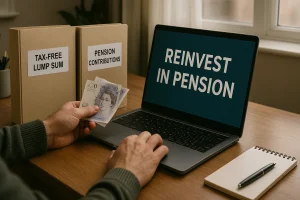
When an individual reaches the minimum retirement age, currently set at 55, they are typically entitled to take a portion of their pension as a tax-free lump sum.
This is commonly known as a pension commencement lump sum (PCLS). According to UK pension legislation, 25% of a defined contribution or defined benefit pension pot can be withdrawn without triggering an income tax charge.
This tax-free allowance is a significant advantage for retirees looking to access cash while minimising their tax burden.
The rules around pension lump sums are straightforward on the surface. A person may:
- Withdraw up to 25% of their pension pot tax-free
- Take the rest of the pot as a taxable income, either through annuity, drawdown, or lump sum withdrawals
- Access their pension from age 55, rising to age 57 from April 2028
The remaining 75% of the pension pot is subject to standard income tax based on the individual’s total annual income.
Therefore, strategic withdrawal and reinvestment planning can help retirees reduce tax on the taxable portion of their pension while taking full advantage of allowable tax relief.
How Does Pension Tax Relief Work in the UK?
Pension tax relief operates on the principle of incentivising long-term saving. Contributions made into a pension scheme receive tax relief at the contributor’s marginal rate of income tax. This means:
- Basic rate taxpayers (20%) get 20% tax relief
- Higher rate taxpayers (40%) can claim an extra 20% through Self Assessment
- Additional rate taxpayers (45%) can claim an extra 25%
For example, a £100 pension contribution costs a basic-rate taxpayer only £80.
The government contributes the remaining £20 as tax relief. For a higher-rate taxpayer, the net cost can be as low as £60 for every £100 saved.
Annual Allowance Limits
The Annual Allowance is currently set at £60,000 per year or 100% of annual earnings, whichever is lower.
Contributions exceeding this threshold may not receive tax relief and could result in an Annual Allowance charge.
The carry forward rule allows individuals to use unused allowances from the previous three tax years, subject to certain conditions.
Tax relief is claimed in two primary ways:
- Automatically through a workplace pension scheme using the net pay or relief at source method
- Manually via Self Assessment for personal pension contributions
The tax relief mechanism is central to strategies like pension recycling, where tax-free cash is reinvested back into a pension scheme.
What Is Pension Recycling and How Can It Lead to Double Tax Relief?
Pension recycling refers to the act of reinvesting the tax-free lump sum back into a pension scheme to gain further tax relief.
This essentially allows a person to obtain tax advantages twice: once when withdrawing the lump sum and again when reinvesting it into a pension.
The logic behind the strategy is to increase pension savings by using tax-free cash as a new contribution. If done correctly, it may enable the individual to receive:
- An additional 20% or more in tax relief on the reinvested sum
- A larger pension fund value in the long term
- Enhanced income or drawdown flexibility during retirement
HMRC allows pension recycling within specific limits and conditions. When those limits are exceeded, the contribution may be deemed artificial and no longer eligible for tax relief.
Breaching the rules can result in tax charges that cancel out any potential benefit.
What Are the Conditions HMRC Requires for Pension Recycling to Qualify?
HMRC has laid out several conditions to assess whether pension recycling has occurred and whether it falls within acceptable parameters.
These rules ensure the strategy is not misused for unintended tax advantages.
Key Conditions Include
- The individual must have taken a tax-free lump sum
- Additional contributions must be made to a registered pension scheme by the individual or a third party
- The additional contributions must be significantly greater than normal
- The total tax-free cash taken, combined with other lump sums in the last 12 months, must exceed £7,500
- The additional contributions must exceed 30% of the lump sum withdrawn
- The recycling must have been pre-planned, not incidental
If these conditions are met, and the contributions are deemed to be funded directly or indirectly by the tax-free lump sum, then pension recycling rules may apply, and HMRC could disallow tax relief.
Pre-planning is the most critical factor. If an individual intended to reinvest the lump sum into a pension at the time of withdrawal, and this can be evidenced by HMRC, then the transaction is more likely to be scrutinised.
Example from Industry Insight
Helen Morrissey from Hargreaves Lansdown explains that an example of pre-planning may involve taking out a short-term loan to make a larger pension contribution and repaying the loan with the tax-free lump sum. This indirect funding route is still considered recycling under HMRC rules.
How Can You Legally Reinvest a Pension Lump Sum for Maximum Tax Relief?
While recycling may appear complex, it can be conducted legally if managed correctly and within HMRC’s specified limits.
The key is to ensure that any reinvestment does not appear as a pre-planned effort to gain additional tax relief and that contribution thresholds are not exceeded.
Legal Strategies Include
- Reinvesting less than 30% of the lump sum
- Keeping total contributions in line with historic patterns
- Documenting the purpose of withdrawals (e.g., debt repayment or helping a family member)
- Spacing out contributions over a longer period to avoid sudden increases
- Consulting an independent financial adviser to support tax planning decisions
When reinvesting, it is also important to ensure contributions stay within the Annual Allowance. High earners may need to consider the Tapered Annual Allowance, which reduces the £60,000 limit depending on adjusted income.
What Are the Common Pitfalls When Attempting Pension Recycling?

Pension recycling is a strategy that walks a fine line between smart tax planning and unintentional non-compliance. Understanding the common pitfalls can help individuals avoid penalties or tax charges from HMRC.
Frequent Pitfalls Include
- Exceeding the 30% contribution limit
- Contributing significant amounts shortly after taking a lump sum
- Failing to track other lump sums taken in the previous 12 months
- Assuming employer contributions are exempt from recycling rules
- Not maintaining a clear paper trail of decision-making and financial advice
Misunderstanding the pre-planning rule is another major issue. For example, if an individual takes the tax-free lump sum with the intention of helping a child with a house deposit but ends up reinvesting the unused portion later, the intent at the time of withdrawal could still come under HMRC review.
Who Should Consider Using This Pension Tax Strategy?
The double tax relief opportunity through pension recycling is not suitable for everyone.
It requires a specific financial position and retirement outlook. Individuals who may benefit include:
- Higher-rate or additional-rate taxpayers seeking to increase tax efficiency
- Those approaching retirement with no immediate income needs
- People with a strong cash position looking to optimise long-term savings
- Individuals wishing to pass on more tax-efficient assets to their beneficiaries
For some, the strategy can be a method of reducing mortgage debt and then redirecting surplus funds into pension investments.
Others may use it to provide financial help to children and reinvest remaining funds without breaching HMRC thresholds.
Example Profile of a Suitable Candidate
| Characteristic | Details |
| Age | 55 to 67 years old |
| Tax Status | Higher-rate taxpayer |
| Pension Size | £100,000+ |
| Lump Sum Taken | £25,000 (tax-free) |
| Reinvestment Plan | £5,000 over next 6 months |
| Advice Taken | Yes – IFA consulted |
This individual stays within both the Annual Allowance and the 30% recycling rule, avoiding any HMRC penalties while benefiting from additional tax relief.
How Can Pension Lump Sum Recycling Help with Long-Term Financial Planning?

For those who execute the strategy within legal boundaries, pension recycling can offer substantial long-term financial benefits.
It not only increases the size of the pension fund but also allows for greater flexibility in later life financial planning.
Key Financial Planning Advantages
- Enhances compound growth within the pension due to reinvested contributions
- Offers future tax-free lump sum opportunities from the reinvested portion
- Reduces overall taxable income if the reinvested amount boosts pension value used later in low-income years
- Contributes to inheritance tax mitigation, as pension pots are usually excluded from IHT calculations
Recycling can also align with broader estate planning strategies. For example, unused pension pots can be passed to beneficiaries free of income tax if the individual dies before age 75. Even beyond 75, beneficiaries will only pay income tax at their own marginal rate.
Benefits of Strategic Pension Recycling
| Benefit | Impact on Retirement Planning |
| Additional tax relief | More disposable income or pension growth |
| Tax-efficient inheritance | More wealth passed on to family with reduced liabilities |
| Income smoothing | Flexibility to draw income when tax rates are lower |
| Increased fund for annuity/drawdown | Greater long-term financial security |
Engaging with a regulated financial adviser ensures that the recycling strategy forms part of a broader financial plan that takes all relevant tax, legal and regulatory considerations into account.
Conclusion
For UK pension savers, the opportunity to gain double tax relief through careful lump sum reinvestment offers substantial long-term value.
When managed correctly and within HMRC limits, pension recycling can improve tax efficiency and support broader retirement planning.
However, due to the complexity of the rules, professional financial advice is essential. With informed planning and accurate execution, individuals can legitimately boost their pension pot and enhance financial security without breaching regulatory thresholds.
FAQs About Pension Lump Sum and Double Tax Relief
What is the current age to access a tax-free pension lump sum in the UK?
As of 2025, you can access your pension and withdraw a tax-free lump sum from the age of 55. This will rise to 57 from April 2028.
Can I get tax relief on a pension contribution made from a tax-free lump sum?
Yes, but only if it meets HMRC rules. If it’s considered “pension recycling,” and exceeds contribution limits or pre-planning rules, it may not qualify for additional relief.
How does HMRC detect pension recycling?
HMRC looks for patterns like large contributions made after lump sum withdrawals, particularly if the contributions exceed 30% of the lump sum or are made within 12 months.
Is there a limit to how much tax relief I can receive in one year?
Yes, the Annual Allowance currently caps total contributions at £60,000 (or 100% of earnings) per tax year. Contributions above this may lose tax relief and incur charges.
Can my employer’s contributions trigger a recycling investigation?
Yes, if employer contributions are part of a pre-planned scheme to recycle your tax-free lump sum, HMRC could investigate and treat it as a breach.
Is pension recycling the same as pension drawdown?
No, pension drawdown refers to accessing pension funds over time, while recycling involves reinvesting a lump sum back into a pension for tax benefits.
Can I recycle part of my lump sum to help family and still get tax relief?
If you only reinvest a portion of the lump sum (under 30%) and it isn’t pre-planned for extra relief, it may still qualify for standard tax relief without breaching rules.
What is your reaction?