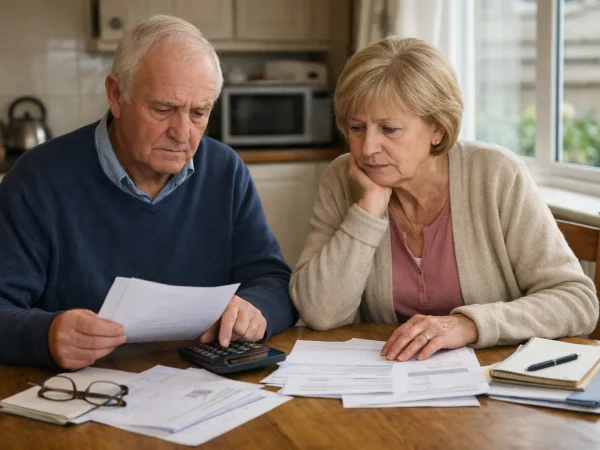
HMRC Sending Tax Refund Letters to Millions of UK Households in 2025

HMRC has started issuing millions of tax refund letters to UK households as part of its post-tax year reconciliation for 2025.
These communications aim to correct overpayments made through the PAYE system and alert individuals to any additional tax owed on savings.
With many unaware of how savings interest can affect their tax liability, it’s essential to understand why these letters are being sent, who receives them, and how to respond correctly to avoid financial surprises.
Why Is HMRC Sending Out Millions of Tax Refund Letters in 2025?
In the 2025 tax year, HM Revenue and Customs (HMRC) began issuing tax refund letters, known as P800 tax calculation letters, to approximately four million households across the UK.
These letters are sent as part of the end-of-year reconciliation process where HMRC reviews tax payments for employees and pensioners who pay tax via the Pay As You Earn (PAYE) system.
When HMRC identifies that a taxpayer has paid more income tax than necessary, a P800 letter is issued.
This letter outlines the refund amount and provides instructions on how to claim it. Refunds typically result from:
- Inaccurate tax codes
- Multiple jobs or pensions
- Taxable benefits not included in your code
- Income changes that weren’t reported in real-time
The 2025 rollout is significant in volume due to the increased use of automated data-matching technology that allows HMRC to detect discrepancies with greater accuracy.
Who Will Receive a Tax Refund Letter from HMRC?
Not every taxpayer will receive a P800 letter. HMRC typically sends these notices to individuals who meet specific conditions under the PAYE scheme. The primary recipients include:
- Employees who changed jobs during the year
- Pensioners with multiple income streams
- Individuals who didn’t claim allowable expenses
- People whose tax codes did not reflect their true earnings or deductions
Those under Self Assessment are not included in this mailing because they calculate and report their own tax.
For PAYE taxpayers, HMRC uses employer and pension provider information to determine overpayments or underpayments.
Many households will receive letters due to shifts in employment patterns, particularly as temporary, contract, and part-time roles have become more prevalent.
These changes can result in incorrect tax deductions if the PAYE system isn’t updated promptly.
What Is a P800 Letter and What Should You Do If You Receive One?
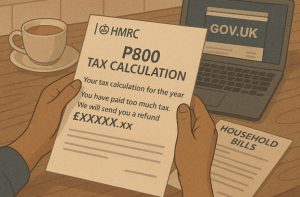
A P800 letter is a formal document from HMRC indicating whether a taxpayer is owed a refund or has underpaid tax.
It details income, benefits, tax paid, and any outstanding balance for the previous tax year. The P800 does not require taxpayers to act unless they’re owed a refund or disagree with the calculation.
If a refund is due, the letter outlines how to claim it either online or by post. The fastest option is using HMRC’s secure online system, which requires:
- A Government Gateway account
- The P800 reference number
- A UK bank account
If no claim is made online within 45 days, a cheque is automatically posted to the taxpayer’s registered address.
Claims made online typically process within five working days, whereas cheque payments may take up to two weeks.
For underpayments, HMRC usually adjusts the tax code for the next financial year, spreading the owed amount across future earnings rather than demanding a lump sum. However, if the underpayment is significant, they may request full payment.
How Much Tax Might You Owe If You Have More Than £3,500 in Savings?
Understanding the Personal Savings Allowance (PSA)
The Personal Savings Allowance (PSA) determines how much interest you can earn on your savings without paying tax.
This threshold varies depending on your total annual income. If your savings generate interest above the PSA limit, HMRC will require you to pay tax on the excess.
| Annual Income Range | Personal Savings Allowance | Tax Rate on Excess Interest |
| Up to £50,270 | £1,000 | 20% (basic rate) |
| £50,271 – £125,140 | £500 | 40% (higher rate) |
| Over £125,140 | £0 | 45% (additional rate) |
Even moderate savings of £3,500 can push individuals over the allowance, depending on how and when interest is paid.
Example Scenario: Fixed-Term Account Interest
Fixed-term savings accounts are one of the most common causes of exceeding the PSA because they typically pay out all accumulated interest at the end of the term. This means all the interest counts toward a single tax year.
If you invested £3,500 into a 3-year fixed account at 5% interest, you would earn over £500 in interest in one lump sum.
For higher-rate taxpayers with a PSA of £500, this would trigger a tax liability. Even basic-rate taxpayers could owe tax if they have additional interest from other sources.
Impact of Exceeding the Allowance
The amount you owe depends on your tax band and how far your interest exceeds the allowance:
- Basic-rate taxpayers pay 20% on the amount over their PSA.
- Higher-rate taxpayers pay 40%.
- Additional-rate taxpayers pay 45%.
So, exceeding the allowance by just £100 could result in a £40 tax charge for a higher-rate earner. Larger balances in high-interest accounts will naturally increase the amount owed.
How Can Savings Interest Push You Over the Tax-Free Limit?
Timing of Interest Payments and Tax Year Relevance
The timing of when interest is paid significantly affects how it is taxed.
Interest from fixed-rate savings accounts is typically paid at the end of the term and is considered income for the tax year in which it is paid, not accrued.
This can mean three years’ worth of interest is taxed in a single tax year, even if the money was deposited much earlier.
This “crystallised” interest can lead to unexpectedly breaching your PSA in one go.
Savings Examples That Trigger Tax Liability
Below is a table showing how different savings amounts can generate interest that exceeds PSA limits:
| Savings Balance | Interest Rate | Interest Earned | Taxpayer Income Level | PSA Breach |
| £3,500 (3 yrs) | 5% | £525 (lump sum) | £50,271 – £125,140 | Yes |
| £11,000 (1 yr) | 5% | £550 | £50,271 – £125,140 | Yes |
| £21,000 (1 yr) | 5% | £1,050 | Under £50,270 | Yes |
Even if individual accounts earn less than £500 or £1,000 in interest, having multiple accounts with smaller balances can collectively exceed your PSA.
Combined Interest From Multiple Accounts
Many savers hold money in various types of accounts—regular savers, fixed bonds, easy-access, or peer-to-peer lending.
Although each might earn modest interest individually, the combined total is what matters for tax purposes.
Key considerations include:
- Interest is reported to HMRC automatically by financial institutions.
- Even dormant accounts generating interest are included.
- Failure to track cumulative interest could result in underpayment.
The Role of Tax Band Changes
An individual’s income level directly affects the PSA, so if your salary increases mid-year or if you’re promoted, your PSA could decrease, changing your tax liability.
This is especially important for those who cross the £50,270 income threshold, which reduces the PSA from £1,000 to £500.
Unexpected bonuses or investment income can also shift you into a new tax band, further complicating how savings interest is taxed.
What Income Sources Count Towards Your Personal Savings Allowance?
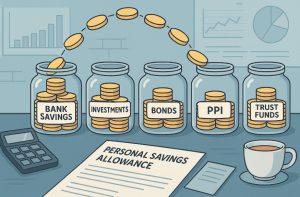
The PSA covers a wide range of income sources, not just traditional bank interest. Many of these can lead to an unexpected tax bill if not tracked properly.
HMRC uses third-party reporting systems to detect these sources and adjust tax codes accordingly.
Examples of interest-bearing income sources that count toward the PSA:
- Bank and building society accounts
- Credit unions
- Peer-to-peer lending platforms
- Investment trusts and unit trusts
- Open-ended investment companies (OEICs)
- Corporate and government bonds
- Compensation payments including Payment Protection Insurance (PPI)
- Trust fund distributions
- Life annuity payments
- Interest from certain life insurance contracts
Interest from Cash ISAs, however, is exempt from tax and does not count toward your allowance. This makes ISAs an ideal option for savers looking to earn interest without triggering additional tax.
Taxpayers should maintain records of all interest earned, especially when managing multiple accounts.
HMRC receives annual reports from banks and other financial institutions, allowing them to cross-check declared income. Failure to declare interest over the PSA could result in an underpayment notice or a fine.
How Can You Claim Your Tax Refund from HMRC?
Once a taxpayer receives a P800 letter indicating an overpayment, claiming the refund is a straightforward process. HMRC provides two main options for receiving the refund:
1. Online Bank Transfer:
- Accessible through your Personal Tax Account
- Requires Government Gateway login
- Typically processed within five working days
2. Cheque by Post:
- Automatically issued if no online claim is made within 45 days
- Sent to your address on file
- Arrives within 14 days of the date printed on the letter
In either case, taxpayers must ensure their address and contact details are up to date with HMRC. Delays can occur if the contact information is outdated or if there are discrepancies in the taxpayer’s financial data.
If you’re due refunds from multiple years, HMRC usually consolidates them into a single payment. All refund communications will clearly indicate the tax year(s) covered.
How Can You Spot a Genuine HMRC Tax Refund Letter?
As online scams have become increasingly sophisticated, HMRC has outlined clear guidance to help taxpayers identify legitimate communications. A genuine P800 letter will:
- Be sent by post only, never by text or email
- Include your full name, address, and National Insurance number
- Reference the tax year the letter relates to
- Include a secure link to the official GOV.UK website
- Never ask for banking details via email or phone
If a letter asks for immediate action involving personal financial information or threatens legal action, it’s likely to be a scam.
Always verify the letter’s authenticity by logging into your Personal Tax Account or calling HMRC directly using the number listed on their official website.
It’s advisable to never click on links in unsolicited emails or texts that claim to be from HMRC. Legitimate communication will direct you to sign in through the official GOV.UK portal.
What Should You Do If You Think HMRC’s Tax Calculation Is Incorrect?
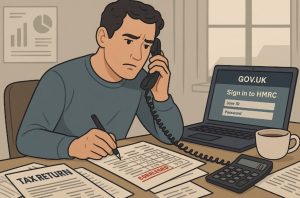
If you believe the information in your P800 is inaccurate, you have the right to challenge the calculation.
Common issues include incorrect employer-reported earnings, duplicated income sources, or interest earnings not matching personal records.
Steps to correct your calculation:
- Log into your Personal Tax Account and cross-check reported income
- Review savings and investment statements for the tax year in question
- Contact HMRC via your account or helpline to report discrepancies
- Provide documentation such as bank statements, employment contracts, or corrected payslips
Once the correction request is submitted, HMRC will either update your calculation or explain why the original figures stand. If revised, a new P800 letter will be sent reflecting the updated amounts.
Conclusion
The 2025 tax refund letters from HMRC are part of routine adjustments affecting millions of UK taxpayers.
Understanding the Personal Savings Allowance, interest reporting, and how to verify HMRC correspondence is vital.
Whether you’re due a refund or owe additional tax, prompt and informed action can help you manage your finances more effectively.
By keeping accurate records and staying updated on tax rules, households can ensure they remain compliant and avoid unexpected liabilities in the future.
Frequently Asked Questions
What is the Personal Savings Allowance and who qualifies?
The Personal Savings Allowance allows basic-rate taxpayers to earn up to £1,000 in savings interest tax-free. Higher earners receive reduced allowances, and additional-rate taxpayers receive none.
How can I confirm that my P800 letter is genuine?
A genuine P800 will be sent by post, include specific tax year references, and will not ask for any banking details via phone, text, or email.
Can I claim my HMRC refund without going online?
Yes, if you do not claim online within the given timeframe, HMRC will send you a cheque automatically by post.
What happens if I don’t respond to my HMRC letter?
If you’re due a refund and do not claim it online, HMRC will issue a cheque. For underpayments, ignoring the letter may lead to deductions via your tax code or further communication.
Do fixed savings accounts increase the chance of tax liability?
Yes, because interest is paid all at once, which may push your interest over the PSA in one tax year.
Is interest from ISAs included in tax calculations?
No. Interest from ISAs remains tax-free and does not count toward your PSA limit.
How long does it take to receive an HMRC refund?
If claimed online: up to 5 working days. If issued by cheque: up to 14 days after issue date, or 6 weeks if requested manually.
What is your reaction?