Does HMRC Owe Me a Tax Rebate? | Here’s How to Check

Paying tax is an unavoidable part of working life in the UK but what happens when you pay too much? If you’ve ever wondered, “does HMRC owe me a tax rebate?”, you’re not alone.
Thousands of taxpayers in the UK are owed refunds each year due to miscalculations, changes in employment, or incorrect tax codes.
This detailed guide will help you understand if HMRC might owe you money and how to claim it.
What Is A Tax Rebate And When Can You Get One From HMRC?
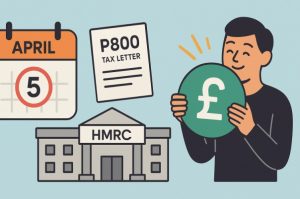
A tax rebate is a refund of income tax that has been overpaid. This usually occurs when there is a change in personal circumstances that affects how much tax you should have paid during a specific tax year.
HMRC reviews your financial information and may issue a rebate if it determines you have overpaid.
You may be eligible for a rebate if:
- Your employer used an incorrect tax code
- You changed jobs during the tax year
- You received employment benefits or state support
- You had more than one job or pension and your personal allowance was not split properly
- You stopped working partway through the year
In most cases, HMRC will identify the overpayment and send you a letter, typically a P800 or a Simple Assessment.
If you are employed or receiving a pension, these letters are sent between June and March following the end of the tax year.
The letters will explain how much tax you’ve overpaid and what steps to take next.
Self-employed individuals will not receive a P800. Their rebate, if applicable, is calculated during the Self Assessment process and automatically deducted or refunded based on their final tax calculation.
How Can You Check If You’re Due A Refund From HMRC
To find out whether you are owed money, you can log into your Personal Tax Account on the HMRC website. This portal shows your income, tax paid, and any active tax calculations.
You should check for signs such as:
- Unusual changes in net pay
- A new or unexpected tax code on your payslip
- Notices of coding from HMRC
- End-of-year forms like the P60 showing excessive tax deductions compared to your income
The HMRC mobile app also provides a quick way to access refund eligibility, allowing you to view notices, payment history, and guidance on how to claim.
If you don’t receive a letter and believe you are owed a rebate, you can still manually check your status and submit a claim.
What Is A P800 Tax Calculation And How Does It Work?
A P800 is a summary of your income and tax paid for the previous tax year. It is issued when HMRC discovers you have either paid too much or too little tax through the PAYE system.
The letter includes a full breakdown of your earnings, tax codes used, and any adjustments required.
You may receive a P800 if:
- You were on an emergency or incorrect tax code
- You started or ended a job partway through the year
- You received multiple forms of taxable income that were not coordinated correctly
- HMRC had outdated or incomplete employment records
If the P800 indicates that a rebate is due, it will contain instructions for claiming your refund.
In many cases, you will be directed to claim it online using a reference number and your National Insurance number.
If HMRC cannot recover underpaid tax automatically, you may receive a Simple Assessment letter instructing you to make a payment.
Both letters should be acted upon promptly, as they include guidance and deadlines for repayment or refund collection.
Can You Claim A Tax Rebate Online?
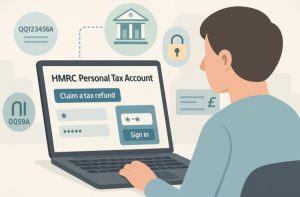
HMRC provides several ways to claim your rebate online. The quickest and most reliable is through the Personal Tax Account, which allows you to:
- View your P800 or Simple Assessment
- Select your refund method (bank transfer or cheque)
- Monitor the progress of your claim
If your P800 includes a reference for online claiming, you will need your National Insurance number and a UK bank account to receive the funds via direct transfer.
Claims can also be made using the HMRC app or by contacting HMRC to request a paper cheque.
Tax Rebate Claim Options And Timings
| Claim Method | Details | Typical Processing Time |
| Online via HMRC Website | Bank transfer using P800 reference | Within 5 working days |
| Personal Tax Account | Online claim with account verification | 5 to 10 working days |
| HMRC App | Mobile access to submit claim | Up to 5 working days |
| Cheque by Post | Issued automatically or by request | Within 14 days of request |
What Common Reasons Cause HMRC To Owe You A Tax Refund?

HM Revenue and Customs (HMRC) may owe you a tax refund for a variety of reasons that stem from changes in employment, tax code errors, or incorrect income reporting.
Many taxpayers are unaware that overpayments are common and often go unnoticed unless actively checked.
Understanding the typical causes of overpayment can help you determine whether you might be due money back.
1. Incorrect Tax Code
A tax code is used by HMRC to determine how much Income Tax should be deducted from your salary. If you’re assigned the wrong tax code, it may lead to excessive tax deductions. This is one of the most common reasons for a tax overpayment.
Examples of incorrect tax code usage include:
- Being placed on an emergency tax code (such as 1257 W1/M1)
- Having a tax code that doesn’t factor in your full Personal Allowance
- HMRC failing to update your tax code after a change in circumstances
Tax code errors can happen when you start a new job, switch jobs quickly, or have multiple sources of income. If your tax code is too restrictive, more tax than necessary will be deducted.
2. Changing Jobs Mid-Tax Year
If you change jobs partway through the tax year, your income and tax deductions may be incorrectly calculated. Employers often apply tax deductions based on the assumption that you’ll work for the full year, even if you leave early.
This can result in:
- Overpayment during a short-term job
- PAYE not being adjusted to reflect reduced annual income
- Not fully utilising your personal tax-free allowance if records aren’t correctly transferred
In such cases, the system may overestimate your annual income, leading to more tax than required being collected.
3. Multiple Jobs Or Income Sources
When a taxpayer has more than one job or a combination of employment and pension income, managing tax codes becomes more complex.
HMRC typically assigns the full Personal Allowance to one income source, and taxes the other at the basic rate unless adjustments are made.
You may be overtaxed if:
- Your second job is taxed without considering available allowances
- Your Personal Allowance was not distributed properly between incomes
- You started receiving a pension while still working
Multiple income streams often confuse the PAYE system, particularly if HMRC isn’t promptly informed of the changes.
4. Leaving Employment Before Year-End
If you leave work partway through the tax year, you may have paid tax as if you were earning a full year’s salary.
The PAYE system operates under the assumption that your earnings are spread evenly across 12 months.
Leaving your job early without informing HMRC may result in an overpayment because your annual income turns out to be lower than projected.
You could also be due a refund if you:
- Took a break from working but did not claim unemployment or state benefits
- Retired and started receiving a pension with lower annual taxable income
- Did not claim any tax relief after leaving work
These refunds often go unnoticed unless a P800 or Self Assessment calculation triggers a review.
5. Employment Benefits And Expenses Not Claimed
Some work-related costs and expenses qualify for tax relief, but if they are not claimed, HMRC will not refund the associated overpaid tax. Examples include:
- Paying for uniforms, tools, or specialist equipment required for your job
- Business mileage or travel costs not reimbursed by your employer
- Professional subscriptions necessary for your role
You need to submit a claim either through the online tool or by post. If you do not actively claim these expenses, the rebate won’t be automatically applied, even if you qualify.
6. Receiving Taxable State Benefits
Certain state benefits such as Jobseeker’s Allowance (JSA) and Employment and Support Allowance (ESA) are taxable.
If you receive these while employed, or transition between benefits and work during the tax year, there can be a mismatch in how your income is taxed.
For example:
- HMRC might overestimate your earnings if benefit income is not accounted for properly
- You might be assigned a new tax code that doesn’t reflect temporary unemployment or benefit periods
If these details aren’t updated promptly, your tax deductions may not accurately reflect your true financial position.
7. Employer Or HMRC Administrative Errors
In some instances, the employer may report incorrect earnings or deductions to HMRC, resulting in an overpayment.
Similarly, HMRC may delay processing changes or misinterpret income data.
Examples of such errors include:
- Duplicate income records for the same job
- Misreported start or end dates of employment
- Delays in updating employment status or tax code adjustments
These issues are usually caught during HMRC’s end-of-year reconciliation process, which can trigger a P800 tax calculation.
8. Pension Contributions And Tax Relief Errors
If you make pension contributions through a scheme that does not apply automatic tax relief (known as a ‘net pay arrangement’), you may need to manually claim the relief you’re entitled to. Failure to do so could result in paying more tax than necessary.
Similarly, if you begin drawing a pension while still earning income from a job, incorrect tax coding can lead to overpayments.
This often happens if the pension provider or HMRC does not have updated income figures.
How Long Does It Take To Receive A Tax Rebate From HMRC?
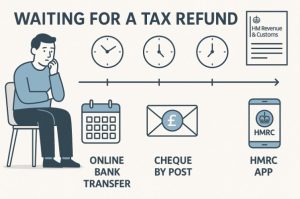
Once you’ve submitted a claim or HMRC has automatically processed one, the waiting time depends on the method used and how the refund is issued.
Online claims are generally processed quickly. Direct bank transfers are often completed within five working days, while cheque payments can take longer, especially if requested by post.
If your refund is scheduled for automatic processing, such as when a P800 specifies that a cheque will be sent, you do not need to take further action. HMRC usually sends these cheques within 14 days of the letter’s date.
Tax Refund Processing Time By Method
| Refund Type | Timeframe To Receive Refund |
| Online Bank Transfer | 3 to 5 working days |
| HMRC App Claim | Up to 5 working days |
| Cheque by Request | Up to 6 weeks |
| Automatic Cheque | Within 14 days of letter date |
If you do not receive your payment in the expected timeframe, contact HMRC with your reference number and personal details to investigate the status.
Are Tax Rebates Automatic Or Do You Need To Apply
Tax rebates can be either automatic or manual depending on the situation. If HMRC issues a P800 stating that a cheque will be posted to you, this is considered an automatic rebate and requires no action on your part.
However, if your P800 invites you to claim your refund, you’ll need to take steps to receive it.
In general, you must apply if:
- Your refund relates to overpaid tax in previous years
- You believe you’re due a rebate but haven’t received a P800
- You’re claiming back expenses or correcting inaccurate records
For self-employed taxpayers, overpaid tax is accounted for in the Self Assessment return. If more tax has been paid than owed, the difference is usually refunded after HMRC processes your return.
What Should You Do If HMRC Doesn’t Issue A Refund You Believe You’re Owed
If you believe you’re entitled to a rebate but haven’t received any notification or payment, start by logging into your Personal Tax Account to review your details. Check your tax code, income reported, and any previous correspondence.
If you still find inconsistencies, contact HMRC and be ready to provide:
- Your National Insurance number
- Employer details and pay history
- Previous tax documents (P60, P45)
- Evidence of employment expenses or income corrections
If HMRC agrees that a rebate is owed, they will issue a revised calculation and process the refund.
If not, they will explain the basis of their decision. You can also file a formal complaint or request a review through HMRC’s internal dispute process.
Can You Reclaim Tax For Previous Years?

You can claim a rebate for overpaid tax going back up to four tax years. This is particularly relevant for individuals who:
- Used the wrong tax code in previous employment
- Did not claim relief for work-related expenses
- Left the UK and were taxed on unused personal allowances
- Received untaxed income that was incorrectly calculated
To reclaim tax from earlier years, submit a written request or claim online with supporting evidence such as old payslips, P45 or P60 forms, and any proof of expenses.
Backdated Rebate Eligibility By Tax Year
| Tax Year | Claim Deadline |
| 2020–2021 | 5 April 2025 |
| 2021–2022 | 5 April 2026 |
| 2022–2023 | 5 April 2027 |
| 2023–2024 | 5 April 2028 |
It is essential to submit claims before these deadlines. Claims submitted after the limit will not be accepted, regardless of the amount owed.
How Can You Avoid Overpaying Tax In The Future
The most effective way to avoid tax overpayments is by regularly reviewing and updating your tax records.
This includes keeping HMRC informed of any changes to your employment, income sources, or benefits.
Here are a few best practices:
- Check your tax code on each payslip
- Notify HMRC immediately when you change jobs or start a pension
- Use your Personal Tax Account to track payments and notices
- Ensure your Self Assessment returns are accurate and submitted on time
Maintaining accurate records and being proactive with your tax affairs reduces the chance of overpayment and simplifies the refund process if one becomes necessary.
Conclusion
Absolutely. Whether you’re employed, retired, or self-employed, tax overpayments are more common than most people think. With digital tools like the HMRC app and Personal Tax Account, it’s now easier than ever to find out if HMRC owes you a tax rebate and to get your money back.
Don’t assume HMRC will always inform you. Take initiative, review your tax history, and claim what’s rightfully yours.
FAQs
What is the difference between a tax refund and a tax rebate?
Both terms are often used interchangeably. A tax rebate refers specifically to a return of excess tax paid, while a tax refund can also include other credits like child tax credits or self-employment overpayments.
Do you need a P45 or P60 to claim a rebate?
While not always necessary, having your P45 (when leaving a job) or P60 (end of year summary) helps support your claim, especially for backdated rebates.
Can students or part-time workers claim a tax rebate?
Yes. Students and part-time workers often overpay due to incorrect assumptions about their annual income. Claims can be made once the tax year ends.
How do tax rebates work if you’re self-employed?
For self-employed individuals, overpayments are calculated through the Self Assessment return. HMRC adjusts your bill accordingly, and if overpaid, you’ll be refunded after submission.
What happens if you ignore a P800 notice?
If the notice shows a refund, you may miss the opportunity to claim. If it shows underpayment, ignoring it could result in further penalties or adjustments.
Is there a deadline for claiming overpaid tax?
Yes, you can only claim for up to four tax years after the year in question. After that, the right to reclaim expires.
What if your HMRC refund goes to the wrong account?
If this happens, contact HMRC immediately. They may need to cancel the payment and issue a new one, usually by cheque.
What is your reaction?