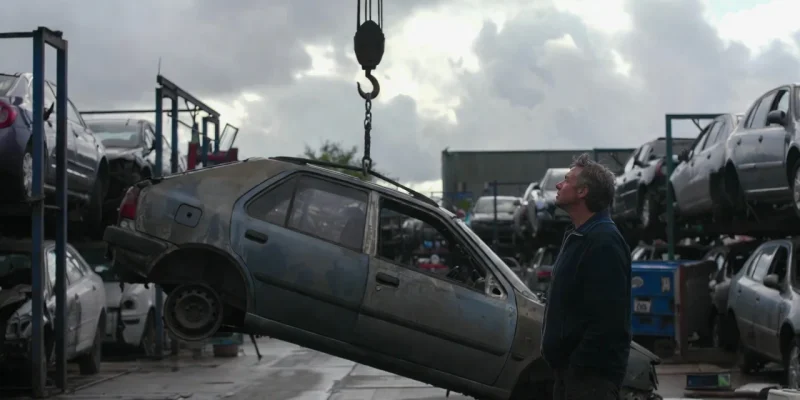
Written Off by High Road Tax: Cars Being Scrapped After April 2026 £760 VED Trap

From April 2026, many UK drivers will see their vehicles effectively written off by high road tax due to sharp increases in Vehicle Excise Duty (VED).
Cars emitting over 225g/km of CO2 will face annual charges of £760 to £790, making ownership of older vehicles financially unviable. This is forcing many to scrap or sell perfectly working cars.
Key Points of the 2026 VED Changes:
| Key Impact Area | Summary |
| Affected Vehicles | Cars emitting 226g/km+ CO2 (2001–2017) |
| VED Rate Increase | Up to £790 per year |
| Common Models Affected | Mondeo V6, Golf R32, Zafira VXR, Audi TT |
| Environmental Debate | Older cars may be greener than new ones |
| Alternative Options | Exporting, converting, or scrapping |
| Owner Challenges | Tax now exceeds car value in many cases |
Why Are UK Cars Being Written Off by High Road Tax in 2026?
In April 2026, the UK government will introduce a revised Vehicle Excise Duty (VED) structure that is pushing many older, high-emission vehicles into financial oblivion.
This new tax structure increases the annual cost for certain emission bands to levels that make keeping some cars unaffordable.
In simple terms, these cars are being “written off” not by insurers or mechanical failure but by the weight of the annual road tax.
Vehicle owners across the UK are reacting with concern as the updates take hold. Under the new rules, cars emitting over 225g of CO2 per kilometre will see their tax jump significantly.
Owners of vehicles emitting between 226 and 255g/km will pay £760 a year, while those with vehicles emitting over 255g/km will be charged £790 annually.
These increases are leaving many drivers facing the prospect of paying more in tax than their cars are worth on the used market.
To clarify the situation, a representative from the Department for Transport shared with me in a direct conversation:
“The policy is about pushing cleaner travel. These changes were signposted well in advance, and the increase reflects the environmental cost these vehicles impose. We understand the frustration, but the aim is to help the UK meet its net-zero targets. These VED rates are part of that commitment.”
Their explanation may be clear, but the economic reality for many drivers paints a different picture.
What’s Changing in the 2026 Car Tax Bands?
The upcoming tax changes affect cars registered between March 1, 2001, and April 1, 2017. The revisions to VED create financial pressure on cars that are often in working condition but have emissions outputs above the new acceptable limits.
Below is a comprehensive table comparing the current and future VED rates:
VED Rate Changes by Emissions Band
| CO2 Emissions (g/km) | Current VED (2025) | New VED (2026) |
| Up to 100 | £20 | £20 |
| 101 – 110 | £20 | £20 |
| 111 – 120 | £35 | £35 |
| 121 – 130 | £165 | £170 |
| 131 – 140 | £195 | £200 |
| 141 – 150 | £215 | £225 |
| 151 – 165 | £265 | £275 |
| 166 – 175 | £315 | £325 |
| 176 – 185 | £345 | £360 |
| 186 – 200 | £395 | £410 |
| 201 – 225 | £430 | £445 |
| 226 – 255 | £735 | £760 |
| Over 255 | £750 | £790 |
The most striking increases are at the top end of the emissions scale. These changes make it particularly challenging for owners of older petrol and diesel cars who may not have the financial means or incentive to transition to electric vehicles.
Which Car Models Are Getting Caught in the £760+ VED Trap?
The models impacted most severely are not just luxury vehicles or supercars but a wide range of standard family vehicles.
These cars, once considered reliable and practical, now come with an annual tax bill that overshadows their remaining market value.
Common Models Affected by the 2026 VED Tax Increase
| Vehicle Model | Engine/Type | VED from 2026 |
| Ford Mondeo V6 | Petrol V6 | £735 |
| Saab 900 Convertible | Petrol | £735 |
| Land Rover Freelander 2 i6 | 4×4 Petrol | £760 |
| Volkswagen Golf R32 | Performance Hatch | £760 |
| Audi TT 1.8T | Turbo Petrol | £735 |
| Chrysler PT Cruiser | Petrol | £735 |
| Subaru Forester 2.5 XT | AWD Petrol | £735 |
| Jaguar X-Type 2.0 Auto | Petrol | £735 |
| Vauxhall Zafira VXR | MPV Petrol | £735 |
| Ford Galaxy 2.3 | MPV Petrol | £735 |
These models represent a significant portion of the cars on UK roads from the early 2000s. Their original appeal lay in their practicality, comfort, and reliability. Unfortunately, their emissions figures now place them in the highest tax brackets.
As someone who has worked with vehicle owners for years, I can confidently say:
“The shift in tax policy disproportionately affects middle-income households. These cars aren’t collectors’ toys; they’re everyday family vehicles. It’s incredibly difficult to justify £760 a year on tax for a car that’s otherwise in good condition but worth under £1,500 on the private market.”
Is It Really Cheaper to Scrap Than Pay the New Road Tax?
A growing number of drivers are concluding that scrapping their vehicle is the only viable financial option. The total cost of ownership is outpacing resale value for many models.
Once insurance and maintenance are factored in, keeping a £1,200 car on the road with a £790 annual tax bill simply doesn’t add up.
Cost Comparison of Keeping vs Scrapping a Typical High-VED Car
| Criteria | Older Car (High VED) | Newer EV or Hybrid |
| Annual VED | £760 – £790 | £0 – £170 |
| Fuel Cost (Per Year) | £1,500 | £600 – £900 |
| Insurance (Average) | £550 | £450 |
| MOT & Servicing | £350 | £200 |
| Estimated Resale Value | £900 – £1,400 | £12,000 – £20,000 |
| Total Annual Running Cost | £3,160+ | £1,250 – £2,000 |
When the tax cost alone consumes more than 50% of the car’s value, it becomes harder for drivers to justify keeping the vehicle.
Dealers and private sellers are reporting decreased interest in these models, and many end up at scrapyards even if they’re mechanically sound.
Some of these cars are now being exported to markets in Eastern Europe or parts of Africa, where emissions tax regulations are more lenient.
However, export requires compliance with destination regulations and shipping costs, which aren’t feasible for all owners.
Should You Buy a New Car or Keep Your Old One in 2026?

It seems obvious at first glance that moving to a low-emissions vehicle is the better choice. But from an environmental point of view, the issue isn’t so black and white.
Producing a new petrol or electric vehicle can generate up to 17 tonnes of CO2e, equivalent to years of household energy consumption. That makes the environmental case for replacing an old vehicle more complex than it might appear.
Environmental researchers Mike Berners-Lee and Duncan Clark argue that keeping a reliable older car running may be better for the planet. According to their research, maintaining a car to 200,000 miles instead of 100,000 could cut lifetime emissions per mile by up to 50%. This assumes the car is reasonably fuel-efficient and not a gross polluter.
I personally believe the VED changes lack nuance:
“If the car is mechanically reliable, decently maintained, and used moderately, it shouldn’t be treated as a carbon criminal. In fact, extending the life of an old car can be more sustainable than building a new one.”
For low-mileage drivers in particular, the new tax bands penalise them heavily despite their minimal environmental footprint. This suggests the policy is focused more on revenue and blanket emissions stats than individual driving behaviour.
Are Pre-2001 and Early 2000s Cars Taxed Differently?
Yes, and this difference is vital for many drivers looking for loopholes in the new VED structure.
Vehicles registered before March 1, 2001, are taxed based solely on engine size, not emissions.
The two-tier system is simple:
- Engines below 1,549cc: £229 per year
- Engines above 1,549cc: £360 per year
This means even a large-engined older vehicle may still be taxed lower than a smaller-engined car from 2005 that emits more CO2. Some car enthusiasts and budget-conscious drivers are already pivoting to these pre-2001 models to avoid the punitive emissions-based rates.
Cars registered between March 2001 and March 23, 2006, were initially protected by a cap at Band K, currently £430, even if their emissions exceed that threshold. However, this cap has not been adjusted in light of the new rules and these vehicles now fall squarely within the targeted group for the 2026 rise.
VED Structure for Pre-2001 vs Post-2001 Cars
| Registration Period | VED Basis | VED (2026) |
| Pre-March 1, 2001 | Engine size | £229 – £360 |
| March 2001 – March 2006 | CO2 (Band K cap) | Up to £430 |
| April 2006 – 2017 | CO2 Emissions | £445 – £790 |
This inconsistency leads to strange situations where a 1999 2.0L sedan pays less road tax than a 2004 hatchback emitting slightly more CO2. Drivers who are aware of this have started considering older classics that avoid emissions-based taxation.
Are Some Drivers Being Penalised Unfairly?
The current system paints all high-emission cars with the same brush, regardless of context. A driver commuting 3,000 miles a year in a well-maintained 2002 Ford Mondeo is taxed the same as someone doing 25,000 miles in a gas-guzzling SUV from the same era. The annual VED does not account for real-world emissions output, only theoretical emissions ratings from manufacturer data.
This disconnect has led to a growing sentiment that the VED policy is unfair to specific groups:
- Rural drivers with fewer public transport options
- Low-income households reliant on older vehicles
- Classic car enthusiasts maintaining historically significant models
- Low-mileage users who drive responsibly
The debate extends beyond economics. It touches on environmental policy, social equity, and consumer choice. Without targeted exemptions, these changes risk alienating responsible drivers who happen to own older vehicles.
Can Exporting or Converting These Cars Help Avoid the Tax?

Some drivers are exploring alternative paths to avoid the upcoming costs. Exporting a vehicle to a country with lower emissions taxes can help avoid the UK’s rising VED, although this comes with added logistical and compliance costs.
Electric conversions are another emerging solution, but they remain niche due to high costs and complex certification processes. As of now, the UK does not offer widespread financial support for converting internal combustion engine vehicles into electric ones.
There’s also uncertainty regarding whether a converted vehicle would be reclassified in a lower VED band post-conversion. Without clear guidance or a streamlined system from the DVLA, uptake remains minimal.
Conclusion
The April 2026 VED changes mark a turning point for thousands of UK drivers, with many perfectly usable cars effectively being written off by high road tax.
While the policy is designed to push cleaner motoring, it also risks forcing owners of older, everyday vehicles into difficult financial decisions. Without more balanced incentives or practical exemptions, the rising cost of VED may accelerate scrappage, distort the used car market, and penalise drivers who are simply trying to keep affordable, reliable cars on the road.
FAQs About the 2026 VED Tax Hike and Car Scrappage
What is Vehicle Excise Duty (VED) and how is it calculated?
VED is an annual tax based on CO2 emissions for cars registered after 2001. Pre-2001 vehicles are taxed by engine size.
When do the 2026 car tax changes take effect?
The revised VED bands will apply from April 1, 2026.
Which CO2 bands will be most affected by the 2026 tax hike?
Vehicles emitting over 225g/km of CO2 will see the largest increases, with some facing up to £790 annually.
Are hybrid and electric vehicles also impacted?
Electric vehicles currently enjoy tax relief but may face standard VED after 2025 depending on future policy.
Is it true some cars are being scrapped just because of tax?
Yes, especially vehicles valued under £1,500 where annual VED exceeds the car’s resale or trade-in value.
Will the government offer any scrappage incentives or rebates?
There’s currently no confirmed national scrappage scheme in place for 2026, but local schemes may exist.
Can classic car tax exemption help with high-VED vehicles?
Vehicles over 40 years old may qualify for tax exemption under the DVLA’s classic car status.
What is your reaction?