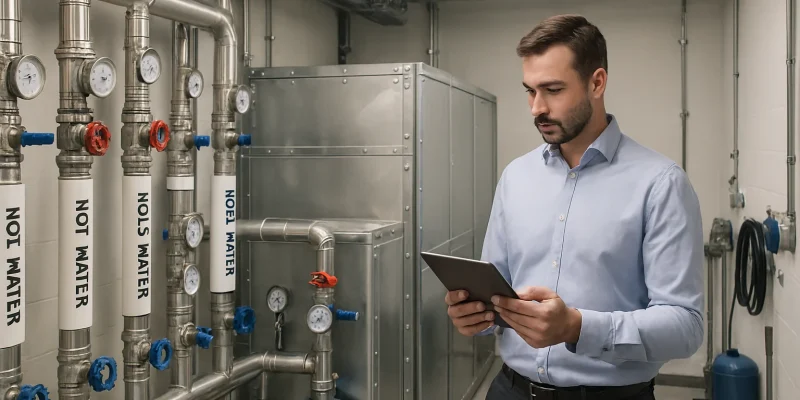
How UK Businesses Are Managing Legionella Risk More Effectively in 2026?

Legionella risk remains a serious concern for UK businesses operating premises with hot and cold water systems. In 2026, organisations face increasing scrutiny from the Health and Safety Executive and greater expectations to demonstrate compliance, protect building occupants, and manage water safety effectively.
To reduce exposure to legionella bacteria and limit reputational damage, many duty holders are now moving away from fragmented paper-based processes and adopting structured digital approaches, including tools such as velappity’s legionella risk assessment software, to support consistent legionella risk management across their estates.
Legionnaires’ disease is a severe form of pneumonia caused by inhaling fine water droplets contaminated with legionella bacteria. While the risks are well documented, recent legionella outbreaks have shown how poorly managed water systems and inadequate control measures can quickly develop into a serious health risk.
Why Legionella Risk Is a Growing Business Issue?
Legionella bacteria thrive in warm water temperatures, typically between 20°C and 45°C. This makes hot water systems, cold water storage tanks, cooling towers, spa pools, and air conditioning systems particularly vulnerable when water stagnation, bacterial growth, or temperature control failures occur.
Businesses operating premises with complex water systems have a legal duty to manage legionella risks under health and safety regulations, including the approved code of practice (ACOP L8). These safety regulations apply across sectors, from healthcare facilities and domestic properties to offices, industrial sites, and buildings supplied by private water supplies.
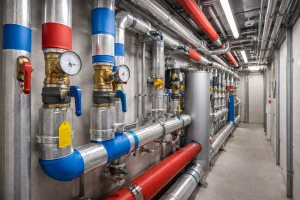
Failure to comply can result in serious illness, enforcement action, and long-term reputational damage.
Understanding Legionella Risks in Water Systems
Legionella exposure typically occurs when contaminated water droplets are inhaled from showers, taps, cooling towers, or water outlets that generate aerosols. The risk increases where water quality is compromised by stagnant water, poorly maintained pipework, or warm water temperatures that encourage bacterial growth.
Complex water systems pose particular challenges. Multiple water tanks, dead legs, infrequently used outlets, and inadequate maintenance procedures can make it difficult to identify potential hazards without a structured legionella management plan.
The Role of Risk Assessment in Legionella Control
A legionella risk assessment is the foundation of effective legionella management. It involves identifying potential hazards, assessing who may be exposed, and determining appropriate control measures to prevent legionella growth.
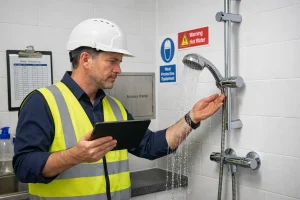
A current legionella risk assessment should consider:
- Hot and cold water systems
- Cold water storage tanks and water tanks
- Cooling towers and air conditioning systems
- Spa pools and healthcare facilities
- Water temperatures and temperature control
- Areas of stagnant water and poorly managed outlets
The Health and Safety Executive requires that risk assessments are reviewed regularly and updated whenever systems change or new risks emerge.
From Assessment to Action: Implementing Control Measures
Identifying legionella risks is only part of the process. Businesses must also implement control measures to control risks and prevent outbreaks. Effective legionella control relies on consistent application of control measures, including:
- Maintaining correct water temperatures
- Preventing stagnation through regular flushing
- Ensuring water systems are properly maintained
- Carrying out water treatment where required
- Monitoring water quality and bacterial growth
These measures must be documented and carried out by a competent person with appropriate training.
The Responsible Person and Duty Holders
Under UK safety regulations, duty holders must appoint a responsible person to manage legionella risks. This individual is accountable for ensuring that risk assessments are completed, control measures are implemented, and maintenance procedures are followed.
The responsible person must:
- Understand relevant regulations and safety executive guidance
- Ensure appropriate training and proper training records are in place
- Oversee legionella management plans
- Demonstrate compliance during inspections or audits
In larger organisations, this responsibility may be shared across teams, increasing the importance of consistent record keeping.
Managing Legionella Across Multiple Sites
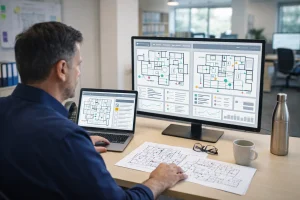
For businesses operating multiple locations, legionella risk management can become complex. Variations in water systems, usage patterns, and maintenance schedules increase the risk of gaps in control measures.
Digital systems are increasingly used to standardise processes, ensure assessments are up to date, and provide a clear audit trail. This approach helps businesses identify potential hazards early and demonstrate compliance more effectively.
Preventing Legionella Growth Through Ongoing Management
Preventing legionella growth requires ongoing vigilance rather than one-off assessments. Warm water temperatures, stagnant water, and poorly managed systems remain a serious concern if controls lapse.
Effective legionella management includes:
- Regular monitoring of hot water and cold water temperatures
- Scheduled inspection of water outlets
- Maintenance of water tanks and cooling towers
- Review of control measures following changes to buildings or usage
These steps reduce the likelihood of contaminated water droplets forming and spreading waterborne pathogens.
Health Impacts and Business Consequences
Legionnaires’ disease can lead to serious illness, particularly among vulnerable individuals, and may contribute to complications such as kidney disease. In severe cases, it can be fatal.
Beyond the health risk, legionella outbreaks can result in enforcement action by the safety executive, legal claims, and significant reputational damage. Businesses that cannot demonstrate compliance may also face disruption to operations and loss of trust among building occupants and stakeholders.
A More Proactive Approach in 2026
In 2026, managing legionella is increasingly viewed as part of wider water safety and health and safety governance. Businesses are focusing on proactive risk management, clearer accountability, and better visibility of compliance activity.
By combining appropriate training, competent persons, effective control measures, and structured documentation, organisations can better manage legionella exposure and protect those who use their buildings.
What is your reaction?