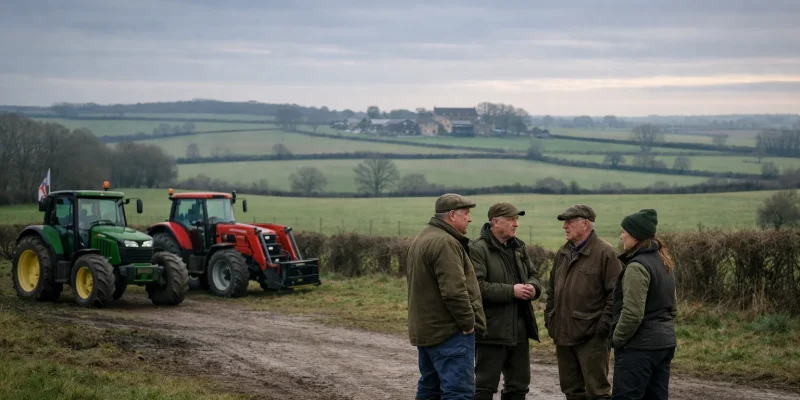
Farmers Inheritance Tax Changes Confirmed After Government Bows to Rural Pressure

The confirmation of farmers inheritance tax changes marks a significant moment for British agriculture, following months of sustained protests and political pressure from rural communities.
After widespread backlash against the proposed so-called “tractor tax”, the government has revised its original plans, easing concerns that family-run farms would face crippling inheritance tax bills when assets are passed to the next generation.
The revised policy, announced after high-level talks with farming representatives, has been welcomed as a partial victory by many in the agricultural sector.
However, critics argue that the episode has already caused lasting damage to trust between the government and rural Britain.
What Are the Newly Confirmed Farmers Inheritance Tax Changes in the UK?
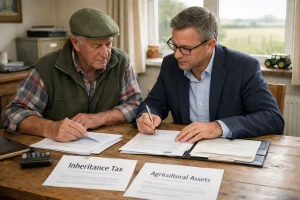
The confirmed farmers inheritance tax changes represent a substantial departure from the original proposals put forward by the government.
The most significant adjustment is the increase in the inheritance tax threshold applied to qualifying agricultural and business assets.
Instead of a £1 million cap, the new threshold has been set at £2.5 million per individual, dramatically reducing exposure for most family-run farms.
This change acknowledges the reality that farmland values have risen sharply over recent decades, often without corresponding increases in farm income.
Many farms are asset-rich but cash-poor, meaning that a low inheritance tax threshold risked forcing land sales simply to meet tax obligations.
For couples, the changes are even more pronounced. Spouses and civil partners can combine their allowances, enabling up to £5 million in qualifying agricultural or business assets to be passed on before inheritance tax becomes payable.
This is in addition to existing nil-rate bands and other allowances available under inheritance tax law.
Key Features of the Confirmed Changes Include
- A higher individual threshold of £2.5 million for qualifying assets
- Combined allowances of up to £5 million for couples
- Retention of agricultural property relief with modified application
- Reduced effective tax rate on assets above the threshold
These adjustments significantly narrow the scope of the policy, ensuring that only the largest agricultural estates are affected.
Why Did the Government Originally Propose Inheritance Tax on Farmland?
The original proposal to impose inheritance tax on farmland was driven by broader concerns about fairness and tax efficiency within the UK system.
Ministers argued that agricultural property relief had drifted from its original purpose of protecting working farms and had instead become a mechanism for sheltering large amounts of wealth from taxation.
Farmland has increasingly been viewed as a stable, appreciating asset, attracting interest from investors with little direct involvement in agriculture.
From the government’s perspective, this created an imbalance where high-value estates could be passed on tax-free, while other family businesses faced significant inheritance tax liabilities.
The policy was also shaped by fiscal pressures. With public finances under strain, the Treasury sought new sources of revenue that could be framed as progressive.
Targeting high-value agricultural assets was presented as a way to address perceived inequities without raising headline tax rates.
However, the policy design failed to account adequately for:
- The low liquidity of farming businesses
- The dependence of farms on land rather than cash reserves
- The emotional and cultural significance of land ownership in rural Britain
These shortcomings became central to the backlash that followed.
How Did Farmers and Rural Communities React to the ‘Tractor Tax’?
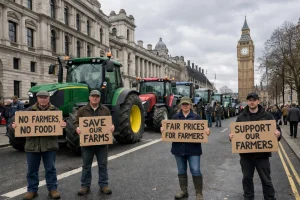
The reaction from farmers and rural communities was swift and intense. Many saw the proposed inheritance tax changes as an existential threat to family farming.
Protests were organised across the country, with tractors travelling to city centres and government buildings to demonstrate the scale of opposition.
Rural communities expressed concern not only about financial viability but also about the long-term impact on food security and land stewardship.
Farming organisations warned that breaking up family farms would undermine environmental management and reduce resilience within the agricultural sector.
The emotional toll was also significant. Farmers reported heightened stress and anxiety as they attempted to reassess succession plans under the proposed rules.
In some cases, the uncertainty exacerbated existing mental health challenges in rural areas, bringing renewed attention to the pressures faced by those working in agriculture.
Public support for the protests grew as the issue gained national media coverage, transforming what began as a technical tax debate into a wider conversation about the government’s relationship with rural Britain.
How Did Pressure from the NFU and Campaign Groups Influence the U-Turn?
The role of organised farming bodies was central to the eventual policy reversal.
The National Farmers’ Union coordinated lobbying efforts, gathered data on the potential impact of the tax, and facilitated direct dialogue between farmers and policymakers.
Senior NFU figures engaged in sustained negotiations with government ministers, presenting evidence that the original threshold would affect a far greater number of farms than initially claimed.
Campaign groups amplified these concerns, ensuring that the issue remained visible both politically and publicly.
Several factors strengthened the case for change:
- Consistent messaging from multiple farming organisations
- High-profile protests that demonstrated grassroots opposition
- Growing political concern about losing rural voter support
The eventual climbdown followed direct talks between NFU leadership and the prime minister, underscoring the influence of structured engagement combined with public pressure.
What Do the Inheritance Tax Changes Mean for Family-Run Farms?
For family-run farms, the revised farmers inheritance tax changes offer greater stability and predictability.
The higher threshold reduces the likelihood that families will need to sell land, livestock, or equipment to meet inheritance tax liabilities following the death of a farm owner.
Succession planning becomes more manageable, allowing families to focus on generational continuity rather than tax mitigation.
This is particularly important in an industry where long-term planning is essential, and ownership often passes through multiple generations.
The changes also reduce the administrative burden associated with inheritance planning.
With fewer farms falling within the scope of the tax, families can avoid complex restructuring arrangements that were previously being considered to minimise exposure.
While not eliminating all concerns, the revised policy restores a measure of confidence among farming families who had feared the erosion of traditional ownership structures.
Which Farms Will Still Be Affected by the Revised Inheritance Tax Rules?
Despite the revisions, the policy continues to affect a subset of farms, primarily those with very high asset values.
According to government estimates, approximately 1,100 estates will face higher inheritance tax liabilities under the new framework.
These are typically large estates with extensive landholdings or diversified business interests.
From the government’s perspective, focusing the tax on these operations aligns with broader principles of progressive taxation.
The following table illustrates how the scope of the policy has narrowed:
| Category | Original Proposal | Revised Policy |
| Threshold per individual | £1 million | £2.5 million |
| Estimated estates affected | Around 2,000 | Around 1,100 |
| Primary impact | Family farms and large estates | Predominantly large estates |
For affected farms, early planning and professional advice remain essential to manage future liabilities effectively.
How Does Agricultural Property Relief Apply Under the New Rules?
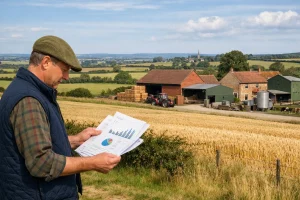
Agricultural property relief continues to play a key role under the revised inheritance tax framework, although its application has been adjusted.
Assets that qualify for relief and exceed the £2.5 million threshold will receive a 50 per cent reduction in taxable value.
This relief reduces the effective inheritance tax rate from the standard 40 per cent to a maximum of 20 per cent on qualifying assets above the threshold.
The aim is to soften the impact on high-value farms while maintaining a degree of contribution from the largest estates.
The interaction between relief and thresholds is critical to understanding the revised system:
| Asset Value | Relief Applied | Effective Tax Outcome |
| Up to £2.5 million | Full exemption | No inheritance tax |
| Above £2.5 million | 50% relief | Up to 20% effective rate |
| Non-qualifying assets | No relief | Up to 40% |
This structure reflects a compromise between protecting working farms and addressing concerns about untaxed wealth.
What Are Political Parties Saying About the Farmers Inheritance Tax Changes?
Political responses to the revised policy have been mixed. Government ministers have emphasised that the changes demonstrate responsiveness and a willingness to listen to rural concerns.
They argue that the revised framework protects ordinary family farms while ensuring fairness.
Opposition parties have taken a more critical stance. Some have argued that the damage caused by prolonged uncertainty cannot be undone, particularly for families who altered plans or suffered financial stress during the debate.
Smaller parties with strong rural support have welcomed the higher threshold but continue to call for a complete exemption for working farms.
The policy has therefore become a focal point in wider discussions about rural representation and policymaking.
Has the Government’s Handling of the Policy Damaged Trust with Farmers?
Trust between the government and farming communities has been strained by the handling of the policy.
Many farmers felt blindsided by the original announcement, particularly given pre-election assurances about supporting rural Britain.
The absence of early consultation has been a recurring criticism. Farming groups argue that meaningful engagement could have identified flaws in the policy design before it was announced.
Key trust-related concerns include:
- Perceived lack of understanding of farming economics
- Insufficient rural consultation
- Prolonged uncertainty affecting planning decisions
Rebuilding confidence will require sustained engagement and a more collaborative approach to future reforms affecting agriculture.
How Do These Farmers Inheritance Tax Changes Compare to Other Government U-Turns?
The inheritance tax reversal fits into a broader pattern of policy adjustments made by the government since taking office.
Several major economic proposals have been revised or abandoned following public and political pressure.
This pattern has prompted debate about whether such changes reflect flexibility or a lack of policy coherence.
Supporters argue that responsiveness is preferable to rigid adherence to flawed plans, while critics see repeated reversals as evidence of poor preparation.
The inheritance tax episode stands out due to its emotional impact and the scale of mobilisation it triggered within a specific community.
What Could Be the Long-Term Impact of These Inheritance Tax Changes on British Farming?
In the long term, the revised farmers inheritance tax changes may help stabilise ownership structures within British farming. By reducing the risk of forced land sales, the policy supports continuity and long-term investment.
Stable ownership is closely linked to environmental stewardship, productivity, and rural employment. Farms that can plan confidently for succession are better positioned to adopt sustainable practices and invest in new technology.
The final table summarises potential long-term impacts:
| Area | Potential Impact |
| Farm succession | Improved generational continuity |
| Investment confidence | Greater willingness to reinvest |
| Rural economy | Enhanced stability |
| Government relations | Conditional rebuilding of trust |
The lasting effect of the policy will depend on how future reforms are approached and whether lessons from this episode are applied consistently.
Conclusion
The confirmed farmers inheritance tax changes represent a significant policy adjustment after sustained rural pressure, offering greater protection for family-run farms while narrowing the number of estates affected.
By raising thresholds and reducing effective tax rates, the government has eased immediate concerns around succession and forced land sales.
However, the episode has highlighted the importance of meaningful engagement with farming communities, as long-term trust and confidence in future agricultural policy remain fragile.
FAQs
How do inheritance tax rules affect farm succession planning?
Inheritance tax rules play a major role in determining whether farms can be passed on intact. Higher thresholds reduce the need to sell land to cover tax liabilities.
Are tenant farmers affected by these inheritance tax changes?
Tenant farmers may be indirectly affected, but the changes primarily concern owners of agricultural assets rather than tenancy agreements.
When do the revised inheritance tax rules take effect?
The higher threshold and revised relief are set to take effect from April, aligning with the next phase of tax policy changes.
Do these changes apply to non-agricultural business assets?
Some business assets may qualify, but eligibility depends on how closely they are linked to agricultural activity.
Why was mental health such a major issue during the protests?
Financial uncertainty and fears of losing family land created intense stress, highlighting wider mental health challenges in rural communities.
Could inheritance tax on farms be reviewed again in future?
Future reviews remain possible, particularly if political priorities or economic conditions change.
What role does Defra play in agricultural tax policy?
Defra works alongside the Treasury to assess the impact of tax policies on farming, food security, and rural sustainability.
What is your reaction?