MT5 Download: Accessing the Next Generation of Online Trading Technology

Trading platforms tend to arrive quietly. There’s rarely a moment when the industry stops and declares that everything has changed.
More often, the shift happens slowly, feature by feature, as markets evolve and users adapt their habits.
MetaTrader 5 fits that pattern. It didn’t burst onto the scene promising to simplify markets or replace experience with technology.
Instead, it expanded what traders could see and manage inside a single environment.
Over time, that expansion changed how many people interact with markets on a daily basis.
For those considering an MT5 download today, the interest usually goes beyond a checklist of features.
The real curiosity is why the platform has lasted, and what its design says about how trading itself has changed.
Trading Platforms Are No Longer Just Execution Tools

There was a time when trading software did one job: place an order and show a price. Analysis happened elsewhere. News came from separate terminals. Risk was tracked manually.
That separation doesn’t really exist anymore.
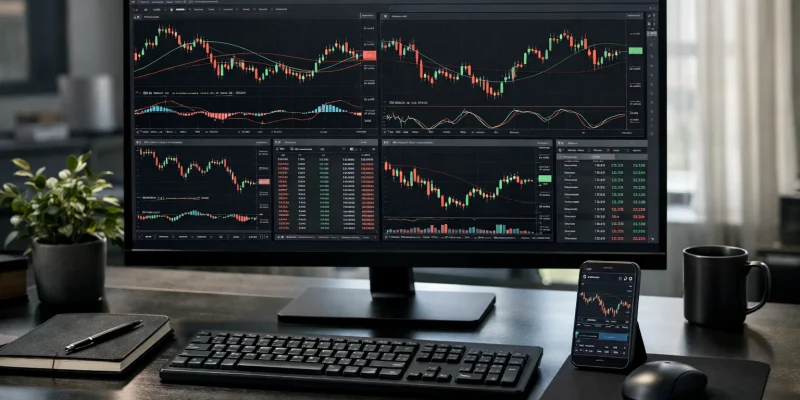
Today, trading platforms function more like control rooms. Charts, data feeds, execution, alerts, and analysis all live together. Decisions are made while information is still moving, not after it settles.
MT5 reflects that reality. It’s built less like a single-purpose tool and more like a workspace, one that assumes users are watching multiple inputs at once and trying to make sense of how they interact.
That shift alone explains why platforms now matter as much as strategy.
What MT5 Actually Expanded On?
MT5 didn’t discard what traders were already familiar with. It kept the basic structure intact and widened the scope around it.
Support for additional asset classes was part of that, but so was deeper analytical flexibility.
More timeframes. More order types. More ways to test and observe behaviour without leaving the platform.
What’s important is that these additions weren’t designed for one specific type of trader.
They were designed to accommodate very different workflows without forcing a single approach. Some users barely scratch the surface. Others explore the platform in depth. Both can coexist.
What This Expansion Looks Like in Practice?
Rather than one dramatic change, MT5’s evolution shows up in lots of small, practical ways that affect how people work day to day:
- Broader market coverage: Currencies, indices, commodities, and other instruments can be followed side by side, which makes cross-market behaviour easier to spot.
- More flexible chart views: Additional timeframes and custom layouts allow users to zoom out or drill down without changing tools.
- Greater control over execution: Extra order types make it easier to express intent without constant manual input.
- Deeper testing capabilities: Historical analysis tools help users explore how ideas behaved across different market conditions.
- Modular workflows: Features can be added, ignored, or removed entirely depending on experience level and style in modern workflows.
None of these elements stands out on their own. Together, they explain why the platform feels more like infrastructure than software.
Watching Multiple Markets Changes How Analysis Works
One of the more subtle shifts MT5 enabled was cross-market awareness. When currencies, indices, commodities, and other instruments sit side by side, relationships become harder to ignore.
A move in one area often explains behaviour elsewhere. A quiet market can suddenly make sense once another asset starts reacting.
This doesn’t mean traders have to follow everything. It simply means the context is there when they need it.
Over time, that wider lens tends to change how markets are interpreted. Moves stop feeling isolated and start feeling connected.
Charts That Record Behaviour, Not Predictions
Charts are often misunderstood. They’re treated as signals or forecasts when, in reality, they’re records. MT5’s charting tools give users control over how those records are viewed.
Timeframes can be expanded or compressed. Indicators added, removed, or ignored entirely. Layouts adjusted until they match how someone actually thinks.
What emerges isn’t a perfect picture. It’s a working one. Price pauses. Momentum fades. Volatility contracts.
Those details matter, especially during uncertain periods, and MT5 allows them to be observed without forcing interpretation.
Execution Isn’t Separate From Analysis
In many older workflows, analysis happened first, and execution followed. In practice, the two often overlap.
MT5 reflects that overlap. Order types allow intent to be expressed in advance, reducing the need to react emotionally in the moment.
Stops, limits, and pending orders aren’t just execution tools. They’re part of how risk is thought about.
This becomes particularly noticeable during volatile sessions, when hesitation or delay can distort outcomes.
Automation as a Supporting Layer, Not a Replacement
Automation tends to polarise opinion. Some see it as essential. Others avoid it entirely. MT5 sits somewhere in the middle. It allows automation, but it doesn’t demand it.
Some users automate alerts. Others automate position management. A smaller group explores algorithmic strategies in depth. Many do a bit of everything, adjusting over time.
What matters is that automation is optional and modular. It supports human oversight rather than removing it.
Too Much Data Is Still a Problem
Modern platforms have access to more data than ever. That doesn’t automatically make them better.
MT5 avoids overload by allowing subtraction. Indicators can be removed. Windows hidden. Layouts simplified. The platform adapts as users refine what they actually need.
That ability to reduce complexity is one reason MT5 works for both newer users and experienced analysts.
Stability Is Easy to Ignore Until It’s Gone
Platform reliability is rarely discussed until something breaks. MT5 was built with stability in mind.
Secure connections, consistent data delivery, and server-based architecture don’t draw attention, but they shape trust quietly over time.
When markets move fast, reliability stops being a background feature and becomes the entire experience.
Why the Broker Still Matters?

No platform operates in isolation. Data quality, execution accuracy, and pricing consistency depend heavily on the broker providing access.
Many traders work with a highly trusted broker such as ThinkMarkets because of its stable pricing environment and dependable data feeds. When analysis relies on subtle price behaviour, even small inconsistencies can distort conclusions.
The platform provides structure. The broker provides the conditions.
Who MT5 Actually Appeals To?
MT5 isn’t aimed at one type of trader. That’s part of its longevity. Some people use it primarily for observation.
Others lean into automation gradually. Some never move beyond charts and alerts. The platform doesn’t enforce progression. It allows users to grow into it, or not, on their own terms.
Beyond the Download
An MT5 download is rarely the end of the process. It’s the beginning of a relationship with a tool that changes as the user changes.
Layouts evolve. Habits shift. What felt essential early on often fades into the background later.
MT5 accommodates that evolution rather than fighting it. That’s what turns software into infrastructure.
Why MT5 Still Makes Sense in Modern Markets?
Markets today are fast, interconnected, and often contradictory. Platforms that survive tend to reflect that complexity rather than promise clarity.
MT5 doesn’t simplify uncertainty. It provides a framework for living with it. And in a trading environment defined by constant change, that flexibility is often more valuable than any single feature.
FAQs
Is MT5 only meant for experienced traders?
Not really. While MT5 has advanced tools, many people start by using only a small part of it. Charts, basic orders, and alerts are easy to access, and everything else can be explored gradually over time.
Does MT5 replace older platforms completely?
It doesn’t have to. Some traders still use earlier platforms for specific purposes. MT5 simply offers a broader toolkit, especially for those who want to watch more than one market or work with deeper data.
Can MT5 be used without automation?
Yes. Automation is optional. Many users never touch automated systems and still use MT5 effectively as a manual analysis and execution platform.
Is MT5 suitable for long-term market observation?
It can be. While often associated with active trading, MT5 is also used by people who mainly monitor price behaviour, trends, and correlations over longer periods.
Does the platform itself influence trading outcomes?
The platform doesn’t change markets, but it does shape how information is seen and managed. Clear data, stable connections, and flexible tools can make analysis more consistent.
What is your reaction?