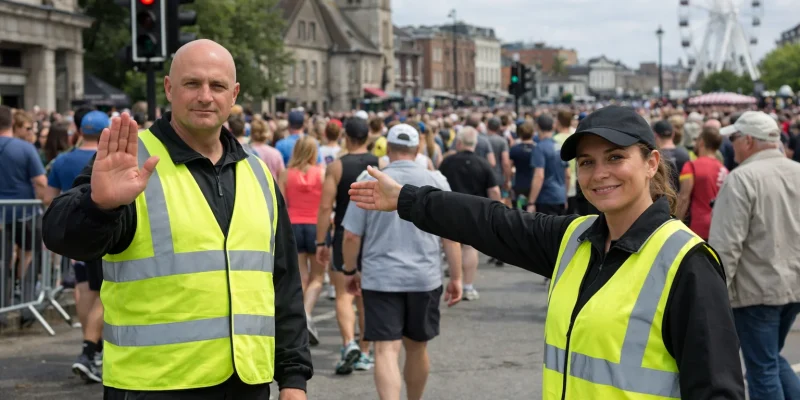
Why Calm, Visible Staff Matter More Than Barriers at Mass Participation Events?

Crowds don’t behave like maths problems; they behave like weather. They shift, swirl, react, and overreact in ways that embarrass neat diagrams. And planners keep throwing metal at the sky, expecting certainty from barriers, fences, and pens.
The fantasy says solid objects control human movement. Real incidents say something else entirely.
People calm down when they see calm humans. They accept direction from confident, visible guides who appear to know what happens next. Barriers restrict options.
People with authority, clarity, and presence reshape behaviour long before trouble starts.
Why Calm and Visible Staff Matter More Than Barriers at Large Public Events?
Humans Follow Humans, Not Fences
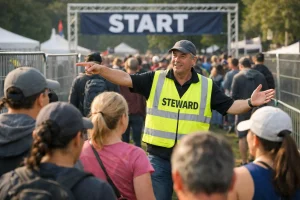
Watch a crowd at a race start or stadium gate. Eyes don’t search for steel; they search for faces and gestures. And when those faces belong to trained, calm, visible event staff, behaviour changes instantly.
People queue more neatly, move more slowly, complain less, and copy the tone they see. Barriers can only say “no”. Humans can say, “Not yet, here’s why, try this instead.” And that tiny shift from rejection to explanation stops frustration from hardening.
So physical structures fade into the background when leadership stands in front of them wearing a high‑vis vest and acting like a guide, not a guard.
Calm Spreads Faster Than Panic
Crowds copy emotions at an alarming speed. One flinch turns into a surge. One shout becomes a rumour. And yet a single unflustered supervisor, standing tall, radio in hand, slows the emotional contagion.
Calm looks contagious as well. People read body language faster than signage. They trust a steady voice over printed instructions or scrolling screens. So when something stalls, the visible presence of relaxed staff buys time.
Not magic, just psychology: visible control lowers the sense of threat, and a lower threat level means fewer bad decisions in tight spaces, bottlenecks, and blind corners across the site.
Barriers Solve Space, Not Understanding
Steel fences solve a simple problem: where bodies can’t go. That’s it. They don’t answer the question that actually matters in a tense moment: what happens next.
Crowds don’t just need routes. They need stories and reasons. Stories come from people who explain, gesture, and repeat the same message without snapping. A barrier can separate flows. A steward can redirect, reassure, and reframe a delay as normal rather than ominous or threatening.
So confusion shrinks when someone visible interprets the space, instead of just defending it with metal and hoping people guess the plan.
Trust Grows From Faces, Not Logos

Big business events drown people in branding. Sponsors, wayfinding, and LED screens are all shouting for attention.
None of that builds trust when a gate closes or a race pauses. Trust grows from consistent, calm behaviour by recognisable staff who look like guardians, not bouncers or ticket inspectors. And when attendees believe staff care about their comfort, they complain less and comply more.
This quiet contract between crowd and organiser doesn’t come from a risk assessment form. It emerges from repeated moments where a human answers a question before anxiety takes root and spreads through the waiting crowd.
Conclusion
The obsession with barriers stems from fear of liability, not from an understanding of crowds. Metal feels safe with paperwork.
People feel safe around others who project competence. And the organisers who grasp this shift their spending: fewer elaborate pens, more training, higher visibility, better briefings, stronger supervision.
They treat staff as a living safety system, not as a cost to minimise or blindly outsource. So events run more smoothly, police intervene less, and tempers flare less often.
The crowd remembers enjoyment, not queuing misery. That memory becomes the strongest safety investment of all, and it sustains attendance.
What is your reaction?