
Which Months Are Council Tax Free And Who Actually Qualifies?

Council tax is a necessary financial responsibility for most UK households, but confusion often arises around whether some months are genuinely “tax free.”
Many believe there’s a break in payments during certain parts of the year, but is that truly the case?
This guide clarifies how council tax payments are structured, explores who qualifies for exemptions or reductions, and explains the difference between perceived payment breaks and actual council tax relief offered by local authorities.
What Does It Really Mean to Have “Council Tax Free” Months?

The phrase “council tax free months” is a widely misunderstood concept across the UK. Many people believe there are specific months when council tax is not required at all.
However, in reality, the term is rooted in the way the annual council tax bill is paid rather than an actual exemption from payment.
If a household chooses to pay their council tax over 10 monthly instalments, usually from April through to January, they do not make any payments in February and March.
These two months appear “free” because no money is due at that time, but the full annual amount has already been paid during the first 10 months.
This structure provides some households with a budgeting break at the beginning of the year. However, these months are not tax-free in the legal or financial sense.
The council still charges the full annual amount; it’s just that it has been paid in advance across fewer months.
This payment option is designed for convenience and is the standard plan offered by many local councils unless a resident chooses otherwise.
How Does the 10-Month Council Tax Plan Work?
The 10-month payment structure is the default option for council tax billing in the UK.
Local councils begin collecting council tax payments in April, the start of the financial year, and continue until January of the following year. The total amount owed is divided into 10 equal monthly instalments.
April to January Payment Cycle
Under the 10-month cycle, payments are typically taken on a specific day each month via direct debit, standing order, or manual payment. Residents pay one-tenth of their total annual bill each month.
For example, if the annual bill is £1,800, each monthly payment would be £180. By the end of January, the full balance has been paid off.
This structure benefits those who prefer to pay off their bills sooner or expect their income to fluctuate later in the year.
It also aligns with the tax year cycle, helping both the council and the taxpayer manage cash flow effectively.
February and March – The Payment Break
After January, households that follow the 10-instalment plan do not make further payments for the remaining two months of the financial year.
This period often coincides with increased utility bills due to winter, making the pause in council tax payments a helpful budgeting break for many.
However, this break is a result of the earlier payment structure. It is not a discount or exemption. The taxpayer has already paid the full annual amount.
If someone moves to a property mid-year or changes their payment schedule, this February and March break may not apply.
What Is the Alternative 12-Month Payment Plan?
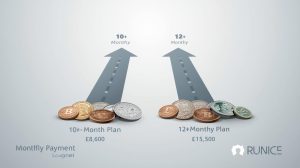
For individuals or families who prefer smaller monthly payments, many councils offer a 12-month payment plan.
This spreads the total council tax bill across all twelve months of the financial year, from April to March. The overall cost remains the same, but each monthly payment is lower than it would be under the 10-month plan.
Choosing a 12-month plan provides consistency, which can help households budget more effectively throughout the year. It eliminates the two-month break but replaces it with more manageable monthly payments.
Requesting a 12-Month Plan
To switch from a 10-month to a 12-month council tax schedule, residents must contact their local council, usually before the start of the financial year.
Most councils allow this change by simply filling out an online form or making a written request. Some councils also provide the option to manage payment schedules through an online account system.
Comparison of 10-Month vs 12-Month Council Tax Payment Plans
| Feature | 10-Month Plan | 12-Month Plan |
| Payment Months | April to January | April to March |
| Monthly Payment Amount | Higher | Lower |
| February and March Payments | None | Yes |
| Budgeting Benefit | Two-month break | Consistent cash flow |
| Default Plan? | Yes | No, must be requested |
Both plans result in the full council tax amount being paid, but the choice of plan can affect how manageable those payments feel throughout the year.
Who Can Qualify for Council Tax Exemptions or Discounts?
While the payment schedule determines whether there are months without payments, exemptions and discounts can reduce or eliminate the amount of council tax a person owes.
These are based on personal circumstances and must be applied for through the relevant local council.
Common Council Tax Discounts
Discounts are available for people who live alone, those on low income, and specific groups of individuals.
The most common discount is the Single Person Discount, which provides a 25% reduction for people living alone. Other examples include:
- Students in full-time education
- People with severe mental impairments
- Carers who provide over 35 hours of care per week
- Individuals in apprentice schemes
- Members of religious communities
- People in hospital or care homes for extended periods
These discounts require proof of eligibility and must be applied for formally.
Council Tax Reduction for Low-Income Households
Local authorities offer a Council Tax Reduction (CTR) scheme for residents with low income or those on benefits.
The amount reduced depends on income, savings, household size, and local council rules. This scheme is not the same nationwide, and each council has its own eligibility criteria.
| Household Scenario | Potential Discount |
| Single person, low income | Up to 100% reduction |
| Family with children on UC | Partial reduction (variable) |
| Disabled occupant | Additional support or band reduction |
| Full-time student household | Full exemption |
In some cases, people may receive a 100% exemption, meaning they do not pay any council tax at all.
This is usually the case for households made up entirely of full-time students or individuals with severe mental impairments.
How Can You Switch Between the 10-Month and 12-Month Council Tax Plans?

The flexibility to switch between the two main payment structures can be a useful budgeting tool. However, many people do not realise that switching is even possible.
Councils typically notify residents of their default plan each year through the annual council tax bill sent in March or April.
Steps to Change Your Council Tax Payment Plan
- Contact your local council through their website or customer service number.
- Request the payment plan you prefer (10 or 12 months).
- Confirm or update your payment method (usually direct debit).
- Review your new payment schedule in your account or paper bill.
The option to change is often time-sensitive. Councils may require the request to be made before a specific date, often 1st April, to apply the new plan to the upcoming financial year. Once accepted, your monthly payments will be recalculated based on the new schedule.
Which Groups Are Fully Exempt From Paying Council Tax?
Not everyone has to pay council tax. In specific circumstances, individuals or households may be fully exempt. Exemptions are granted on the basis of the property’s use or the residents’ status.
Examples of Full Exemptions
- Properties occupied only by full-time students
- Homes left empty by someone who has moved into a care home
- Properties where all residents are under 18 years old
- Homes owned by a charity that remain unoccupied (for up to 6 months)
- Properties occupied by people with a severe mental impairment and one or more students
Each case requires documentation and an application. Councils usually require a GP’s certificate or proof of student status to process these exemptions.
What Should You Know About Council Tax Bands and Reductions?
Council tax is calculated based on the value of the property and its designated council tax band.
These bands were created in 1991 and are still used today, although they may not always reflect the property’s current market value. In England, bands range from A to H.
Council Tax Band Table (England)
| Band | Property Value (as of 1991) | Typical Annual Council Tax |
| A | Up to £40,000 | Lowest band – £1,000–£1,400 |
| B | £40,001 – £52,000 | £1,200–£1,600 |
| C | £52,001 – £68,000 | £1,400–£1,800 |
| D | £68,001 – £88,000 | Average band – £1,600–£2,000 |
| E | £88,001 – £120,000 | £1,900–£2,400 |
| F | £120,001 – £160,000 | £2,200–£2,800 |
| G | £160,001 – £320,000 | £2,500–£3,200 |
| H | Over £320,000 | Highest band – £3,000+ |
Values are approximate and vary by council.
You can check your band online through the Valuation Office Agency (VOA). If you believe your band is incorrect, you can challenge it, but the process requires detailed evidence and may result in your property being placed in a higher band.
How Do Local Councils Handle Council Tax Rules and Exceptions?

Although council tax is governed by national legislation, local councils have discretion over certain elements, especially when it comes to discounts, exemptions, and payment structures.
This means two neighbouring councils may offer different levels of support or require different processes for applying for exemptions.
Variations Between Councils
- Local Council Tax Support (LCTS) schemes can differ
- The availability of hardship funds or payment deferrals
- Digital access to council tax services
- Policies on discounts for empty properties or second homes
As a result, residents should always check their local authority’s website for the most accurate and current information. Failure to follow your council’s specific process can result in delays or denied applications.
Why Is There Confusion About Council Tax-Free Months?
The confusion around “council tax free” months stems primarily from the visibility of the February and March break in the 10-month plan. When no payment is required during these two months, it can appear that the council has waived charges temporarily. This is not the case.
The lack of public awareness about the 12-month option also adds to the misconception. Many residents are unaware that they can request to spread payments across the full year, which removes the break but creates a more balanced financial load.
In addition, many residents believe the absence of payment in certain months must be a council-driven decision. In reality, it is a result of how the taxpayer chooses to manage their payments. This lack of clarity underscores the importance of councils providing clear, detailed information about payment options and eligibility criteria.
Conclusion
To summarise, no months are inherently council tax free. If someone is on the 10-month payment plan, they will not make payments in February and March — but this is purely due to how their annual bill is split.
Council tax is still owed in full for the year, and the “free” months are part of a budgeting structure, not a formal exemption.
Those who wish to spread their payments more evenly can request to switch to the 12-month plan.
Additionally, some individuals may qualify for discounts or full exemptions based on specific circumstances.
Understanding your local council’s policies and your eligibility can help ensure you manage your council tax efficiently.
Frequently Asked Questions
Can students get full council tax exemptions?
Yes, full-time students are generally exempt from paying council tax. If all occupants in a property are full-time students, the household is usually completely exempt.
What happens if I miss a council tax payment?
Missing a payment can lead to reminders, penalties, and eventually legal action. It’s best to contact your council immediately if you’re having trouble paying.
Can I get help paying my council tax if I’m on Universal Credit?
Yes, many local councils offer support for those on Universal Credit. You may be eligible for a council tax reduction under the Local Council Tax Support scheme.
How do I check my council tax band?
You can check your property’s council tax band online using the Valuation Office Agency’s tool or by contacting your local council.
Is council tax the same across all UK local authorities?
No, council tax rates vary by local authority. The band of your property and your local council’s rates determine the total amount.
What’s the difference between a council tax discount and exemption?
A discount reduces the amount you pay, while an exemption means no council tax is due at all. Discounts often apply to single occupants or those with certain conditions.
Can I change my council tax payment plan anytime?
In most cases, yes. You can request to switch between the 10-month and 12-month payment options by contacting your council, usually at the start of the financial year.
What is your reaction?