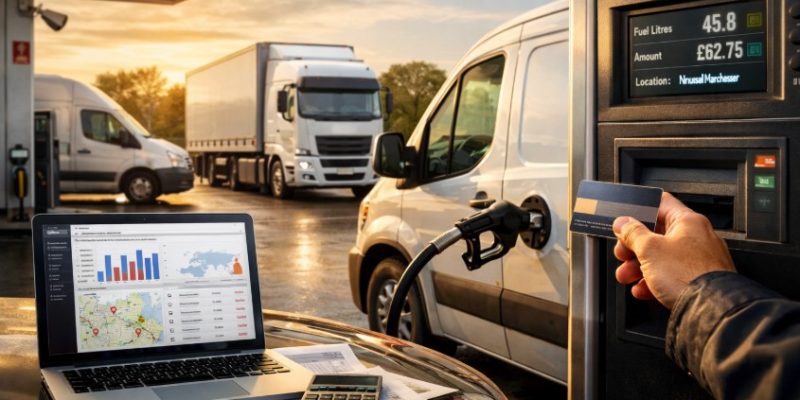
How Fuel Cards Improve Financial Oversight for Fleets in the UK?

Fuel management is one of the biggest and most unpredictable expenditures of operators of the UK fleet, but the majority of enterprises use decentralised approaches to fuel payment, like reimbursements to drivers, fuel receipts, or hybrids.
This method undermines financial control by postponing visibility, creating additional administrative workload, and creating room to make errors or abuse. Fuel management often becomes a reactive process rather than a disciplined financial operation.
Fuel cards help overcome these areas of weakness by consolidating fuel spending into one auditable system, which enhances transparency and accountability at the fleet level.
Every transaction is also stored with useful information like location, fuel type, volume, and time, which enables the business to know how much they have spent in almost real time and detect anomalies within a short amount of time.
Providers such as Radius can be configured to allow limits on spending, fuel restrictions, and other controls, which prevent unauthorised use and minimise fraud, an issue that is significant when dealing with geographically dispersed fleets in the UK.
The Financial Oversight Challenge Facing UK Fleets
UK fleet operators face a unique financial problem. Fluctuating fuel prices, affected by global markets and domestic taxes, require businesses to manage VAT recovery, fuel benefit reporting, and mileage compliance. Relying on paper-based expense claims and ad hoc fuel receipts causes poor visibility, frequent errors, and increases administrative expenses.
For finance teams, this uncertainty makes budgeting less reliable. For fleet managers, it limits the ability to spot waste, such as too much idling, route changes, or odd fuel-buying patterns.
The problem is not just overspending, but also the challenge of assigning fuel expenses to the correct vehicles, drivers, and locations.
How Fuel Cards Improve Financial Oversight for Fleets?
Centralising Spend Data Through Fuel Cards
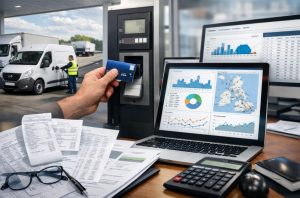
The use of fuel cards radically transforms the way spending on fuel is recorded and tracked. Fuel purchases are brought together in a single reporting system as opposed to divided into operations between different forecourts and payment systems. Each transaction is recorded with accurate information such as date, place of purchase, type of fuel, volume and price.
This centralisation allows the finance teams to visualise the fuel spend almost in real time and not weeks later. Trends are easily discerned as to why a certain vehicle is using more fuel than projected, or a driver is always buying premium fuel that is not necessarily warranted.
Improving Cost Control and Fraud Prevention
The prevention of misuse and fraud is one of the most underestimated advantages of the fuel cards. Fuel cards can be programmed to have controls which limit the type of fuel, limit spending, limit the time of transactions, and even geographical usage. These controls are very effective in eliminating the chances of personal use, siphoning of fuel or unauthorised purchases.
These controls are combined with reporting tools that automatically indicate anomalies by providers such as Radius.
For example, it can be seen immediately when there are multiple fuel purchases within a short period or when there are unusual volumes for a specific vehicle.
Supporting VAT Recovery and Regulatory Compliance
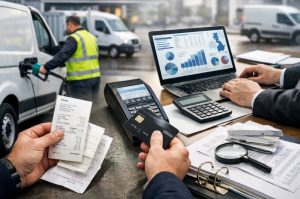
The UK tax and reporting requirements are also relaxed with the use of fuel cards. Claiming the VAT on fuel is infamously complex, particularly when using fuel in both business and personal settings. Fuel card statements normally offer invoices of HMRC-compliant VAT, and recovery of the necessary VAT based on the invoice is far easier than claiming missing or incomplete receipts.
Service providers like radius.com. also assist proper record keeping of fuel transactions, thereby making it easier to compute fuel benefits and report on miles. This minimises the chances of mistakes that would result in audits or punishment by HM Revenue and Customs.
Clear and standardised records of fleet fuel expenditure enhance the financial management of those fleets that are either internally or externally audited.
Turning Fuel Data into Strategic Insight
In addition to oversight and control, fuel cards can provide data that is used to make improved strategic decisions. Fuel data can be used with vehicle telematics or maintenance logs to identify vehicles that are not performing well, or inefficient routes, or unprofessional behaviours of drivers that can be more expensive.
This understanding is becoming a valuable asset in the UK, where low-emission areas, congestion taxes, and fuel taxes are also contributing to the cost of running businesses. Fuel data can help businesses to assess the financial cost of switching to hybrid or electric cars, depot placement, or shift schedules.
Conclusion
Fuel card to the UK fleet operators is no longer a luxury but an operational management and control tool that is in tandem with the current needs of operations and regulation.
By providing centralised spend data, easier compliance, and actionable insights, fuel cards enable businesses to not only transform cost management into financial governance but also gain a strategic edge in efficiency, transparency, and regulatory confidence.
What is your reaction?